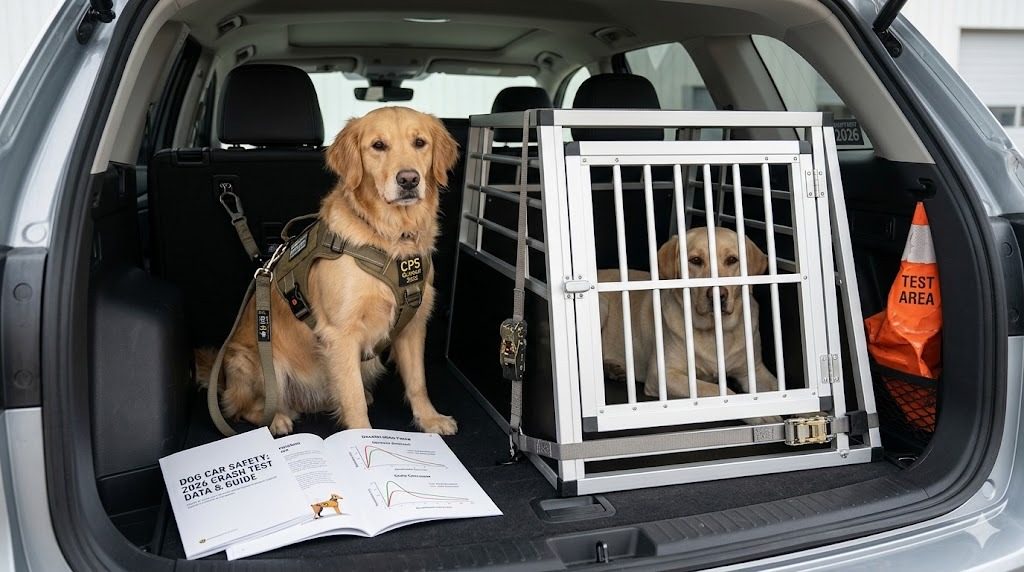
Best Dog Crates 2026: Wire, Plastic, Wooden, and Designer Compared
An honest comparison of the best dog crates in 2026 - wire, plastic, wooden furniture, heavy-duty, and travel. Sizing guide, prices, and which is right for your dog.
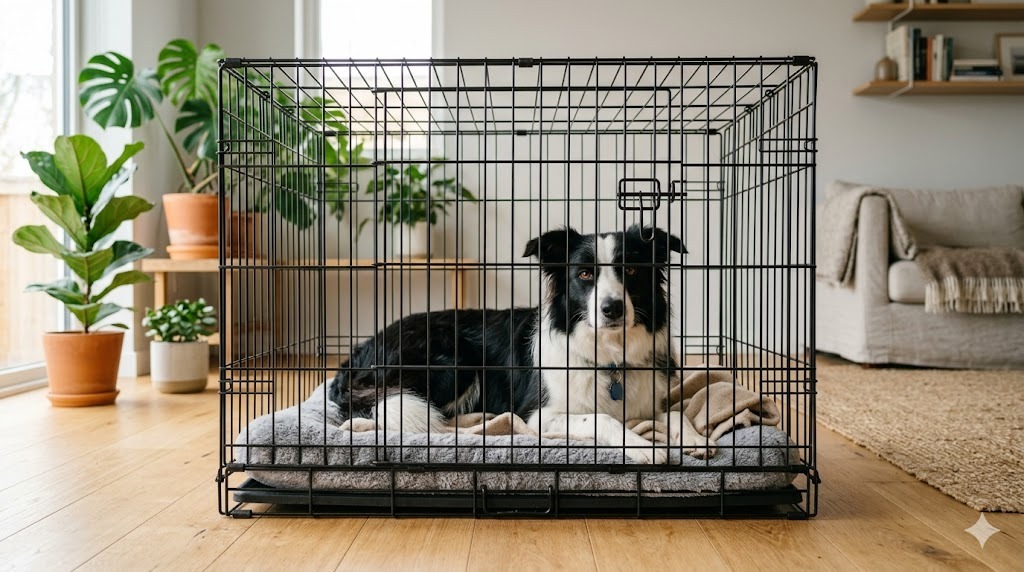
Best Dog Crates 2026: Wire, Plastic, Wooden, and Designer Compared
The best dog crate for most dogs is a wire crate with a divider - it grows with a puppy and folds flat - with a high-impact plastic crate for travel and den-lovers, a furniture-style crate for the living room, and a heavy-duty steel crate for escape artists. Size it so the dog can stand, turn around, and lie down, and no bigger.
A dog crate is one of the few purchases that genuinely matters. The wrong crate leads to escape attempts, anxiety, injuries, and replacement costs. The right crate becomes your dog’s safe space for 10+ years - for travel, recovery, training, and daily rest.
But “best crate” depends on what you need: a puppy in training needs different features than a 90-lb adult with separation anxiety. A travel crate has different requirements than a furniture-style living room piece. This guide compares 12 top crates across five categories - with real prices, dimensions, and the trade-offs the marketing won’t tell you.
Sizing first: A crate should be just large enough for your dog to stand up, turn around, and lie down comfortably. Too big = potty area + sleep area (dogs naturally avoid soiling sleep area; oversized crates defeat this instinct). Adult-sized crates with dividers work best for growing puppies.
Crate Size Guide by Dog Weight
| Weight | Crate Size | Length × Width × Height |
|---|---|---|
| Under 10 lbs (Chihuahua, Yorkie) | XS / 18-inch | 18” × 12” × 14” |
| 10-25 lbs (Frenchie, Pug, Beagle) | S / 24-inch | 24” × 18” × 19” |
| 25-40 lbs (Cocker, Aussie pup) | M / 30-inch | 30” × 19” × 21” |
| 40-70 lbs (Border Collie, Lab) | L / 36-inch | 36” × 23” × 25” |
| 70-90 lbs (GSD, Golden) | XL / 42-inch | 42” × 28” × 30” |
| 90-110 lbs (Rottweiler, Mastiff pup) | XXL / 48-inch | 48” × 30” × 33” |
| 110+ lbs (Great Dane, Mastiff) | Giant / 54-inch | 54” × 35” × 45” |
For accurate fit: measure your dog from nose tip to tail base (length) and floor to top of head when sitting (height). Add 4 inches to both.
At a Glance: Best Crates by Category
| Category | Top Pick | Price |
|---|---|---|
| Best Overall (Wire) | MidWest iCrate Double-Door | $50-110 |
| Best Designer/Modern | Diggs Revol Crate | $355-545 |
| Best Heavy-Duty (Escape-Proof) | Impact Stationary Aluminum | $700-1,400 |
| Best Plastic/Airline | Petmate Sky Kennel | $80-180 |
| Best Wooden Furniture | Casual Home Wooden Pet Crate End Table | $130-280 |
| Best Travel/Soft-Sided | EliteField 3-Door Soft Crate | $60-120 |
| Best Budget | Frisco Fold & Carry Wire Crate | $35-95 |
🥇 Best Overall: MidWest iCrate Double-Door
The MidWest iCrate is the default recommendation in 80%+ of training contexts. It folds flat for transport, has dividers to grow with your puppy, and survives daily use for 8-10 years. Two-door design lets you place it against a wall while still accessing your dog.
Cost by size:
- 24-inch: $35-55
- 30-inch: $45-70
- 36-inch: $55-80
- 42-inch: $70-95
- 48-inch: $85-110
Best for: First-time crate buyers, puppy training, dogs who aren’t escape artists, owners who need a multi-purpose crate that folds for trips. This is what most people should buy.
🎨 Best Designer/Modern: Diggs Revol
Diggs Revol is what happens when industrial designers redesign a wire crate from scratch. The diamond-pattern panels are smaller than traditional wire (paws can’t slip through), the doors have a “garage style” mechanism, and the whole thing folds flat in seconds. It also genuinely looks good in a living room - owners actually want to display it.
Cost:
- Small (24”): $355
- Medium (32”): $445
- Large (37”): $545
Best for: Owners who care about home aesthetics, dogs who reach through traditional wire crates, multi-tasking owners who want one crate for travel + home use.
💪 Best Heavy-Duty (Escape-Proof): Impact Stationary
For escape artists, separation-anxiety destruction, or working dogs, Impact Stationary is in a class of its own. Made of aircraft-grade aluminum with welded construction, these survive dogs that demolish standard wire crates within hours.
Real-use cases: Owners report Impact crates have survived 10+ years of daily use with destructive dogs. The Stationary version is welded (not foldable) for maximum strength; the Collapsible version trades some structural integrity for portability.
Alternative heavy-duty options:
- ProSelect Empire (welded steel, $400-800)
- Lucky Dog Uptown (modular, $300-600)
- Carlson Compact (medium-duty wire, $150-300)
Best for: Confirmed escape artists, anxious dogs who self-injure, dogs with bite-through tendencies, professional kennel use.
✈️ Best Plastic/Airline: Petmate Sky Kennel
If you fly with your dog (especially internationally), you need an IATA-compliant crate. Petmate Sky Kennel is the industry standard accepted by virtually all airlines. Solid plastic walls create a “den” feeling that many dogs prefer for sleeping, even outside travel.
Airline considerations:
- Verify size requirements with your specific airline (some require larger)
- Add metal hardware (zip ties not allowed)
- Provide water dish attached to door
- Practice with the crate weeks before travel
Best for: Air travel, multi-modal travel, dogs who prefer enclosed dens, post-surgery confinement.
🛋️ Best Wooden Furniture: Casual Home Wooden Pet Crate
For owners who don’t want a crate visible as a crate, wooden furniture crates double as end tables, sideboards, or TV stands. They’re slatted (still ventilated) but blend into living spaces.
Range:
- Casual Home End Table Crate: $130-250
- Merry Products Wood Crate: $150-300
- Crown Pet Wood Crate: $250-450
- Brennon Pet Crate (custom-made): $400-800+
Cons: Not escape-proof, harder to clean than plastic/wire, fixed sizing.
Best for: Adult dogs already crate-trained (not for chewers), home aesthetics matter, secondary “calm space” rather than training crate.
🚗 Best Travel/Soft-Sided: EliteField 3-Door Soft Crate
Soft-sided crates are for travel only - never for unsupervised time. They’re light, fold to nothing, and set up in seconds.
Why three doors: Top, side, and front access lets you position in cars or hotels however you need.
Cost: $60-120 by size.
Cons: No barrier against destruction; never leave a dog unsupervised in one.
Best for: Hotel stays, car travel, beach/camping, vet/groomer waiting.
💰 Best Budget: Frisco Fold & Carry Wire Crate
Chewy’s house brand wire crate is functionally similar to MidWest iCrate at about 20% less. Same divider panel, same two-door design, slightly thinner wire gauge.
Cost: $30-80 by size.
Best for: Budget-conscious owners, secondary/travel crate, short-term use (pup grows out within a year).
Detailed Comparison Table
Side-by-side comparison
| Name | Category | Price L | Escape Proof | Folds |
|---|---|---|---|---|
| MidWest iCrate | Wire | $55 | Medium | Yes |
| Diggs Revol | Modern Wire | $545 | High | Yes |
| Impact Stationary | Aluminum | $900 | Maximum | No |
| ProSelect Empire | Steel | $600 | Maximum | No |
| Petmate Sky Kennel | Plastic | $120 | Medium | No |
| Casual Home Wooden | Wooden | $200 | Low | No |
| EliteField Soft Crate | Soft-sided | $90 | Low | Yes |
| Frisco Fold & Carry | Wire | $45 | Medium | Yes |
How to Choose: A 5-Question Framework
1. Is your dog crate-trained or in training?
Already trained, low anxiety: Almost any crate works. Aesthetic and budget can dominate. In training / puppy: MidWest iCrate with divider (grows with dog) or Diggs Revol (durable through chew phase). Anxious or destructive: Heavy-duty Impact Stationary or ProSelect.
2. Where will the crate live?
Living room visible: Diggs Revol or wooden furniture crate. Bedroom/hidden: Wire crates are fine. Multi-location: Foldable (MidWest, Frisco, Diggs). Car: Plastic Petmate or soft-sided EliteField.
3. Travel plans?
Frequent car travel: Foldable wire or soft-sided. Air travel: Petmate Sky Kennel (IATA compliant) - start with this. Hotel stays: Soft-sided EliteField. No travel: Furniture or any stationary.
4. Your dog’s destruction level?
Calm chewer: Any crate. Mouthy but not destructive: Wire or plastic with reinforced corners. Bites at bars / escapes: Impact or ProSelect heavy-duty. Anxiety destruction: Impact Stationary + behavioral support (medication/training).
5. Budget?
Under $100: Frisco or MidWest small/medium. $100-250: MidWest XL, Petmate Sky, wooden furniture. $250-600: Diggs Revol, heavy-duty mid-range. $600+: Impact, custom Brennon wooden, premium designer.
Crate Training Quick Tips
The crate is only as useful as the training. The most common mistakes:
❌ Using crate as punishment - Permanently associates the crate with negative emotions ❌ Leaving dog in crate too long - Adults max 6-8 hours; puppies 1 hour per month of age ❌ No transition period - Dogs need 2-4 weeks of progressive crate training ❌ No bedding or comfort items - Bare crates feel like jail ❌ Crate too small or too large - Size matters for sleep/potty separation
Correct approach:
- Day 1-3: Crate door open, treats inside, dog explores freely
- Day 4-7: Feed meals inside crate, brief closures while you’re present
- Week 2: Short alone-time inside (5-15 min)
- Week 3+: Progressive duration buildup
For step-by-step guidance, see How to Crate Train a Puppy in 7 Days - coming soon.
Bedding and Accessories
Inside your crate:
- Bed/pad: Choose washable, durable (Kuranda aluminum cot, or K9 Ballistics chew-proof pad)
- Water: Spill-proof bottle (Lixit) better than open bowl
- Toys: KONG stuffed with frozen peanut butter for separation
- Cover: Lightweight blanket over 3 sides creates “den” feeling (skip if dog overheats)
Avoid: pillows that can suffocate, loose blankets that puppy can chew, anything with stuffing that could be ingested.
Frequently Asked Questions
What size crate does my puppy need?
Buy adult-size with a divider. Set the divider so the puppy has just enough room to stand up, turn around, and lie down. Move the divider as the puppy grows. This is more economical than buying multiple sizes.
Is crate training cruel?
No, when done correctly. Dogs are den animals - properly introduced crates become safe spaces. The cruelty would be using the crate as punishment or leaving the dog inside for 12+ hours. Used as a tool for short-term confinement, training, and travel, it’s a kindness.
Can my adult dog start using a crate?
Yes, though training takes longer (4-6 weeks vs 1-2 for puppies). Start slow, never force, make the crate the most rewarding place in the house first.
How long can a dog stay in a crate?
Puppies under 6 months: 1 hour per month of age (so 3 hours for a 3-month-old) max during the day. Overnight is okay with bathroom breaks. Adult dogs: 6-8 hours max during workday, with a midday break ideal. Anxious dogs: Often shouldn’t be crated long-term - find alternatives (dog walker, daycare, gated room).
Should I cover the crate?
Many dogs prefer it (more den-like). Use a breathable cover (lightweight blanket) over 3 sides, leaving the door side open. Skip in hot weather or for dogs that overheat.
My dog has separation anxiety - should I use a crate?
Sometimes. For some anxious dogs, the crate is a safety blanket. For others, it amplifies panic and self-injury (broken teeth, bloody paws from clawing). Consult a behaviorist before crating anxious dogs.
Are airline crates also good for home?
Plastic Petmate Sky Kennel works at home but is bulky. Better for travel + occasional confinement than primary home crate.
Should I get one crate per dog?
Yes, in multi-dog households. Each dog needs their own space. Some dogs share crates fine, but expecting it can lead to fights and resource guarding.
What about crate alternatives?
Exercise pens (Midwest, IRIS) are larger play areas. Baby gates create dog-safe rooms. For some dogs, a “free roam” approach with dog-proofed space works. Crates are a tool, not the only option.
How do I clean a crate?
Wire: Soap + water, hose down, dry in sun. Plastic: Same; can use diluted bleach for sanitizing. Wooden: Wood cleaner, avoid soaking. Soft-sided: Most are machine-washable removable.
Final Recommendation
For 80% of owners, the MidWest iCrate Double-Door is the right answer. It’s affordable, durable, includes a divider for growing puppies, and folds for travel. Buy the size that fits your dog’s expected adult weight.
For escape artists or destructive dogs, jump straight to Impact Stationary or ProSelect Empire. The extra cost saves you replacement crates and emergency vet bills from escape injuries.
For living-room aesthetics, Diggs Revol is genuinely worth the premium - it folds flat for travel and looks intentional in any space.
For air travel, you need a Petmate Sky Kennel - start there if flying is part of your plan.
The wrong crate for your dog wastes money and creates negative training experiences. The right crate becomes your dog’s safe home for a decade. Choose based on your specific dog, not the deal of the week.
Related Reading
- Best Dog Playpens: Indoor, Outdoor, Travel
- Best Dog Gates: Indoor Pet Barriers
- Best Orthopedic Dog Beds
- How to Crate Train a Puppy
- Best Collapsible Dog Crates
Last updated: May 2026.