German Shepherd
The German Shepherd Dog (GSD) is one of the most recognised and capable dogs in the world.
🗓️ Last reviewed: August 2026
Full Guide
Deep dive · 25-35 min · everything you need
Overview
The German Shepherd Dog (GSD) is one of the most recognised and capable dogs in the world. Originally bred to herd sheep, it has become the dog of choice for police, military, search-and-rescue, guide-work, and protection. The combination of intelligence, athleticism, courage, and loyalty makes the German Shepherd extraordinary - but it also makes the breed demanding. A bored, untrained, or under-socialised German Shepherd is a problem most homes are not ready for; a well-raised one is among the finest dogs a person can own.
History & Origins
The breed was created in 1899 by Captain Max von Stephanitz, a Prussian cavalry officer who wanted to unify Germany's regional herding dogs into a single standardised working breed. At a dog show in Karlsruhe he bought a wolf-like dog named Hektor Linksrhein, renamed him Horand von Grafrath, and founded the Verein für Deutsche Schäferhunde (SV). Horand became the foundation sire.
Von Stephanitz drove the breed toward utility rather than appearance - "utility and intelligence" was his motto. Within twenty years the GSD had moved from herding into police and military work. The First World War spread the breed worldwide; the silent-film star Rin-Tin-Tin made it a household name in America.
After the Second World War the breed split into distinct lines: West German show, West German working, East German (DDR), Czech working, and American show. The American show line, in particular, was bred for an extreme rear-angled stance, which produced the "sloped back" controversy that still divides the breed today. Working lines retain a straighter topline and steadier nerves.
Appearance
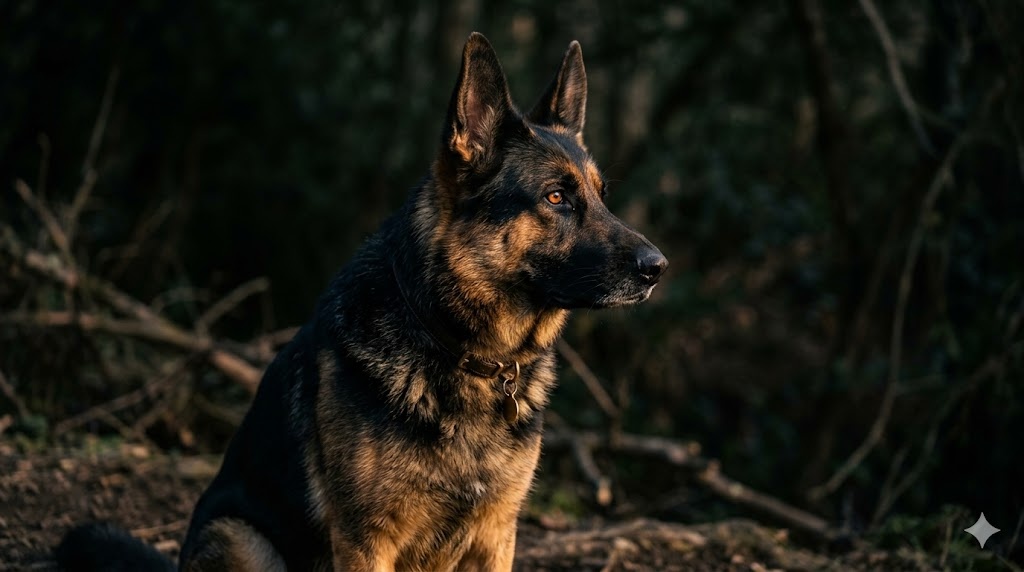
A large, athletic, slightly elongated dog. Males stand 60-65 cm (24-26 in) and weigh 30-40 kg (66-88 lb); females are noticeably smaller and lighter.
Key features:
- Coat: double coat in three varieties - stock (medium), long stock (with undercoat), and long (no undercoat, not approved in some standards).
- Colour: black-and-tan is iconic, but solid black, sable (agouti), bi-colour, and white are also seen. Blue and liver exist but are faults under most standards.
- Head: wedge-shaped with erect, mobile ears and dark almond eyes.
- Topline: ideally firm and only gently sloped from withers to croup. Extremely sloped backs are a structural defect.
Temperament & Character
A correct German Shepherd is confident, alert, courageous, and steady. Friendly with its family, reserved with strangers, and protective when genuinely needed. They are not "friendly to everyone" - and they should not be. A good GSD is calmly observant and slow to engage, not reactive or fearful.
The breed forms intense bonds with one or two key people. They want to work, to be near you, to know what you want next. Bored GSDs invent jobs - usually destructive ones. Anxious or poorly bred ones develop sharpness, fear-biting, and obsessive behaviours.
Care
Coat & Grooming
GSDs shed heavily year-round and "blow" coat twice annually. Plan on brushing 3-4 times weekly with a slicker and an undercoat rake; daily during heavy shed seasons. Long-coated dogs need extra attention to feathering and ears.
Bathe every 6-8 weeks. Clean ears regularly, trim nails monthly, brush teeth several times a week. Coats are weather-resistant; do not shave them.
Exercise & Activity Needs
A working dog through and through. Minimum 90-120 minutes of real activity per day - walking alone is not enough. Combine running, structured training, scent work, retrieving, and protection or obedience sports. The breed thrives in IGP/Schutzhund, agility, herding, tracking, and dock diving.
Mental work is equally critical. Daily training, problem-solving games, and varied environments keep a Shepherd balanced. The cliché "a tired dog is a good dog" is more true of this breed than almost any other.
Health & Lifespan
Average lifespan is 9-13 years, with working lines generally healthier and longer-lived than extreme show lines.
Common issues:
- Hip and elbow dysplasia - historic breed problem. Demand certified scores from both parents.
- Degenerative myelopathy (DM) - progressive spinal disease. DNA test available.
- Bloat (GDV) - high risk; the deep-chested build is a key risk factor.
- Exocrine pancreatic insufficiency (EPI) - relatively common, treatable.
- Allergies and chronic skin issues.
- Haemangiosarcoma in older dogs.
Feeding & Nutrition
Adult Shepherds need 3-4 cups of quality food per day, split into two or three meals to reduce bloat risk. Working dogs need significantly more. Avoid heavy exercise within an hour either side of meals.
The breed has a notably high rate of food sensitivities. Some require novel-protein, grain-inclusive, or hydrolysed diets. Joint-support diets with EPA/DHA, glucosamine, and chondroitin are reasonable from middle age onward.
Pros & Cons
Pros
- Among the most intelligent and trainable breeds.
- Versatile - excels at every dog sport and most working roles.
- Loyal, protective, family-oriented.
- Stunning, instantly recognisable appearance.
Cons
- High exercise, training, and engagement demands.
- Sheds heavily.
- Significant inherited health issues, especially in poorly bred lines.
- Can be reactive, sharp, or fearful without proper rearing.
- Not a beginner's dog.
Best Suited For
- Active, experienced owners.
- Households committed to daily training and exercise.
- Sport homes (IGP, obedience, agility, tracking).
- Working roles: police, security, search-and-rescue, service.
- Families with older children and the time to invest.
Not suited for sedentary owners, full-time-office homes without coverage, first-time dog owners without mentorship, or anyone wanting an "easy" dog.
German Shepherd puppy growth chart
A typical growth curve for a large breed like the German Shepherd, estimated from its adult weight of 30-40 kg. Puppies vary with sex, genetics and diet, so treat this as a guide - for your own puppy, use the puppy weight predictor.
| Age | Typical weight | % of adult |
|---|---|---|
| 2 mo | 6.6-8.8 kg | 22% |
| 3 mo | 9.9-13.2 kg | 33% |
| 4 mo | 12.9-17.2 kg | 43% |
| 6 mo | 18-24 kg | 60% |
| 9 mo | 24-32 kg | 80% |
| 12 mo | 27.6-36.8 kg | 92% |
| Adult | 30-40 kg | 100% |
German Shepherd - frequently asked questions
Are German Shepherds dangerous?
A well-bred and well-raised Shepherd is stable, controllable, and safe. A poorly bred or mishandled one can be dangerous - they are powerful dogs with strong protective instincts. Buy from a temperament-tested breeder, train from day one.
Working line vs show line - which is better?
For sport, protection, or active home, working lines are better - straighter backs, healthier joints, sharper minds, harder drive. Show lines are usually calmer and more "petty" but vary widely.
Are German Shepherds good with kids?
Generally yes, with their own family. Socialise carefully and supervise - the breed's herding instinct can lead to nipping at running children.
Do they need a yard?
A yard helps but is not enough on its own. Many GSDs live well in apartments if exercised properly. A yard with no exercise creates a destructive, frustrated dog.
Are German Shepherds hypoallergenic?
No - they shed heavily and produce dander.
🧠 Test yourself: guess the dog
Three clues from our quiz bank, each about another of our dogs. Can you name them?
Clue 1.One of the oldest Arctic sled dogs, this powerful freighting breed was developed by an Inuit people to haul heavy loads over long distances, not to race for speed.
It's the Alaskan Malamute - read the full profile →
Clue 2.This giant breed was raised by Alpine monks to find and rescue travelers lost in mountain snow.
It's the Saint Bernard - read the full profile →
Clue 3.This small German terrier-type dog sports a bushy beard and arched eyebrows on a squared-off muzzle.
It's the Miniature Schnauzer - read the full profile →
💛 Adoptable German Shepherds near you
Real dogs of this breed (and close mixes) waiting in shelters and rescues right now, live from Petfinder. We have no affiliation and earn nothing - if someone catches your eye, the link goes straight to their shelter. New to adopting? Start with our adoption guide.
Widget not loading (some ad-blockers hide it)? Search directly on petfinder.com.