Golden Retriever
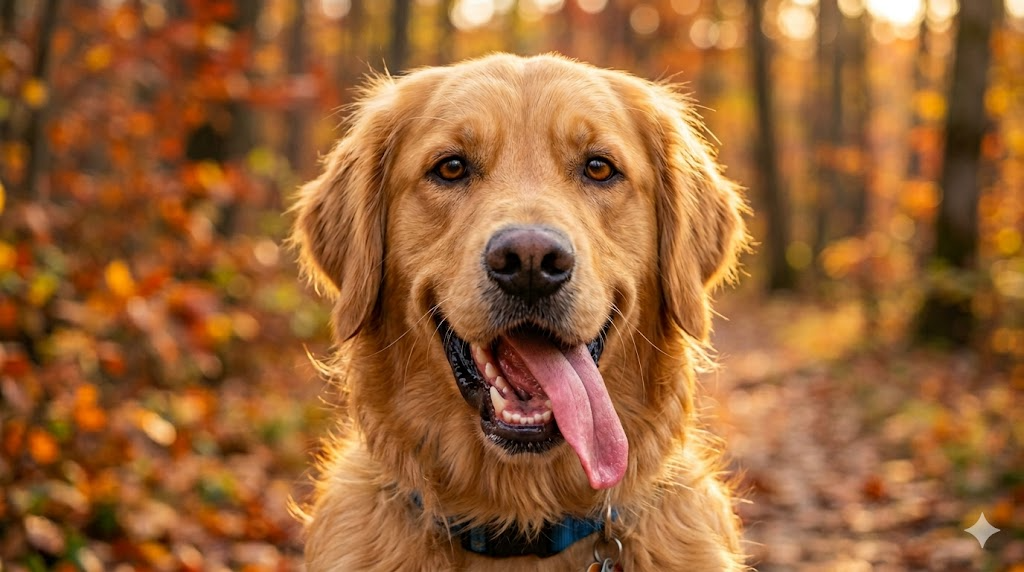
The Golden Retriever is the postcard family dog - beautiful, gentle, intelligent, and almost universally good-natured.
🗓️ Last reviewed: July 2026
Full Guide
Deep dive · 25-35 min · everything you need
Overview
The Golden Retriever is the postcard family dog - beautiful, gentle, intelligent, and almost universally good-natured. Bred in 19th-century Scotland as a versatile gundog, the Golden combines the working drive of a retriever with the soft, biddable temperament that has made it one of the most beloved breeds in the world. Its expressive face, flowing golden coat, and almost permanent half-smile have helped cement it as the cinematic shorthand for "perfect dog."
History & Origins
The breed was developed in the Scottish Highlands in the second half of the 1800s by Dudley Marjoribanks, the first Lord Tweedmouth, on his estate Guisachan. Wanting a dog ideally suited to retrieving from both water and rough upland terrain, he crossed a yellow Wavy-Coated Retriever (now extinct) named Nous with a Tweed Water Spaniel called Belle. Subsequent additions over thirty years included Irish Setter, Bloodhound, and more Tweed Water Spaniel.
The result was a dog of remarkable consistency and beauty. Tweedmouth kept meticulous breeding records (now preserved by the Kennel Club), making the Golden one of the best-documented breeds in history. The breed was recognised by the Kennel Club (UK) in 1913, the Canadian Kennel Club in 1927, and the AKC in 1932. Three slightly distinct types developed regionally: the heavier, paler British/European Golden; the more athletic and richly coloured American Golden; and the lighter, deeper-red Canadian Golden.
Appearance
Goldens are medium-large, well-balanced dogs. Males stand 58-61 cm (23-24 in) and weigh 29-34 kg (65-75 lb); females are slightly smaller. The body is athletic, slightly longer than tall, with strong rear drive and a level topline.
Key features:
- Coat: dense, water-repellent double coat with feathering on the chest, belly, legs, and tail. The undercoat is soft; the outer coat may be straight or wavy.
- Colour: any shade of gold or cream. The "English Cream" is simply a very pale Golden - not a separate breed despite some marketing.
- Head: broad skull with a kind, intelligent expression; medium-sized ears set roughly at eye level.
- Tail: thick at the base, tapering, carried level or with a slight upward curve, never high or curled over the back.
Temperament & Character
Few breeds are as consistently friendly. The Golden is outgoing, trusting, and gentle, with an almost limitless tolerance for children, strangers, and other animals. They are sensitive - they read human emotions with disconcerting accuracy and dislike conflict in the household.
Goldens want to be involved in everything. They follow their people from room to room, lean against legs, and offer toys as gifts. Left alone for long stretches, they suffer. Bred to work alongside a hunter, they remain happiest when given a job and a partner.
The breed is slow to mature. The classic Golden does not really settle until age 3-4. Until then, expect a perpetually optimistic, slightly goofy, occasionally destructive puppy in a very large body.
Care
Coat & Grooming
The double coat sheds heavily - every day, with two seasonal "coat blows" in spring and autumn. Brush 3-4 times a week minimum, daily during shed seasons. Use a slicker followed by an undercoat rake; ignoring the undercoat leads to mats around the ears, behind the elbows, and on the rear legs.
Bathe every 6-8 weeks. Do not shave the coat - it provides insulation in both heat and cold, and shaved Goldens often regrow patchy, frizzy hair. Clean ears weekly (especially after swimming), trim nails monthly, brush teeth several times per week.
Exercise & Activity Needs
A healthy adult Golden needs at least 60-90 minutes of vigorous exercise daily - ideally a mix of running, swimming, retrieving, and scent work. They excel at virtually every dog sport: obedience, agility, dock diving, field trials, therapy work, and tracking.
Goldens love water with the same enthusiasm as Labradors. Swimming is excellent low-impact exercise and the most efficient way to drain a teenage Golden's energy.
Mental stimulation is essential. Puzzle feeders, daily training sessions, and rotating toys help; a bored Golden chews skirting boards, digs holes, and develops anxiety.
Health & Lifespan
Average lifespan is 10-12 years, though sadly this has declined in recent decades, particularly in the United States, due to high cancer rates.
Common concerns:
- Cancer - haemangiosarcoma, lymphoma, mast cell tumours. Up to 60% of US Goldens die from cancer. European lines fare better but are not immune. The Morris Animal Foundation Golden Retriever Lifetime Study is mapping risk factors.
- Hip and elbow dysplasia - insist on cleared parents.
- Subaortic stenosis and other heart conditions.
- Hypothyroidism.
- Progressive retinal atrophy and pigmentary uveitis.
- Ear infections from heavy, hairy ears.
Spay/neuter timing matters in this breed - recent research suggests delaying gonadectomy until at least 12-18 months may reduce joint disease and some cancers.
Feeding & Nutrition
Adult Goldens typically eat 2½-3 cups of quality dry food per day in two meals. Like Labs, they overeat readily and gain weight quickly. Measure portions, keep treats under 10% of calories, and adjust seasonally.
Bloat (gastric dilatation-volvulus) risk is moderate. Avoid vigorous exercise within an hour of meals, use slow-feeder bowls if your dog inhales food, and watch for the classic warning signs (restlessness, unproductive retching, distended belly) - bloat is a surgical emergency.
Some Goldens develop food intolerances, often beginning around age 2-3. Chronic ear or paw issues frequently respond to a hydrolysed or novel-protein diet.
Pros & Cons
Pros
- Friendly with everyone - kids, dogs, strangers.
- Highly trainable; thrives in dog sports, service work, therapy.
- Beautiful, expressive, photogenic.
- Adaptable to many lifestyles with enough exercise.
- Sensitive and emotionally intelligent.
Cons
- Sheds heavily - every day, all year.
- High exercise and engagement needs.
- Significant cancer risk, especially in US lines.
- Cannot be left alone for long periods.
- Slow to mature; long, mouthy adolescence.
Best Suited For
- Active families with children.
- Owners who want a versatile companion for hikes, swims, sports.
- People interested in therapy, service, or competitive obedience work.
- Households where someone is home most of the day.
Not suited for owners who cannot tolerate dog hair, full-time-office households without a midday visit, or anyone wanting a low-maintenance pet.
Golden Retriever puppy growth chart
A typical growth curve for a large breed like the Golden Retriever, estimated from its adult weight of 29-34 kg. Puppies vary with sex, genetics and diet, so treat this as a guide - for your own puppy, use the puppy weight predictor.
| Age | Typical weight | % of adult |
|---|---|---|
| 2 mo | 6.4-7.5 kg | 22% |
| 3 mo | 9.6-11.2 kg | 33% |
| 4 mo | 12.5-14.6 kg | 43% |
| 6 mo | 17.4-20.4 kg | 60% |
| 9 mo | 23.2-27.2 kg | 80% |
| 12 mo | 26.7-31.3 kg | 92% |
| Adult | 29-34 kg | 100% |
Golden Retriever - frequently asked questions
Golden Retriever vs Labrador - which is better?
Both are friendly family dogs with similar exercise needs. The Lab has a shorter, easier coat and a slightly cheekier personality; the Golden has more coat work and tends to be softer, more sensitive, and more visibly cuddly. Lifespan favours the Lab slightly; aesthetics often favour the Golden.
Are English Cream Goldens healthier?
Slightly, on average, because European breeding standards and screening tend to be stricter - but "English Cream" is a marketing term, not a separate breed. Health depends on the individual breeder, not the colour.
Do Goldens make good guard dogs?
No. They are likely to greet a burglar with a wagging tail and a slipper. They will bark at strange noises, but their threat level is minimal.
Are Golden Retrievers hypoallergenic?
No - they shed heavily and produce dander.
How much does a Golden Retriever puppy cost?
From a reputable, fully health-tested breeder, expect €1,500-€3,000 in Europe, $2,000-$3,500 in the US. Cheap puppies almost always skip the health screening that prevents heartbreaking problems later.
🧠 Test yourself: guess the dog
Three clues from our quiz bank, each about another of our dogs. Can you name them?
Clue 1.With a curly, cotton-ball coat that sheds very little, this little dog was historically a popular circus and street-performer dog because it loves tricks and attention.
It's the Bichon Frise - read the full profile →
Clue 2.A big, fluffy, double-coated dog from Japan, it has small triangular eyes, a broad head, and a plush tail that curls over its back.
It's the Akita - read the full profile →
Clue 3.Heavy, low-slung, and brachycephalic, this breed's pushed-in face causes snoring and a low tolerance for heat or swimming.
It's the Bulldog (English Bulldog) - read the full profile →
💛 Adoptable Golden Retrievers near you
Real dogs of this breed (and close mixes) waiting in shelters and rescues right now, live from Petfinder. We have no affiliation and earn nothing - if someone catches your eye, the link goes straight to their shelter. New to adopting? Start with our adoption guide.
Widget not loading (some ad-blockers hide it)? Search directly on petfinder.com.