Axolotl
The Axolotl (Ambystoma mexicanum) is a permanently aquatic salamander from Mexico, famous for retaining juvenile features into adulthood (neoteny) and for an extraordinary regenerative capacity - they regrow lost limbs, heart tissue, and parts of the brain.
🗓️ Last reviewed: June 2026
Overview
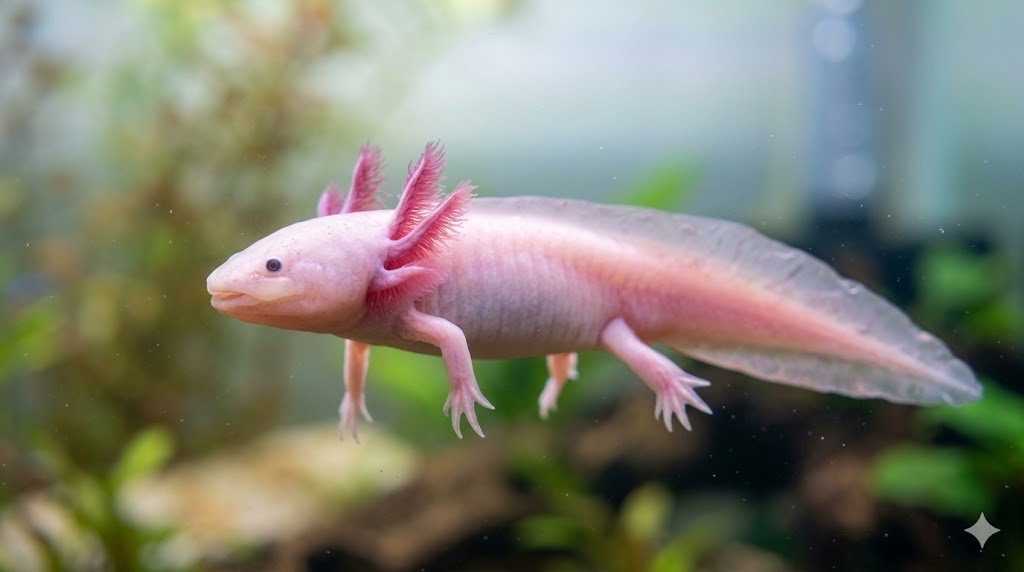
The Axolotl (Ambystoma mexicanum) is a permanently aquatic salamander from Mexico, famous for retaining juvenile features into adulthood (neoteny) and for an extraordinary regenerative capacity - they regrow lost limbs, heart tissue, and parts of the brain. The pink or "leucistic" form with feathery external gills has made the species an internet star. Critically endangered in the wild.
Natural History
Native to Lake Xochimilco near Mexico City - now nearly extinct in the wild due to habitat destruction and invasive species. Captive population is robust and entirely captive-bred.
Stays in larval form lifelong (unlike most salamanders that metamorphose to terrestrial adults). Lives fully aquatic with external gills.
Appearance
Adults 23-30 cm length, 200-400 g.
Colour morphs: wild (dark olive), leucistic (pink with dark eyes), albino (pink with red eyes), melanoid (solid dark), golden, copper, chimera (genetic mix).
External feathery gills, lidless eyes, long flat tail.
Temperament & Handling
Aquatic observation pet only. Never handle - their skin is fragile and absorbs oils and bacteria. Lift only briefly using a soft fine-mesh net if necessary.
Enclosure
Minimum: 75 L (20 gallon) for one adult; 110 L (30 gallon) preferred. Larger for pairs.
Provide:
- Strong filtration (gentle current - axolotls don't tolerate strong flow).
- Smooth substrate (large stones too big to swallow, or bare bottom) - small gravel causes fatal impaction.
- Hide caves.
- Live or silk plants.
- Tight-fitting lid (they jump).
Heating, Lighting, Humidity
- Water temperature: 14-18°C. Cool water essential. Many homes need a chiller in summer. Above 22°C is dangerous; above 24°C is often fatal.
- Lighting: dim. They have no eyelids and dislike bright light. No UVB needed.
- Aquatic - no humidity management.
Diet
Carnivore.
- Earthworms (gold standard).
- Salmon pellets designed for carnivorous fish.
- Frozen bloodworms (juveniles).
- Occasional shrimp, mealworms.
Avoid: feeder fish (parasite risk), beef heart (digestion issues), live aquarium fish (some carry diseases).
Juveniles eat daily; adults every 2-3 days.
Health & Lifespan
10-15 years.
Common concerns:
- Heat stress - most common cause of death. Keep water cold.
- Ammonia/nitrite poisoning from inadequate filtration.
- Impaction from substrate.
- Fungal infections.
- Chemical poisoning - sensitive to tap water chlorine and chloramine. Always use dechlorinator.
- Tank mate aggression - never house with fish; they nip gills.
Salts (Holtfreter's solution) baths and tubs of cool dechlorinated water help injured or sick axolotls.
Pros & Cons
Pros:
- Unique and fascinating.
- Regenerative capacity is genuinely remarkable.
- 10-15 year companion.
- Quiet observation pet.
Cons:
- Cool water requirement (chiller in many climates).
- Fragile - cannot be handled.
- Sensitive to water quality.
- Substrate impaction risk.
Best Suited For
- Aquarium enthusiasts.
- Cool-climate or air-conditioned homes.
- Older children and adults.
Not suited for tropical climates without chiller, beginner aquarium keepers, households with toddlers.
Axolotl - frequently asked questions
Why are they always pink?
Most pet axolotls are leucistic - a colour morph with white-pink skin and dark eyes. Wild axolotls are dark olive with spots.
Do they really regrow limbs?
Yes - limbs, gills, parts of the heart and brain. The species is heavily researched for regenerative medicine.
Are they salamanders?
Yes - Mexican salamanders that fail to metamorphose. With thyroid hormones they can be forced to metamorphose into terrestrial adults, but the process often kills them. Don't try.
How long do they live?
10-15 years on average.
Can I keep two together?
Adults can coexist; juveniles often nip each other's limbs. Best to keep adults singly or with careful supervision.
🧠 Test yourself: guess the amphibian
Three clues from our quiz bank, each about another of our amphibians. Can you name them?
Clue 1.This tiny fully aquatic amphibian spends its whole life underwater, surfacing only to gulp air, and is a popular tank companion for small fish.
It's the African Dwarf Frog - read the full profile →
Clue 2.Despite its name, this semi-aquatic creature has a slightly bumpy skin and bright belly that warns predators of its toxic secretions.
It's the Fire-Bellied Toad - read the full profile →
Clue 3.This plump, placid green tree frog from Australia has loose folds of skin and a famously calm, docile temperament for a pet amphibian.
It's the White's Tree Frog - read the full profile →