Fire-Bellied Toad
The Fire-Bellied Toad (Bombina species) is a small, semi-aquatic frog with brilliant orange or red belly markings used to warn predators of mild toxicity.
🗓️ Last reviewed: June 2026
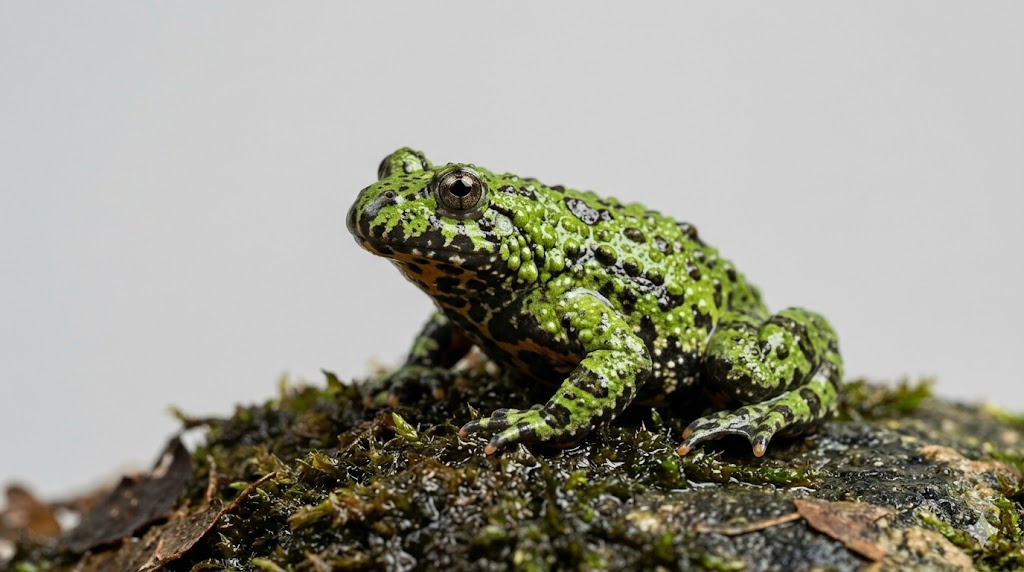
Overview
The Fire-Bellied Toad (Bombina species) is a small, semi-aquatic frog with brilliant orange or red belly markings used to warn predators of mild toxicity. Active during the day, social, and reasonably hardy - among the more visible pet frogs.
Natural History
Native to eastern Europe and Asia. Semi-aquatic - lives at the water's edge.
Appearance
Adults 4-5 cm length. Dark green or brown back; brilliant orange/red belly with black spots.
Temperament & Handling
Active and social. Do not handle - skin secretions are mildly toxic and can irritate human eyes or open wounds. Always wash hands thoroughly after any contact.
Enclosure
Minimum: 75 L (20 gallon) for a group of 3-5.
Half-and-half setup - water area and land area both substantial.
Heating, Lighting, Humidity
- Day: 22-26°C.
- Night: 18-22°C.
- Daytime light; no specific UVB requirements.
Diet
Insects: small crickets, fruit flies, bloodworms (frozen). Feed every 2-3 days.
Health & Lifespan
10-15 years.
Common concerns:
- Chytrid fungus.
- Bacterial infections.
- Skin sensitivities in keepers - wash hands.
Pros & Cons
Pros: active and diurnal, social, attractive, long-lived. Cons: mild skin toxicity, cannot be handled.
Fire-Bellied Toad - frequently asked questions
Are they toxic?
Mildly. The bright belly warns predators. Skin secretions can irritate human eyes and wounds - wash hands carefully.
Can I keep them with fish?
Generally no - they may eat small fish, and their skin toxins can stress fish.
How long do they live?
10-15 years.
Are they good for kids?
For observation, yes. Older children with adult supervision regarding skin contact.
🧠 Test yourself: guess the amphibian
Three clues from our quiz bank, each about another of our amphibians. Can you name them?
Clue 1.A hardy arboreal amphibian whose waxy skin secretions help it resist drying out, allowing it to bask more than most frogs.
It's the White's Tree Frog - read the full profile →
Clue 2.This stout amphibian of the genus Ceratophrys will try to swallow prey nearly its own size and may wait days for a meal.
It's the Pacman Frog (Horned Frog) - read the full profile →
Clue 3.This tiny fully aquatic amphibian spends its whole life underwater, surfacing only to gulp air, and is a popular tank companion for small fish.
It's the African Dwarf Frog - read the full profile →