African Grey Parrot
The African Grey is widely considered the most intelligent parrot - and one of the most intelligent animals on Earth.
🗓️ Last reviewed: June 2026
Overview
The African Grey is widely considered the most intelligent parrot - and one of the most intelligent animals on Earth. The famous research subject Alex (1976-2007) demonstrated abilities including identifying objects by colour, shape, and material; counting; understanding the concept of zero; and using over 100 English words contextually. Modern pet African Greys are deeply bonded, brilliant, and demanding companions whose 50-60 year lifespans require careful planning.
Natural History & Origin
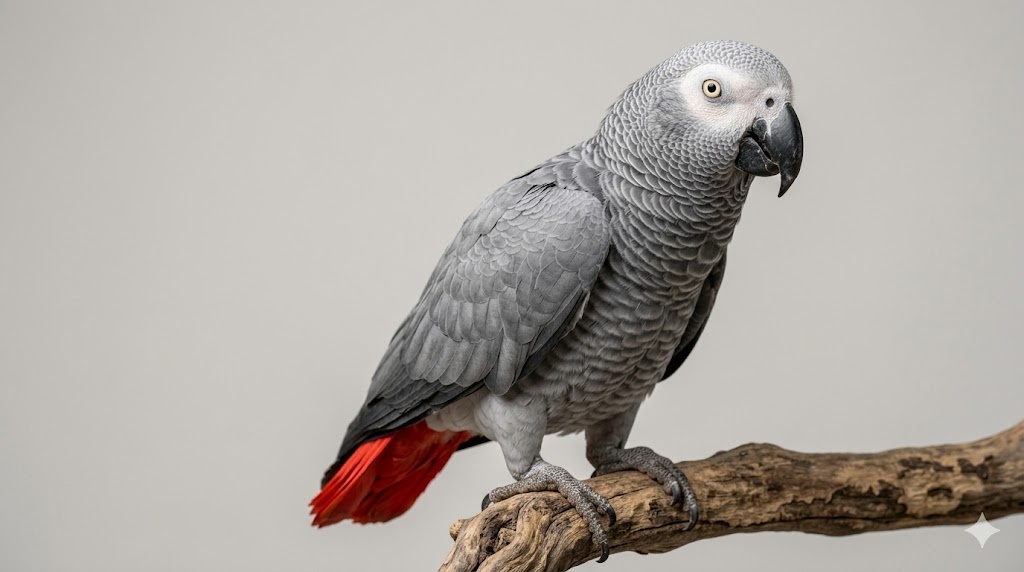
Two subspecies: Congo African Grey (Psittacus erithacus, larger, lighter grey) and Timneh African Grey (Psittacus timneh, smaller, darker, maroon tail). Both native to rainforests of central and western Africa. Wild populations are declining due to habitat loss and the illegal pet trade - both species are now CITES Appendix I protected.
Appearance
Adults weigh 400-650 g (Congo larger), length 30-35 cm.
Colours: grey body, brilliant red tail (Congo) or maroon tail (Timneh), pale eye rings, dark eyes.
Temperament & Noise
Intelligent, sensitive, deeply bonded. African Greys are not naturally cuddly - they are interactive companions rather than physical-contact lovers. Most bond strongly with one or two primary people and are reserved with others.
Vocal moderately - not as loud as Sun Conures or Cockatoos. Excellent talkers - many learn hundreds of words and use them contextually. Mimic household sounds with disturbing accuracy.
The breed is famously sensitive to environmental change, stress, and inconsistency. Feather plucking from stress is common.
Housing & Flight
Minimum cage: 90 × 60 × 1.2 m. Larger preferred.
Provide:
- Many varied perches.
- Rotating toys (heavy chewers - wood, leather, rope).
- Foraging puzzles (mental enrichment essential).
- Daily out-of-cage time - minimum 3 hours.
Diet
- High-quality pellets as base (60%).
- Fresh vegetables abundantly - emphasising calcium-rich greens (Greys are prone to calcium deficiency).
- Limited fruit.
- Nuts sparingly (treats).
- Sprouted seeds.
Avoid: avocado, chocolate, caffeine, alcohol, onion, salt.
Health & Lifespan
50-60 years; some reach 70+.
Common concerns:
- Calcium deficiency / hypocalcaemic seizures - uniquely common in African Greys; calcium-rich diet essential.
- Aspergillosis.
- PBFD (psittacine beak and feather disease).
- Polyomavirus.
- Feather plucking from stress, boredom, or illness.
- Atherosclerosis - fatty deposits in arteries.
Find an avian vet experienced with African Greys before acquisition.
Training & Enrichment
Brilliant. African Greys are capable of contextual language use, simple problem-solving, and complex training. Mental enrichment is as important as physical.
Pros & Cons
Pros:
- Most intelligent parrot.
- Talented talker.
- Strong bond to humans.
- Quieter than most large parrots.
Cons:
- 50-60 year commitment.
- Sensitive - feather plucking common.
- Calcium deficiency risk.
- Demands hours daily.
- Not cuddly.
- CITES protected - purchase from licensed breeders only.
Best Suited For
- Experienced parrot owners committing to lifetime ownership.
- Households able to dedicate hours daily.
- Adults; older teens.
- Stable environments - Greys hate change.
Not suited for first-time bird owners, working households without coverage, families with frequent change, anyone wanting a cuddly demonstrative bird.
African Grey Parrot - frequently asked questions
How smart are they really?
Studies with Alex demonstrated abilities equivalent to a 4-6 year old human in language and concept tasks. Pet African Greys vary but generally show remarkable problem-solving.
Congo vs Timneh - which is better?
Congo is larger, lighter, more famous. Timneh is smaller, slightly less reactive, often considered easier to live with. Both equally intelligent.
How long do they live?
50-60 years; longest documented well over 70.
Are they good with kids?
With older children, yes - but the lifetime commitment requires adult planning. The bird will likely outlive a young child's interest.
Do they need a friend?
Not necessarily another bird. Daily significant human interaction is the key requirement.
🧠 Test yourself: guess the bird
Three clues from our quiz bank, each about another of our birds. Can you name them?
Clue 1.This small finch, named for the Atlantic islands it hails from, was famously carried into coal mines to detect deadly gas.
It's the Canary - read the full profile →
Clue 2.Demanding loud companions, the scarlet and blue-and-gold kinds of this bird need very large cages and space.
It's the Macaw - read the full profile →
Clue 3.Wild flocks of this slender, long-tailed parrot are grey, but pet breeding created lutino, pied, and pearl color mutations.
It's the Cockatiel - read the full profile →
Social Needs
Bonded to humans. Daily hours of interaction non-negotiable. Some do well with another bird; many prefer humans only.