Budgerigar (Budgie)
The budgerigar - universally called the "budgie" or "parakeet" in American English - is the most popular pet bird in the world.
🗓️ Last reviewed: June 2026
Overview
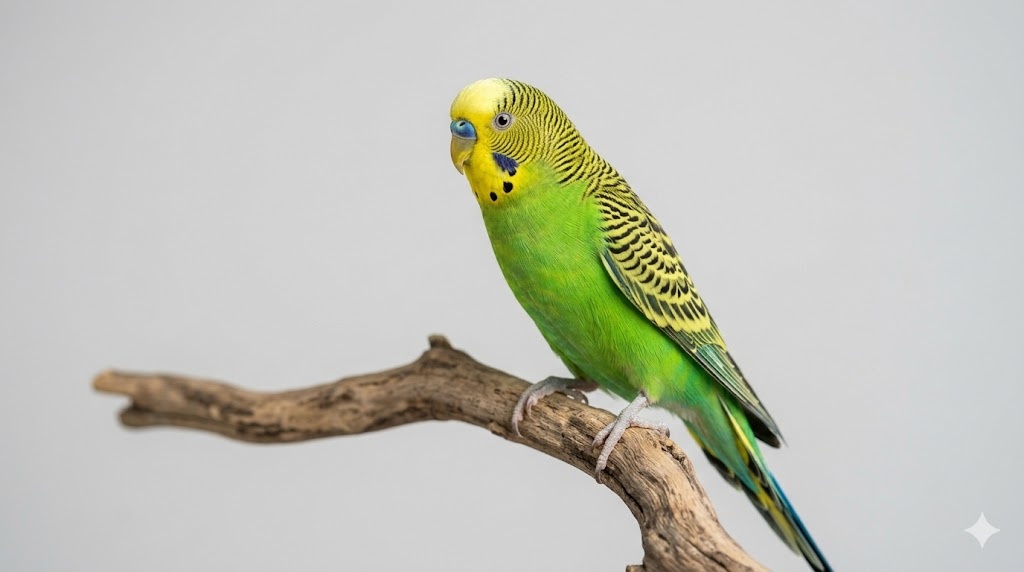
The budgerigar - universally called the "budgie" or "parakeet" in American English - is the most popular pet bird in the world. Small, colourful, intelligent, social, and inexpensive, the budgie is the entry-level pet parrot for millions of households. Behind the cheerful appearance is a clever little parrot capable of learning hundreds of words (the world record for budgie vocabulary is over 1,700 words).
Natural History & Origin
Wild budgies are native to inland Australia, where they live in flocks of hundreds to thousands across grasslands and scrub. Domestication began in Europe in the 1840s after the first imports from Australia.
Appearance
Adults weigh 25-40 g, length 18 cm including tail.
Colour varieties: thousands of recognised mutations including green (wild), blue, yellow, white, violet, cinnamon, opaline, pied, lutino, albino, English type (larger show budgies), and many more.
Temperament & Noise
Active, social, vocal. Budgies chatter happily throughout the day at a moderate volume - not nuisance-level for most apartments. Males learn to talk more readily than females.
Hand-raised budgies bond closely with people and can become loving companions. Pet shop budgies (typically not hand-raised) are often shy and prefer their own kind to humans.
Housing & Flight
Minimum cage: 60 × 40 × 50 cm for one bird. Flight cage strongly preferred - 90+ cm wide for daily exercise. Budgies are highly active and need to fly.
Provide:
- Multiple perches of varied diameters (natural wood preferred).
- Toys - bells, mirrors (with caution - can cause obsessive bonding), foraging puzzles.
- Cuttlebone for calcium.
- Daily out-of-cage flight time in a bird-safe room (windows covered, ceiling fans off).
Diet
- Quality pellets as base (50-70% of diet).
- Seed mix as supplement (not as base - all-seed diet causes obesity and nutritional deficiency).
- Daily fresh vegetables - leafy greens, broccoli, carrot, herbs.
- Limited fruit - small piece 2-3 times weekly.
- Cuttlebone for calcium.
Avoid: avocado (toxic to all birds), chocolate, caffeine, alcohol, onion, salt.
Health & Lifespan
7-10 years (some live 12-15).
Common concerns:
- Fatty liver disease and obesity from seed-only diets.
- Tumours - common, especially in older budgies.
- Egg binding in females.
- Mites and lice.
- Respiratory infections - sensitive to fumes (Teflon, aerosols, smoking).
- Psittacosis (bacterial).
- Goitre from iodine-deficient diets.
Find an avian vet experienced with parrots before acquisition.
Training & Enrichment
Intelligent and trainable. Many learn step-up, recall, target training, and tricks. Talking ability varies - most males learn at least a few words.
Pros & Cons
Pros:
- Small, affordable to buy and house.
- Sociable and trainable.
- Can talk and whistle.
- Many colour varieties.
- Generally healthy.
Cons:
- 7-10 year commitment.
- Need pair or significant interaction.
- Daily flight time required.
- Susceptible to airborne toxins (Teflon, aerosols).
- Pet shop budgies often poorly socialised.
Best Suited For
- First-time bird owners.
- Apartment dwellers.
- Families with older children.
- Households able to keep a pair.
Not suited for households with non-stick cookware in active use (Teflon fumes can kill budgies quickly), smokers in the same room, or homes too cold or drafty.
Budgerigar (Budgie) - frequently asked questions
Can budgies really talk?
Many males can. The world record is over 1,700 words. Females rarely talk but can mimic sounds.
Should I get one or two?
Two is easier on the bird. One is fine only with several hours of daily handling and interaction.
How long do they live?
7-10 years on average; up to 15 with excellent care.
Are they good for kids?
Older children (8+) with parental supervision. Bites are mild but startle young kids; budgies are fragile.
Are they noisy?
Moderately. Constant cheerful chatter; not loud or aggressive sounds.
🧠 Test yourself: guess the bird
Three clues from our quiz bank, each about another of our birds. Can you name them?
Clue 1.Bred for centuries into 'song', 'color', and 'type' varieties, this seed-eater can be yellow, orange, white, or even reddish.
It's the Canary - read the full profile →
Clue 2.Hailing from the rainforests of central Africa, this ash-colored parrot can mimic human speech and household sounds with uncanny accuracy.
It's the African Grey Parrot - read the full profile →
Clue 3.Demanding loud companions, the scarlet and blue-and-gold kinds of this bird need very large cages and space.
It's the Macaw - read the full profile →
Social Needs
Highly social. Keep at least in pairs unless willing to spend hours daily as the budgie's flock substitute. Two budgies are usually happier than one.
Pairs of unrelated budgies bond easily. Same-sex pairs typically work; opposite-sex pairs will breed unless eggs are removed.