Canary
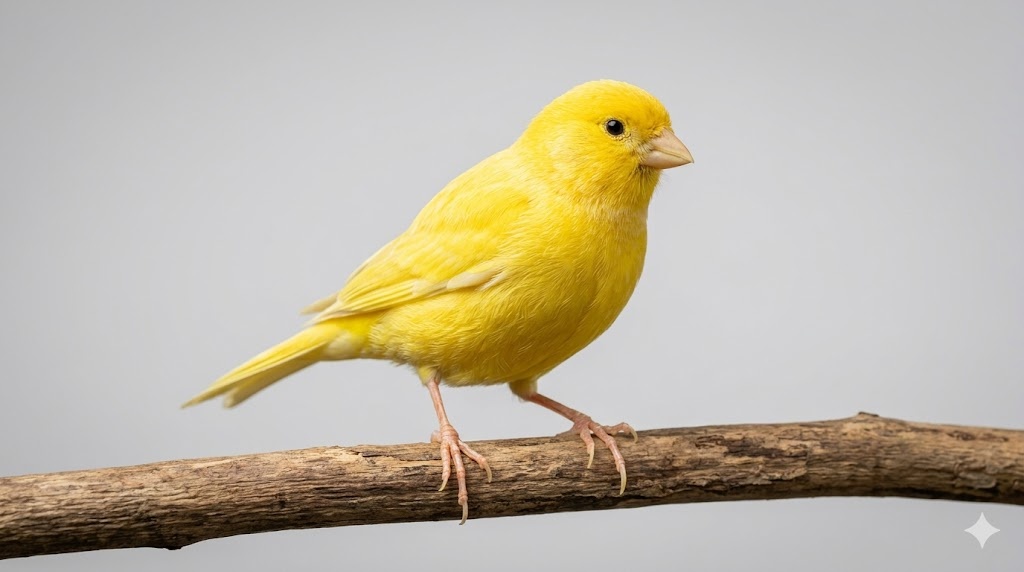
The canary (Serinus canaria domestica) is one of the oldest pet birds in the West - domesticated for over 500 years for its beautiful song.
🗓️ Last reviewed: June 2026
Overview
The canary (Serinus canaria domestica) is one of the oldest pet birds in the West - domesticated for over 500 years for its beautiful song. Unlike parrots, canaries are finches and prefer being observed rather than handled. Males sing for territory and mate attraction; their song is the breed's main appeal.
Natural History & Origin
Wild canaries are native to the Canary Islands, Azores, and Madeira (the islands named the bird, not the bird the islands). Spanish sailors brought them to Europe in the 1400s. Selective breeding produced song canaries, colour canaries, and type canaries (specific body shapes).
Appearance
Adults weigh 15-25 g, length 12-13 cm.
Three breeding categories:
- Song canaries: Roller, Waterslager, Spanish Timbrado - bred for specific song.
- Colour canaries: red, yellow, white, variegated, mosaic.
- Type canaries: Crested, Frilled, Yorkshire (large), Gloucester (small).
Many colour mutations and varieties.
Temperament & Noise
Solitary, song-focused, observation pet. Canaries are not typically hand-tame and prefer being observed rather than handled. Males sing - beautiful melodic song. Females rarely sing.
Volume is moderate - suitable for most apartments.
Housing
Minimum cage: 60 × 40 × 50 cm. Wide is more important than tall - canaries fly horizontally.
Provide:
- Multiple perches at varied heights.
- Cuttlebone, mineral block.
- Bath dish or fountain (canaries love bathing).
- Quiet location - male song develops best in quiet environments.
Males kept for song should be housed individually - paired males or those with female companions sing less.
Diet
- Quality canary mix - small seeds.
- Pellets as supplement.
- Fresh greens - dandelion, kale, broccoli, spinach (small amounts).
- Egg food during breeding/moulting.
- Cuttlebone and grit.
Health & Lifespan
8-12 years.
Common concerns:
- Mites - feather and air-sac.
- Respiratory infections.
- Egg binding in females.
- Diabetes - uncommon but documented.
Pros & Cons
Pros:
- Beautiful song (males).
- Quiet enough for apartments.
- Inexpensive to keep.
- No bonding pressure - observation pet.
- 8-12 year companion.
Cons:
- Not for handling/cuddling.
- Males kept singly to preserve song.
- Sensitive to drafts and temperature.
Best Suited For
- People who want a song bird without parrot demands.
- Apartment dwellers.
- Observation pet keepers.
Not suited for anyone wanting hand-tame interactive bird.
Canary - frequently asked questions
Do all canaries sing?
Males sing; females rarely sing (mostly call notes). Buy a guaranteed singing male if song is the goal.
Can canaries be tamed?
Limited. They are not parrots - most prefer not to be handled. Some accept gentle finger presence.
How long do they live?
8-12 years on average.
Can canaries live with other birds?
Other canaries or finches in mixed aviaries can work. Don't mix with parrots - different species' communication styles cause stress.
Are they good for kids?
For observation, yes. For handling, no.
🧠 Test yourself: guess the bird
Three clues from our quiz bank, each about another of our birds. Can you name them?
Clue 1.This noisy white or dark parrot family is defined by a showy, movable head crest and a powerful curved bill.
It's the Cockatoo - read the full profile →
Clue 2.Selective breeding turned this little parrot into blues, whites, and a larger 'English' show type, though wild ones are always green.
It's the Budgerigar (Budgie) - read the full profile →
Clue 3.Wild flocks of this slender, long-tailed parrot are grey, but pet breeding created lutino, pied, and pearl color mutations.
It's the Cockatiel - read the full profile →
Social Needs
Variable. Males sing best housed alone. Females do well in pairs or groups. Mixed-sex housing leads to breeding.