Cockatiel
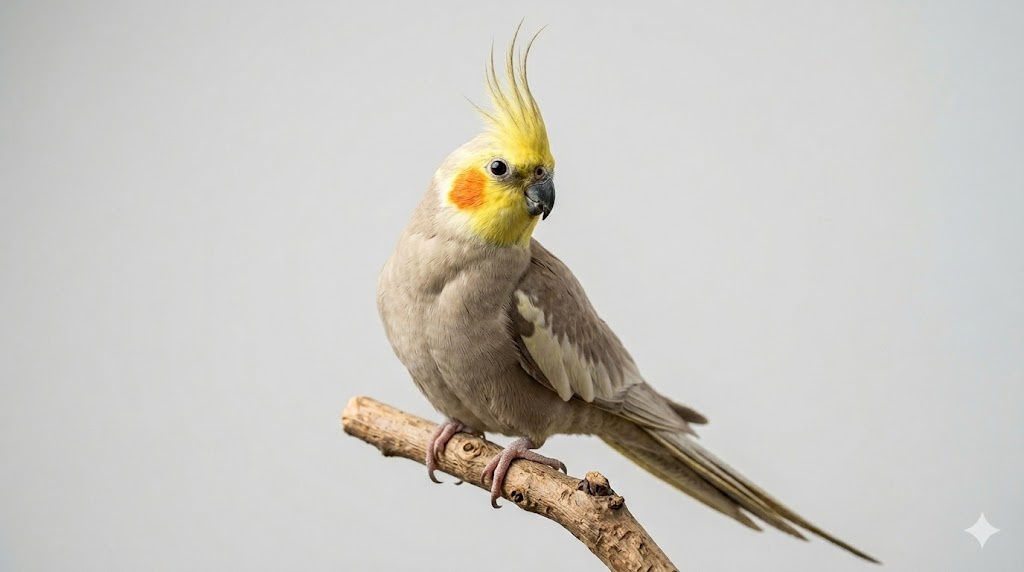
The cockatiel is a small Australian cockatoo with a distinctive crest, orange cheek patches, and one of the most affectionate temperaments in any pet bird.
🗓️ Last reviewed: June 2026
Overview
The cockatiel is a small Australian cockatoo with a distinctive crest, orange cheek patches, and one of the most affectionate temperaments in any pet bird. Cockatiels are typically gentler than budgies, longer-lived, and famously whistle-trainable - many males learn tunes and become household entertainers.
Natural History & Origin
Wild cockatiels are native to inland Australia, living in nomadic flocks across arid regions. They are members of the cockatoo family despite being smaller. Domestication began in Europe in the 1800s.
Appearance
Adults weigh 80-110 g, length 30-33 cm.
Colour varieties: grey (wild), pied, lutino, cinnamon, pearl, whiteface, albino, and many combinations.
The signature crest indicates mood - fully raised when alert/surprised, flattened when angry/frightened, neutral when relaxed.
Temperament & Noise
Gentle, affectionate, intelligent. Cockatiels bond closely with humans and tolerate handling well. Males are generally more outgoing and vocal; females are quieter and more demure.
Vocal but not loud - soft chirps, whistles, and contact calls. Males learn melodies, sounds, and sometimes short words. Females rarely talk.
Cockatiels are sensitive - sudden loud noises and changes upset them. Many panic at night ("night frights") and benefit from a small night light.
Housing & Flight
Minimum cage: 75 × 50 × 75 cm for one bird. Flight cage strongly preferred.
Provide:
- Natural-wood perches of varied diameter.
- Toys - bells, foraging puzzles, shredding toys.
- Cuttlebone.
- Daily out-of-cage flight time.
Night light for night fright prevention.
Diet
- Quality pellets as base (60% of diet).
- Seed mix in moderation (cockatiels gain weight on seed-heavy diets).
- Daily fresh vegetables - leafy greens, broccoli, herbs, carrot.
- Limited fruit.
- Cuttlebone or mineral block.
Avoid: avocado, chocolate, caffeine, salt, onion.
Health & Lifespan
15-20 years (some 25).
Common concerns:
- Fatty liver disease from seed-heavy diets.
- Chronic egg laying in females (cause of calcium depletion and reproductive disease).
- Respiratory issues - sensitive to Teflon, aerosols, smoke.
- PBFD (psittacine beak and feather disease).
- Conjunctivitis.
- Heavy metal toxicity from chewing painted or galvanised metal.
Training & Enrichment
Highly trainable - step-up, recall, harness training, tricks, whistled tunes. Many males learn classic songs and theme tunes.
Pros & Cons
Pros:
- Gentle, affectionate temperament.
- Trainable and whistle-musical.
- Manageable size.
- 15-20 year companion.
- Quieter than larger parrots.
Cons:
- Need significant interaction or pair.
- Sensitive to night frights, household toxins.
- Chronic egg laying in females.
- Powder dust (all cockatoos) - can trigger allergies and asthma.
Best Suited For
- Families with older children.
- Apartment dwellers (within reason on dust).
- First-time parrot owners.
- People who appreciate whistling and music.
Not suited for smokers, households with active Teflon use, or allergy-sensitive owners.
Cockatiel - frequently asked questions
Can cockatiels talk?
Some males learn short words and phrases. Most are better at whistled tunes than speech.
Are they good with kids?
Yes - gentle and tolerant of older children with supervision.
Do they need a friend?
Either a pair, or significant daily human attention. Cockatiels are flock animals.
How long do they live?
15-20 years; up to 25 with excellent care.
What is "powder"?
All cockatoos (including cockatiels) produce a fine white powder from special feathers. It can trigger asthma in sensitive people.
🧠 Test yourself: guess the bird
Three clues from our quiz bank, each about another of our birds. Can you name them?
Clue 1.Sold in bright peach-faced and masked varieties, this little hookbill can become nippy without daily attention.
It's the Lovebird - read the full profile →
Clue 2.This noisy white or dark parrot family is defined by a showy, movable head crest and a powerful curved bill.
It's the Cockatoo - read the full profile →
Clue 3.Demanding loud companions, the scarlet and blue-and-gold kinds of this bird need very large cages and space.
It's the Macaw - read the full profile →
Social Needs
Social. Either keep a pair or commit to daily interaction with a single bird. Single cockatiels do well with sufficient human attention.