Lovebird
The lovebird is a small, brilliantly coloured African parrot named for its strong pair bonds.
🗓️ Last reviewed: June 2026
Overview
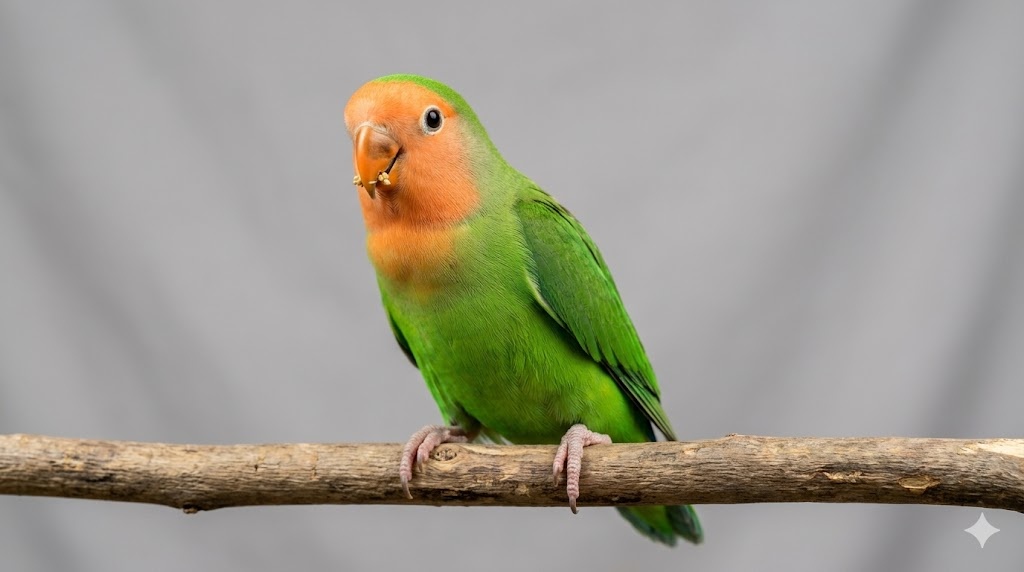
The lovebird is a small, brilliantly coloured African parrot named for its strong pair bonds. Despite the romantic name and small size, lovebirds are spirited, sometimes nippy, vocal little birds that pack a big parrot personality into a 50 g body. Several species exist; the Peach-faced Lovebird is most common.
Natural History & Origin
Nine species of lovebird are native to Africa and Madagascar. They live in monogamous pairs within flocks, often nesting in tree cavities or abandoned structures.
Common pet species:
- Peach-faced (Rosy-faced) Lovebird - most popular.
- Fischer's Lovebird.
- Masked Lovebird.
- Black-cheeked Lovebird (rare).
Appearance
Adults weigh 50-60 g, length 13-17 cm.
Wild colours: green with various face/head colours by species. Mutations include lutino, cinnamon, blue, pied, and many more.
Temperament & Noise
Bold, intelligent, sometimes aggressive for the size. Lovebirds are demanding of attention from their bonded humans and can be nippy with strangers and other birds.
Vocal - high-pitched chirping and screeching. Loud for the size and persistent.
The myth that lovebirds must be kept in pairs is partial; a single hand-raised lovebird bonded to a human can do well, but pairs of unhand-raised lovebirds typically reject human interaction.
Housing & Flight
Minimum cage: 60 × 50 × 60 cm for one bird; significantly larger for pairs.
Provide:
- Multiple perches.
- Many toys (lovebirds are heavy chewers - provide untreated wood, shred toys, foraging puzzles).
- Daily out-of-cage flight time.
Diet
- Pellets (60% of diet).
- Seed mix as supplement.
- Fresh vegetables daily.
- Limited fruit.
Health & Lifespan
10-15 years.
Common concerns:
- Polyomavirus.
- Psittacine beak and feather disease (PBFD).
- Egg binding in females.
- Self-mutilation / feather plucking from stress or boredom.
- Aspergillosis.
Pros & Cons
Pros:
- Brilliant colours.
- Strong personality.
- Affectionate when bonded.
- Long-lived for size.
Cons:
- Loud and persistent.
- Nippy.
- Single vs pair decision affects bonding outcomes.
- Aggressive with other birds.
Best Suited For
- Owners willing to commit significant daily handling (single) or accept that birds bond to each other (pair).
- Households tolerant of noise.
Not suited for apartment dwellers in shared buildings or owners wanting calm quiet pets.
Lovebird - frequently asked questions
Do they have to be in pairs?
Not strictly. Hand-raised singles bonded to humans can thrive. Pairs without human bonding work well together but ignore people.
Are they good with kids?
With older children, in supervised handling. Bites are sharp.
How long do they live?
10-15 years.
Are they aggressive?
Can be - to other birds and sometimes to unfamiliar people. Bonded pair can be intolerant of intruders.
🧠 Test yourself: guess the bird
Three clues from our quiz bank, each about another of our birds. Can you name them?
Clue 1.Playful and clownish, these long-tailed Central and South American parrots love to cuddle and may sleep on their backs.
It's the Conure - read the full profile →
Clue 2.This tiny aviary bird has a short, conical, cone-shaped bill perfectly built for cracking small seeds.
It's the Finch (Zebra & Society) - read the full profile →
Clue 3.Hardy enough to form feral city colonies in cold climates, this small talkative parrot constructs apartment-like twig nests.
It's the Quaker (Monk) Parakeet - read the full profile →
Social Needs
Pairs do well together but often ignore humans. Single hand-raised lovebirds bond to humans intensely.
Choose: hand-raised single (for human interaction) or pair (for the birds' welfare without human bonds).