Abyssinian
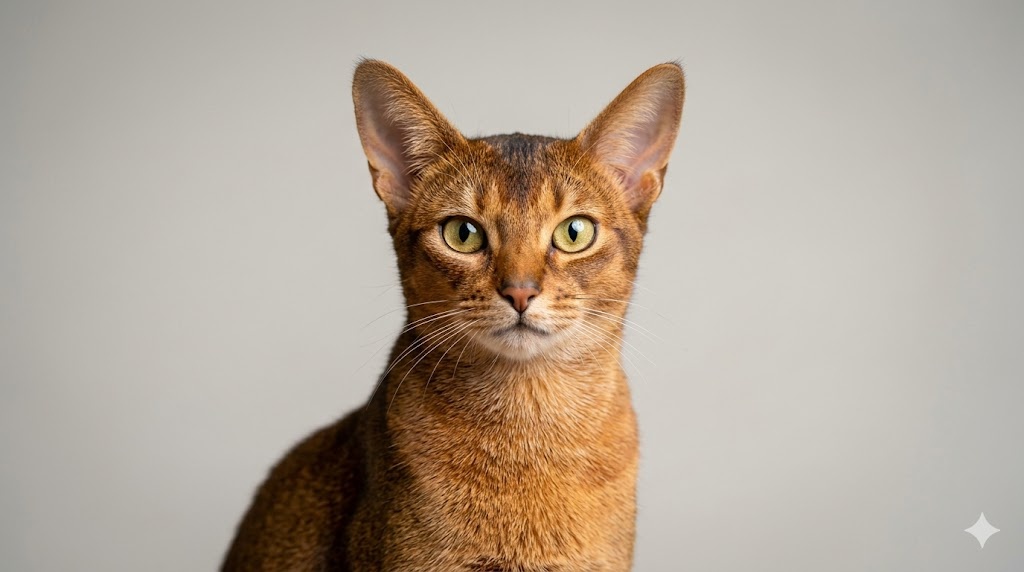
The Abyssinian is a medium-sized, sleek, ticked-coated cat with one of the most distinctive appearances of any breed - a wild, lion-coloured look reminiscent of ancient Egyptian temple cats.
🗓️ Last reviewed: June 2026
Overview
The Abyssinian is a medium-sized, sleek, ticked-coated cat with one of the most distinctive appearances of any breed - a wild, lion-coloured look reminiscent of ancient Egyptian temple cats. The "Aby" is also one of the most active and intelligent breeds - playful, curious, and famously unable to sit still. Combined with a strong bond to family, the breed produces an interactive companion that some owners describe as "more puppy than cat."
History & Origins
The Abyssinian's origin is debated. The breed was named after Abyssinia (modern Ethiopia) when one of the first known dogs reached Britain from there in the late 1860s. However, genetic studies suggest the breed's ancestors lived along the Indian Ocean coast or in Southeast Asia. Ancient Egyptian cat statues bear striking resemblance to the Abyssinian, suggesting deep antiquity.
The first British Abyssinians were nearly destroyed in World War II - only a dozen breeding cats survived in the UK by 1945. The breed was reconstructed with imports from North America and continental Europe. The CFA recognised the breed in 1907.
Appearance
Medium-sized, slender, athletic. Adults weigh 3-5 kg (6-10 lb).
Key features:
- Coat: short, dense, ticked - each hair has 2-3 alternating dark and light bands, producing a shimmering appearance.
- Colour: ruddy (warm reddish-brown, most iconic), red (sorrel), blue, fawn, and silver variations.
- Head: modified wedge with gentle contours.
- Eyes: large, almond-shaped, gold, green, or hazel.
- Ears: large, pointed, set wide.
- Body: lithe, muscular, medium-boned.
- Tail: long, tapering.
Temperament & Character
Active, curious, affectionate, and intelligent. The Abyssinian is among the most energetic cat breeds - climbing constantly, investigating every change in the household, and demanding involvement in every activity.
The breed bonds strongly with family without being a lap cat. Abyssinians prefer to be near you, watching what you're doing, rather than sitting still. They are quiet - soft voices, infrequent meowing - unlike the equally active Siamese.
Most Abyssinians are friendly with strangers, other cats, and dogs. The breed tolerates multi-pet households well.
Care
Coat & Grooming
The ticked coat is very low-maintenance: weekly rub-down with a rubber mitt. Sheds minimally.
Clean ears monthly. Trim claws every 2 weeks. Brush teeth several times weekly.
Exercise & Enrichment
High. Provide tall cat trees, climbing structures, interactive wand toys, puzzle feeders, and daily play sessions. Many Abyssinians enjoy harness walks and trick training.
A bored Abyssinian climbs everything, opens doors, and develops obsessive behaviours.
Health & Lifespan
Average lifespan is 12-15 years.
Common concerns:
- Pyruvate kinase (PK) deficiency - DNA test available.
- Progressive retinal atrophy (rdAc) - DNA test available.
- Renal amyloidosis - relatively elevated rates.
- Patellar luxation.
- Hypertrophic cardiomyopathy.
- Dental disease.
Feeding & Nutrition
60-80 g per day. The breed maintains lean condition naturally.
Living With
Litter, multi-cat
Standard provisions. Excellent with other cats.
Indoor vs outdoor
Indoor-only or supervised outdoor. The breed's curiosity and climbing make secure enclosures essential.
Pros & Cons
Pros
- Active, intelligent, interactive.
- Very low grooming.
- Long-lived.
- Striking appearance.
- Good with other pets.
Cons
- Enormous exercise and enrichment needs.
- Not a lap cat.
- Cannot tolerate being alone for long.
- PK deficiency and PRA risks; choose tested breeder.
Best Suited For
- Active homes wanting an interactive cat.
- Multi-pet households.
- Owners willing to provide significant enrichment.
Not suited for sedentary owners or those wanting a calm lap cat.
Abyssinian - frequently asked questions
Why is the coat called "ticked"?
Each hair has alternating bands of light and dark colour - a single ticked hair contains 2-3 different shades. This produces a warm, shimmering appearance without distinct stripes or spots.
Are they good with kids?
With active older children, yes. The breed's energy can overwhelm toddlers.
Do they shed?
Minimally. The short ticked coat is among the easiest to maintain.
Abyssinian vs Somali - what's the difference?
Same breed, different coat length. Somali is the longhaired Abyssinian. Personality and structure are identical.
Are they hypoallergenic?
No - they produce Fel d 1 normally. Low shedding helps some allergy sufferers.
🧠 Test yourself: guess the cat
Three clues from our quiz bank, each about another of our cats. Can you name them?
Clue 1.Nicknamed the 'swimming cat,' this Turkish breed has a water-resistant coat and color restricted to its head and tail.
It's the Turkish Van - read the full profile →
Clue 2.Named after Turkey's capital, this fine-boned longhair has a shimmering coat with no woolly undercoat, giving it a graceful look.
It's the Turkish Angora - read the full profile →
Clue 3.This semi-longhair carries the same agouti ticking as the Abyssinian, with each hair banded in multiple colors.
It's the Somali - read the full profile →
💛 Adoptable Abyssinians near you
Real cats of this breed (and close mixes) waiting in shelters and rescues right now, live from Petfinder. We have no affiliation and earn nothing - if someone catches your eye, the link goes straight to their shelter. New to adopting? Start with our adoption guide.
Widget not loading (some ad-blockers hide it)? Search directly on petfinder.com.