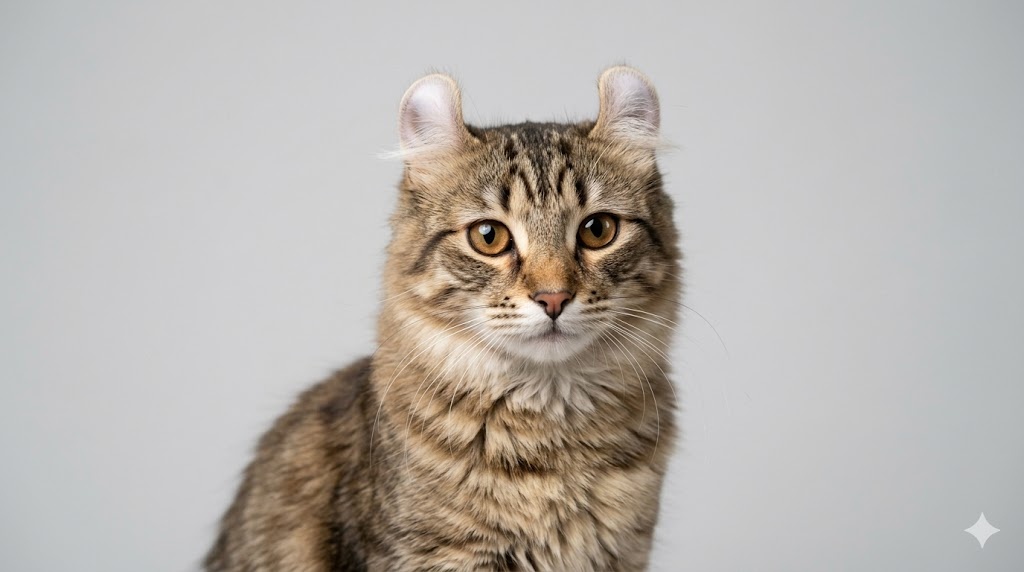
The American Curl is a medium-sized cat famous for its uniquely backward-curling ears.
Coming soon. Subscribe to the newsletter to get notified when this video drops.
The American Curl is a medium-sized cat famous for its uniquely backward-curling ears. Unlike the Scottish Fold mutation, the American Curl gene affects only cartilage in the ears with no associated skeletal or systemic disease β making the breed a welfare-friendly alternative for owners who want unusual ears.
In 1981 a stray longhaired black cat with curled-back ears appeared at the home of Joe and Grace Ruga in Lakewood, California. The cat β Shulamith β became the foundation of the breed. Her kittens were curl-eared too, identifying a dominant gene. CFA recognition came in 1993.
Kittens are born with straight ears; the curl develops over 3β7 days, then settles into a permanent shape by 4 months.
Medium-sized, balanced. Adults weigh 3β5 kg (7β11 lb).
Friendly, playful, intelligent. The breed bonds strongly with family, is excellent with children, and remains kitten-like into old age. Many Curls are described as "Peter Pan cats" for their lasting playfulness.
Shorthair: weekly brushing. Longhair: 2β3 times weekly.
Clean ears weekly β the curl traps wax and debris. Gentle handling β the cartilage is firm but can be damaged by rough manipulation.
Trim claws every 2 weeks. Brush teeth several times weekly.
12β16 years.
The breed is generally healthy. No major breed-specific genetic diseases β unlike the Scottish Fold mutation, the American Curl gene affects only ear cartilage.
Pros: unique appearance, healthy, family-friendly, long-lasting playfulness. Cons: ears need regular cleaning; cartilage can be damaged by rough handling.
American Curl vs Scottish Fold β which is healthier? American Curl. The Curl gene affects only ear cartilage; the Fold gene causes systemic skeletal disease. American Curl is the welfare-friendly choice.
Why do their ears curl? A dominant genetic mutation affects the cartilage in the ear. Kittens are born straight-eared; the curl develops in the first week.
Are they good with kids? Excellent.
Are they hypoallergenic? No.
The American Curl β The Cat With Backwards Ears
10β11 minutes
American Curl with distinctive backwards-curled ears, alert expression, bright eyes. Caption: "EARS LIKE NO OTHER".
Close-up portrait of an American Curl cat showing its signature ears curling backwards in a graceful arc, alert expression, bright round eyes, medium-length silky coat, soft warm cream background, even gentle lighting, 85mm lens at f/2.2, professional pet portrait photography, distinctive ear shape clearly visible, sweet expression.
The American Curl is the cat with ears that curl backwards β a 1981 California spontaneous mutation now stabilised into a healthy distinctive breed. Today we cover the origin story, the playful temperament, the special ear care, breed health, and whether the Curl is right for your home.
β± Timestamps 00:00 Intro Hook 01:00 Origin: Shulamith, the California Stray 02:30 Temperament: People-Pampered Kitten Forever 04:00 Care: Coat, Ears, Engagement 05:30 Health: Robust Breed, Ear Care 07:00 Training: Cooperative 08:30 3 Biggest Mistakes New Curl Owners Make 10:00 Is The American Curl Right For You? 11:00 Outro
π Subscribe for a new breed each week.
"Most cats have forward-facing pointed ears. The American Curl does not. Its ears curl gracefully backwards from base to tip β a unique spontaneous mutation that became a healthy, friendly breed in just a few decades. Today: the California origin, the temperament, the ear care, breed health, training, and whether the American Curl is your cat."
"In June 1981, a stray black long-haired female with strangely curled ears appeared at the home of Joe and Grace Ruga in Lakewood, California. They named her Shulamith. Six months later she had a litter of four kittens, two of which inherited the curled ears. Geneticists confirmed a dominant single-gene mutation. The breed was developed quickly: TICA accepted the American Curl in 1986, CFA in 1993. Every American Curl alive today traces back to Shulamith. The breed has been carefully outcrossed to non-pedigree domestic cats throughout its development to maintain genetic diversity, which is one reason the breed enjoys excellent general health. Both shorthair and longhair varieties exist. Kittens are born with straight ears that begin to curl within 48 hours, taking final shape by four months."
"American Curls are playful, affectionate, kitten-like for life, and intensely people-focused. They follow their humans, sit on shoulders, greet visitors, and demand involvement in family activities. They are not lap cats but participation cats. Voice is moderate. Soft chirps and trills. Bonding is family-wide and warm. Energy is moderate to high. The breed plays into old age. Intelligence is good. Curls learn names, tricks, and routines easily. With other animals β excellent. Friendly, non-aggressive, social. Children adore them and the cats reciprocate."
"Shorthair: weekly rubber mitt. Longhair: twice-weekly comb. Ears require gentle handling. The cartilage is firm but should never be bent or pulled. Clean carefully with a damp cotton pad β never insert anything into the ear canal. Nails fortnightly. Teeth daily. Enrichment: cat tree, daily play, puzzle feeders. Indoor only. Litter standard."
"Lifespan twelve to sixteen years. The American Curl is one of the healthiest pedigreed cats. Careful outcrossing maintains genetic diversity. No major breed-specific diseases. Standard feline concerns apply: dental disease, kidney disease in old age, hyperthyroidism. Ear care is the breed's unique requirement. Always handle ears gently. Some Curls produce slightly more ear wax than average; weekly check and gentle wipe. Pet insurance sensible but the breed does not carry the heavy genetic burden of more extreme breeds."
"Curls are cooperative learners. Food-motivated and engaged. Targets: name, recall, sit, fetch, harness wear, tricks. Leash training works. Litter solved by the breeder. Scratching: tall sisal posts. Handling tolerance is excellent."
"Mistake one: rough ear handling. The ears can be damaged by pulling or bending. How to avoid: gentle handling always. Teach children never to pull ears. Mistake two: leaving the Curl alone all day. Engagement-focused breed. How to avoid: pair with another social pet. Mistake three: assuming all kittens will have curled ears. Roughly half of kittens from a Curl-to-non-Curl mating inherit the gene. How to avoid: buy from a breeder who clearly identifies which kittens have curled ears."
"Checklist: You want a playful, affectionate, kitten-for-life cat. You can handle ears gently and teach others to. You provide engagement or a companion. You want a unique-looking healthy breed. You want a family-friendly cat. Tick four β the Curl is a wonderful choice. If you want a calm dignified cat, choose a Russian Blue."
"That is the American Curl β the California stray that became a breed. Friendly. Playful. Healthy. Unforgettable ears. Next breed? Comment below. Subscribe and the bell. Next week: the Egyptian Mau β the spotted speed champion of the cat world." (End screen: subscribe button, 'watch next: Egyptian Mau' thumbnail, channel logo)