American Shorthair
The American Shorthair is the working cat of the New World - a sturdy, easygoing, naturally healthy breed descended from the cats that arrived on European ships and made their way across colonial America as rodent controllers.
🗓️ Last reviewed: June 2026
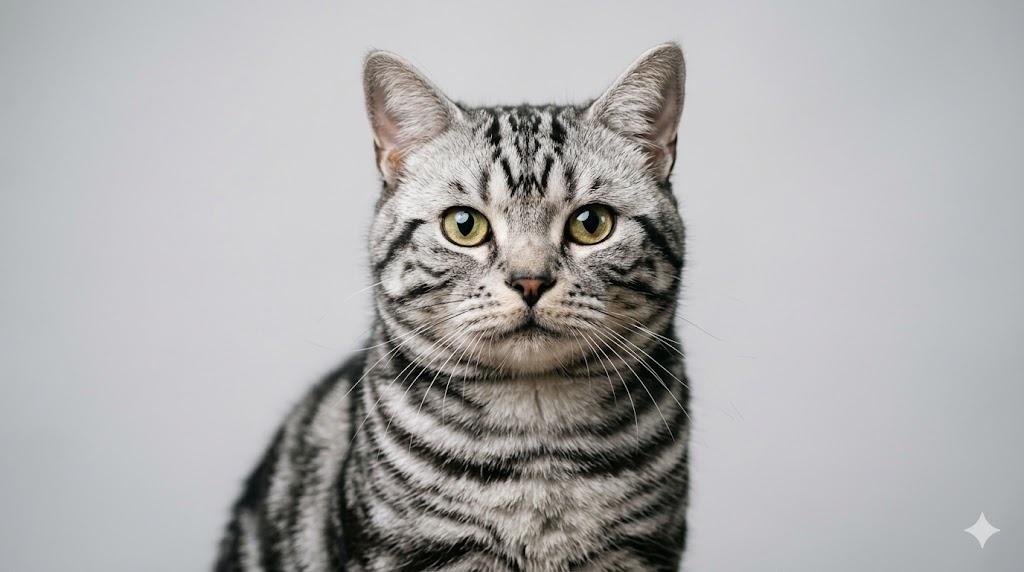
Overview
The American Shorthair is the working cat of the New World - a sturdy, easygoing, naturally healthy breed descended from the cats that arrived on European ships and made their way across colonial America as rodent controllers. The breed is the cat-fancy version of "the regular cat" - moderate in every direction, healthy, friendly, and the original American family cat. Often confused with non-pedigreed "domestic shorthair" cats, the American Shorthair is a specific pedigreed breed with consistent type and well-documented ancestry.
History & Origins
Cats arrived in North America on European trading ships from the 1600s onward, valued for keeping rats off cargo and out of food stores. These working cats spread across the colonies and developed into a hardy, weatherproof population.
In the early 1900s American breeders began selectively breeding the best examples of these "working farm cats" to establish a pedigreed breed. The breed was originally called the "Domestic Shorthair" but renamed "American Shorthair" in 1966 to distinguish it from mixed-breed pet cats. The CFA had recognised the breed since 1906.
The American Shorthair was the foundation for several modern breeds (American Wirehair, American Curl, Bengal) and remains one of the most popular pedigreed cats in North America.
Appearance
Medium-large, balanced, naturally muscular. Males weigh 5-7 kg (11-15 lb); females 3.5-5 kg.
Key features:
- Coat: short, dense, hard textured, with a slight loft. Weather-resistant.
- Colour: over 80 recognised colours and patterns. Silver tabby is iconic.
- Head: large, full-cheeked, with a slight rounded muzzle.
- Eyes: large, round, set wide.
- Body: strong, well-muscled, balanced - not as cobby as a British Shorthair, not as fine as a Siamese.
- Tail: medium-thick, tapering slightly.
Temperament & Character
Easygoing, friendly, and adaptable. The American Shorthair is the textbook "good with everything" cat - comfortable with children, tolerant of dogs, agreeable with other cats. The breed is intelligent, moderately playful as adults, and famously low-maintenance behaviourally.
Most are independent. They enjoy company but don't demand it; they tolerate alone-time well, making them suitable for working households.
Care
Coat & Grooming
The short dense coat is low-maintenance: brush 1-2 times weekly. Sheds moderately, more during seasonal coat changes.
Bathe every 2-3 months. Clean ears monthly. Trim claws every 2 weeks. Brush teeth several times weekly.
Exercise & Enrichment
Moderate playfulness. Provide interactive wand toys, cat trees, puzzle feeders. The breed has retained working-cat hunting instincts; many enjoy mousing and play that mimics it.
Health & Lifespan
Average lifespan is 15-20 years - among the longest of any breed.
Common concerns:
- Hypertrophic cardiomyopathy (HCM).
- Hip dysplasia - uncommon.
- Obesity.
- Dental disease.
The breed is generally healthier than most pedigreed breeds, reflecting the natural selection of its working heritage.
Feeding & Nutrition
Adults typically eat 50-80 g of quality cat food per day. Measured meals to prevent obesity.
Living With
Litter
Standard provisions. Easy to litter-train.
Multi-cat households
Excellent with other cats.
Indoor vs outdoor
Adapts to either. Indoor-only is safer; the breed's retained working instincts and adaptability mean it tolerates supervised outdoor access (catio, harness) well.
Pros & Cons
Pros
- Genuinely low-maintenance.
- Excellent with kids, dogs, other cats.
- Long-lived and generally healthy.
- Easy short coat.
- Tolerates alone-time well.
Cons
- Easy to confuse with non-pedigreed shorthairs - buy from a reputable CFA/TICA breeder.
- Prone to obesity without measured feeding.
- Sheds moderately.
Best Suited For
- First-time cat owners.
- Working households.
- Families with children of any age.
- Multi-pet homes.
Not suited for households wanting an exotic-looking or attention-seeking cat.
American Shorthair - frequently asked questions
American Shorthair vs Domestic Shorthair - what's the difference?
American Shorthair is a specific pedigreed breed with documented ancestry. Domestic Shorthair is a generic term for any non-pedigreed shorthaired cat. Pedigree affects type consistency and health screening.
Are they good with kids?
Excellent - patient, sturdy, friendly.
Do they shed a lot?
Moderately. Less than longhaired breeds; more during seasonal changes.
How long do they live?
Often 15-20 years. The breed's natural origin and limited inbreeding produce one of the longest cat lifespans.
Are they hypoallergenic?
No - they shed and produce dander.
🧠 Test yourself: guess the cat
Three clues from our quiz bank, each about another of our cats. Can you name them?
Clue 1.With a faint upturned mouth giving a permanent smile and a plush double coat, this reserved breed traces to a northern port.
It's the Russian Blue - read the full profile →
Clue 2.A round-headed, sturdy mouser, this cat may have no tail at all or just a tiny stump.
It's the Manx - read the full profile →
Clue 3.An all-black, muscular cat with shining copper eyes, it is people-oriented, warm, and often greets visitors at the door.
It's the Bombay - read the full profile →
💛 Adoptable American Shorthairs near you
Real cats of this breed (and close mixes) waiting in shelters and rescues right now, live from Petfinder. We have no affiliation and earn nothing - if someone catches your eye, the link goes straight to their shelter. New to adopting? Start with our adoption guide.
Widget not loading (some ad-blockers hide it)? Search directly on petfinder.com.