🐾 Smart pet care, real pet parent NEW 50+ buyer guides published πŸ“© Weekly newsletter As an Amazon Associate we earn from qualifying purchases
Home/ Pets/ Cats/ Bengal

Bengal

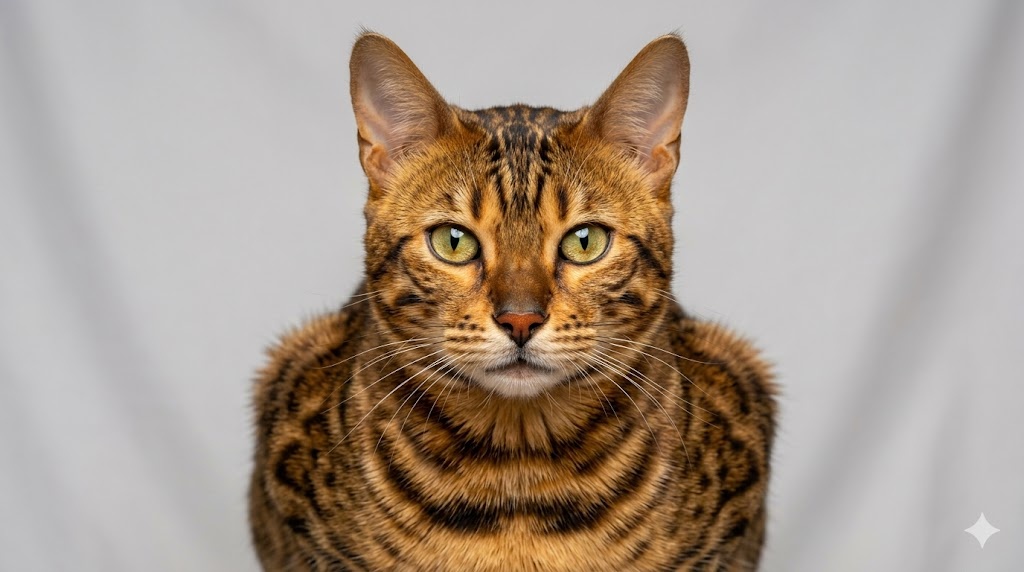
The Bengal is a medium-large, athletic, leopard-spotted cat that looks like a miniature jungle predator and behaves accordingly.

🐈
🐾
Coming soon
πŸ“Ί Video guide in production

Bengal β€” the full video guide

Coming soon. Subscribe to the newsletter to get notified when this video drops.

Lifespan
12–16 years
Weight
5–7 kg
Category
Cats
Difficulty
See care section

Overview

The Bengal is a medium-large, athletic, leopard-spotted cat that looks like a miniature jungle predator and behaves accordingly. The breed was created in the 1960s and 70s by crossing the wild Asian Leopard Cat with domestic shorthairs, producing a striking, energetic, highly intelligent pet that retains a noticeably wild aesthetic. Bengals are demanding cats β€” not difficult, but genuinely active and stimulation-hungry β€” and ownership requires understanding the breed's significant exercise and enrichment needs.

History & Origins

The Asian Leopard Cat (Prionailurus bengalensis) is a small wild felid native to South and East Asia. American breeder Jean Mill began crossing Asian Leopard Cats with domestic cats in 1963, initially to study feline leukaemia resistance and then to create a pet cat with wild appearance.

The first Bengals were F1 hybrids (50% wild). Subsequent generations (F2, F3, F4) were bred back to domestic cats to produce more tractable temperaments. By F4 (great-great-granddaughter of the wild parent) the cats are considered fully domesticated. Modern pet Bengals are SBT ("stud book traditional") β€” at least four generations removed from the wild ancestor.

TICA recognition came in 1991. Bengals are now one of the most popular pedigreed cats globally despite being banned or restricted in several jurisdictions due to the wild ancestry.

Appearance

Medium-large, athletic, sleek. Males weigh 4.5–7 kg (10–15 lb); females 3.5–5 kg.

Key features:

  • Coat: short, dense, with a uniquely silky pelt-like texture. Many Bengals have "glitter" β€” a genetic trait producing iridescent sparkle on the coat tips.
  • Colour and pattern: the breed's signature. Brown (most common), silver, snow (lynx, mink, sepia), blue, charcoal, melanistic (black). Patterns: spotted (rosetted, single-spotted, or arrowhead), marbled (swirled pattern unique to Bengals).
  • Head: broad, with rounded contours, prominent whisker pads, and a slight nose break.
  • Eyes: large, almond-shaped, in colours that contrast with the coat.
  • Body: long, muscular, athletic β€” clearly a working hunter.
  • Tail: medium length, thick, with rings and a black tip.

Temperament & Character

Energetic, intelligent, demanding, affectionate. Bengals are among the most active cat breeds β€” climbing, running, jumping, exploring constantly. The breed retains a strong hunting drive and benefits from prey-like play.

Bengals bond intensely with family but are not typical lap cats β€” they prefer to participate in activities rather than be held. Many enjoy water (a legacy of the Asian Leopard Cat) and play in sinks, baths, and water bowls.

Vocal communication is significant. Bengals chirp, trill, growl, and produce a wide vocabulary of unusual sounds β€” quite different from typical domestic cat meows.

Some Bengals develop guarding behaviour or territoriality without socialisation. Most are friendly with familiar people but can be challenging with strangers and other cats.

Care

Coat & Grooming

Very low-maintenance. The short pelt-like coat requires only weekly rub-down with a rubber curry mitt; baths every 2–3 months. Sheds minimally.

Clean ears monthly. Trim claws every 2 weeks. Brush teeth daily.

Exercise & Enrichment

The defining ownership requirement. Bengals need substantial daily activity β€” climbing structures (multiple tall cat trees), interactive play sessions (2–3 daily), puzzle feeders, harness walks, and ideally a catio or secure outdoor enclosure.

Without enough exercise and stimulation, Bengals become destructive, vocal, escape-driven, and frustrated. The breed has been described as "what happens when you give a domestic cat the energy of a working spaniel."

Health & Lifespan

Average lifespan is 12–16 years.

Common concerns:

  • Hypertrophic cardiomyopathy (HCM).
  • Progressive retinal atrophy (Bengal PRA) β€” DNA test available.
  • Pyruvate kinase deficiency β€” DNA test.
  • Polycystic kidney disease.
  • Anaesthetic sensitivities β€” discuss with vet.
  • Patellar luxation.
  • Hip dysplasia.

Feeding & Nutrition

Adults typically eat 60–90 g of quality cat food per day β€” more if very active. High-protein diets suit the breed's energy needs. Many Bengals do well on raw or high-meat commercial diets.

Living With

Litter

Standard provisions. Some Bengals dislike confined boxes; provide large open-top boxes if possible. Most are easy to litter-train.

Multi-cat households

Variable. Some Bengals are sociable with other cats; others guard resources aggressively. Same-sex pairs are most challenging. Best raised with the other cat from kittenhood.

Indoor vs outdoor

Strictly indoor or supervised outdoor (catio, harness). Bengals are talented escape artists and powerful hunters; outdoor access damages local wildlife and risks the cat.

Pros & Cons

Pros

  • Striking, wild-looking appearance.
  • Energetic and intelligent.
  • Trainable β€” leash, fetch, tricks.
  • Low-maintenance coat.
  • Long-lived.

Cons

  • Enormous exercise and enrichment needs.
  • Vocal and demanding.
  • Can be territorial or aggressive with other cats.
  • Some lines retain wild temperament traits.
  • Restricted or banned in some jurisdictions.
  • Premium prices and frequent rehoming when owners underestimate the breed.

Best Suited For

  • Active, experienced cat owners.
  • Households able to provide significant daily enrichment.
  • Owners who want an interactive, "dog-like" cat.
  • Single-cat homes (often).
  • Households with catios or secure outdoor enclosures.

Not suited for sedentary owners, apartment dwellers without serious enrichment, families with timid pets, first-time cat owners, or anyone wanting a calm lap cat.

FAQ

Are Bengals dangerous? No. SBT Bengals (4+ generations from wild ancestor) are fully domestic in behaviour, though more active and vocal than typical cats. F1–F3 Bengals are kept under hybrid regulations in many jurisdictions and are not appropriate pet cats.

Why are Bengals banned in some places? The Asian Leopard Cat ancestry triggers exotic-animal regulations. New York City, Hawaii, and several countries restrict or ban Bengal ownership.

Do they really like water? Many do. Bengals play in water, dip paws into bowls, watch baths, and sometimes join showers. A water fountain is often appreciated.

Are they good with kids? With respectful older children, yes. Bengals are not gentle "let me hug you" cats; they prefer interactive play.

Are they hypoallergenic? No, despite occasional online claims. Bengals produce Fel d 1 protein normally.

🎬 YOUTUBE LONG-FORM SCRIPT

Working title

The Bengal Cat β€” The Leopard in Your Living Room (Everything You Need to Know)

Estimated length

11–12 minutes

Thumbnail concept

Close-up of a brown rosetted Bengal staring directly into camera, golden eyes wide, mouth slightly open in a chirp. Bold text top-left: "BEFORE YOU GET A BENGAL". Small leopard silhouette bottom-right for the wild-ancestor reference.

Thumbnail Image Prompt

Hyper-detailed photograph of a brown-spotted Bengal cat sitting on a wooden table, head tilted slightly, large almond-shaped golden-green eyes locked on the viewer, glittery short coat catching warm window light, rosette pattern clearly visible along the flank, soft blurred living-room background, cinematic depth of field, shot on 85mm at f/1.8, professional pet photography, ultra-sharp focus on eyes, natural daylight.

Description with timestamps

The Bengal cat looks like a miniature leopard β€” and acts like one too. In this complete breed guide we cover the wild origins of the Bengal, what it's really like to live with one, the three mistakes new owners make most often, and whether this athletic, vocal, water-loving cat is the right match for your home.

⏱ Timestamps 00:00 Intro Hook 01:00 Origin: Asian Leopard Cat Hybrid 02:30 Temperament: The Dog-Cat 04:00 Care: Exercise, Climbing, Water 05:30 Health: HCM, PRA, PK Deficiency 07:00 Training: Leash, Fetch, Tricks 08:30 3 Biggest Mistakes New Bengal Owners Make 10:00 Is The Bengal Right For You? 11:00 Outro

πŸ”” Subscribe for a new breed each week.

00:00–01:00 INTRO HOOK

"Picture a leopard. The spots, the rosettes, the muscular shoulders, the green-gold eyes. Now shrink it to the size of a house cat, and let it climb your bookshelves at three in the morning. That is the Bengal. The Bengal is the only domestic cat breed whose direct ancestor is a wild felid β€” the Asian Leopard Cat. The wild blood is four generations back, but the wild attitude is still very much present. Today: where the Bengal came from, what it is actually like to live with one, the three mistakes new owners make that ruin the experience, and whether this cat is right for your household. I'm covering one breed every week. Subscribe so you don't miss the next one. Let's get into it."

01:00–02:30 ORIGIN: ASIAN LEOPARD CAT HYBRID

"The Bengal story starts in 1963, in California, with an American breeder named Jean Mill. Jean crossed a small wild cat β€” the Asian Leopard Cat, native to the jungles of South-East Asia β€” with a domestic shorthair. The original goal was scientific: researchers thought the Asian Leopard Cat carried genetic resistance to feline leukaemia, and a hybrid might pass that resistance on. The resistance theory did not work out. But the kittens were spectacular. The very first cats β€” called F1 hybrids β€” were fifty percent wild. They were also nearly impossible to keep as pets. Spraying, biting, fear, hunting drive at full intensity. So Jean and other breeders bred the F1s back to domestic cats. F2 was twenty-five percent wild. F3 was twelve and a half. By the fourth generation, called F4 or SBT β€” stud book traditional β€” the cats are considered fully domesticated. Every pet Bengal you can legally buy today is SBT β€” at least four generations from the wild ancestor. That matters because the laws vary by jurisdiction. New York City bans Bengals outright. Hawaii bans them. Some Australian states restrict ownership. Always check your local rules before buying. TICA recognised the breed in 1991. Within twenty years the Bengal became one of the top five most-registered pedigreed cats in the world."

02:30–04:00 TEMPERAMENT: THE DOG-CAT

"Bengals are often called dog-cats β€” and the comparison is fair. They fetch. They walk on a harness. They greet you at the door. They follow you from room to room. They learn their names within days. Many will sit on command. They are also intensely vocal. A Bengal does not meow politely once. A Bengal chirps, trills, growls, mutters, chats, and occasionally yells. If you want a quiet cat, this is not your breed. Bengals bond hard with one or two family members. They are not standoffish β€” but they are not lap cats either. A Bengal would rather sit on your desk and watch you type than curl up on your knees and sleep. Water is the famous quirk. Many Bengals genuinely love water. They paw at faucets, knock over glasses, splash in bowls, jump into showers. A pet water fountain is almost mandatory. And the hunting drive β€” they have it. Bengals stalk feet, hands, dust motes, toys, and any small object that twitches. They need an outlet. Without one, the outlet becomes your curtains."

04:00–05:30 CARE: EXERCISE, CLIMBING, WATER

"This is the breed-defining section. Get this wrong and Bengal ownership becomes miserable for both of you. Bengals need significant daily activity. I mean cat-tree-the-size-of-a-bookcase activity. Multiple tall climbing structures. Wall shelves. A catio if you can build one. Two or three interactive play sessions per day β€” wand toys, laser pointers (always finishing on a physical toy they can catch), feather chasers. Puzzle feeders are not optional. Hide kibble around the house. Use food-dispensing toys. Make the cat work for meals. Harness training works for many Bengals. Start as kittens. A daily walk in the garden burns enormous amounts of energy. Coat care is the easy part. The pelt-like coat needs nothing more than a weekly rub with a rubber grooming mitt. Bath every two or three months. Trim claws every two weeks. Brush teeth daily β€” Bengals get periodontal disease early. If you work twelve-hour shifts and live in a small apartment with no enrichment plan β€” please consider a different breed. The Bengal will not adapt. It will redecorate your home instead."

05:30–07:00 HEALTH: HCM, PRA, PK DEFICIENCY

"Bengals live twelve to sixteen years on average with good care. The big health concerns: Hypertrophic cardiomyopathy β€” HCM. The most common heart disease in cats, and Bengals are predisposed. Annual cardiac ultrasound from age three is wise for at-risk lines. Bengal progressive retinal atrophy β€” Bengal PRA. A breed-specific eye disease leading to blindness. There is a DNA test. Any reputable breeder tests parents. Pyruvate kinase deficiency β€” a blood disorder causing anaemia. DNA test available. Always insist on it. Polycystic kidney disease. Patellar luxation. Anaesthetic sensitivities β€” flag to your vet before any surgery. Buy from a breeder who tests for all of these. Cheaper Bengals from un-tested lines often develop expensive problems by age five. Vaccinations standard. Indoor lifestyle reduces parasite risk but does not eliminate it. Insurance is worth considering for this breed β€” cardiac scans and ophthalmology workups add up."

07:00–08:30 TRAINING: LEASH, FETCH, TRICKS

"Bengals are among the most trainable cats on earth. Clicker training works beautifully. Start at eight to twelve weeks. Five-minute sessions, twice a day. Use freeze-dried chicken or salmon as a reward. Targets to aim for in the first six months: name recognition, recall, sit, high-five, jump-through-hoop, fetch, harness wear. Leash training: introduce a soft H-style harness indoors first. Build up to short outdoor sessions. Never use a collar with a leash β€” Bengals can twist out instantly. Litter training is usually solved by the breeder. Most Bengals are flawless from day one. If problems appear, the cause is almost always anxiety, dirty litter, or medical β€” investigate immediately. Scratching: provide multiple tall vertical scratchers and one horizontal. Train from kittenhood by carrying the cat to the post and rewarding. Never declaw β€” illegal in most of Europe, ethically indefensible, and creates lifelong behavioural problems. The single most useful command is recall. A Bengal that comes when called is a Bengal you can manage. Practise it ten times a day for the first year."

08:30–10:00 3 BIGGEST MISTAKES NEW BENGAL OWNERS MAKE

"Mistake one: underestimating the energy. Owners see the leopard look and adopt the cat for the aesthetic. Six months later the household is chaos. How to avoid: before you buy, commit to two interactive play sessions per day, a full cat tree setup, and either harness walks or a catio. If that sounds like too much β€” skip the Bengal. Mistake two: keeping Bengals with the wrong other pets. Many Bengals are territorial. Pairing them with timid older cats, small dogs, rabbits, or rodents goes badly. How to avoid: if you must have a second pet, raise the Bengal alongside another confident, similarly active cat or dog from kittenhood. Adult introductions are difficult. Mistake three: leaving the Bengal alone for long days with no enrichment. Bengals become destructive, vocal, escape-driven, and sometimes self-mutilating when bored. A bored Bengal is a small disaster. How to avoid: rotating toys, puzzle feeders, food-hunting games, a window perch with a bird feeder outside, video for cats on the TV. Many owners get a second active cat as a Bengal companion."

10:00–11:00 IS THE BENGAL RIGHT FOR YOU?

"Checklist: You can commit to two daily play sessions for the next fifteen years. You have space for tall climbing structures. You are okay with a vocal cat. You want an interactive, dog-like companion β€” not a lap warmer. You can afford DNA-tested kittens from a tested breeder. Tick four out of five β€” the Bengal will thrive with you. Tick fewer β€” please look at a calmer breed. The British Shorthair, the Ragdoll, or the Persian will be much happier and so will you."

11:00–11:30 OUTRO AND CTA

"So that is the Bengal β€” the leopard-spotted hybrid born in a California lab in the 1960s, now one of the most popular and most demanding pedigree cats in the world. Athletic. Vocal. Water-loving. Brilliantly trainable. Not a beginner cat. Which breed should I cover next? Drop the name in the comments. Subscribe, hit the bell. Next week: the Siamese β€” the talkative blue-eyed legend of the cat world." (End screen: subscribe button, 'watch next: Siamese' thumbnail, channel logo)

One smart pet email a week.

Vet-reviewed care, training, and gear. No spam, unsubscribe in one click.

🐢
🐱
🐰