🐾 Smart pet care, real pet parent NEW 50+ buyer guides published πŸ“© Weekly newsletter As an Amazon Associate we earn from qualifying purchases
Home/ Pets/ Cats/ Birman

Birman

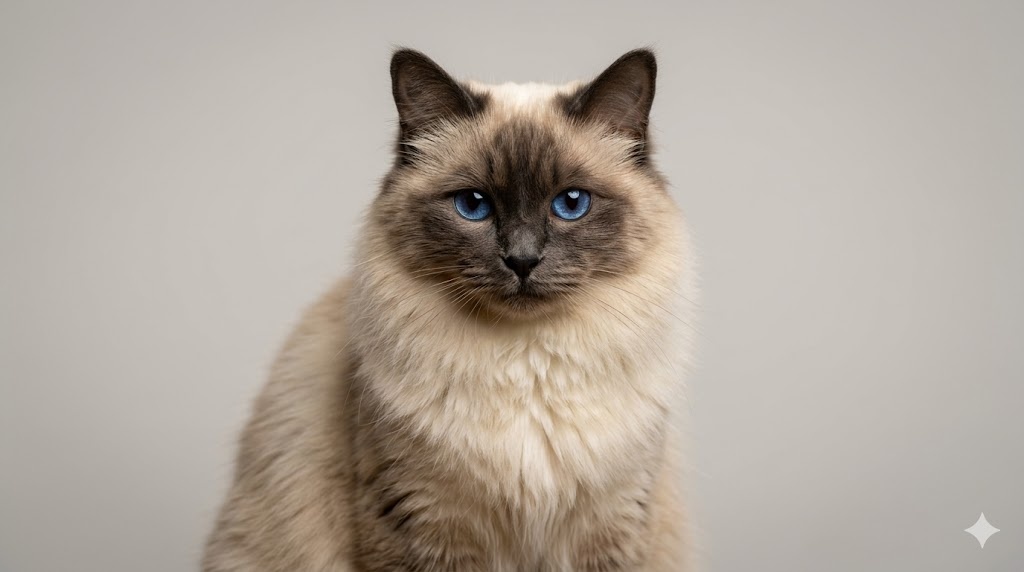
The Birman β€” sometimes called the "Sacred Cat of Burma" β€” is a medium-large, pointed longhaired cat with brilliant blue eyes and distinctive pure-white "gloves" on all four paws.

🐈
🐾
Coming soon
πŸ“Ί Video guide in production

Birman β€” the full video guide

Coming soon. Subscribe to the newsletter to get notified when this video drops.

Lifespan
13–16 years
Weight
4–6 kg
Category
Cats
Difficulty
See care section

Overview

The Birman β€” sometimes called the "Sacred Cat of Burma" β€” is a medium-large, pointed longhaired cat with brilliant blue eyes and distinctive pure-white "gloves" on all four paws. Behind the legendary origin story (the breed supposedly takes its golden colour from temple goddesses) is a calm, gentle, sociable companion that has become one of the most popular pedigreed cats in Europe.

History & Origins

Legend says the Birman descends from temple cats of Burma (modern Myanmar), where the goddess Tsun-Kyan-Kse blessed the cats with golden coats and blue eyes when the temple priest died defending her statue.

Documented history is more recent: two Birmans were exported from Burma to France around 1919. The female was pregnant and her litter founded the breed in Europe. World War II nearly destroyed the breed; only two cats survived in France. The breed was reconstructed using Persian, Siamese, and other longhairs.

CFA recognition came in 1967.

Appearance

Medium-large, balanced, with pointed coat and white "gloves." Adults weigh 4–6 kg (9–13 lb).

Key features:

  • Coat: medium-long, silky, single-coated (no thick undercoat), with feathering on tail and ruff.
  • Colour: pointed β€” pale body with darker points on face, ears, legs, and tail. Seal, blue, chocolate, lilac, red, cream points plus tabby and tortie variants.
  • Eyes: brilliant blue, round to oval.
  • Head: rounded with full cheeks and a Roman nose.
  • Paws: the signature feature β€” pure white gloves on the front paws ending in even lines at the wrist; longer white "laces" extending up the back paws to the hock.
  • Body: long, stocky, well-muscled.

Temperament & Character

Calm, gentle, sociable. The Birman is famously sweet β€” friendly with family, polite with strangers, and tolerant of children and other pets. Most are excellent lap cats and bond strongly with the whole family rather than one person.

The breed is moderately playful and quiet. Not as vocal as Siamese; not as athletic as Maine Coons; an easygoing middle ground.

Care

Coat & Grooming

The silky single-layered coat is easier than most longhaired breeds. Brush 2–3 times weekly with a metal comb. The lack of dense undercoat means less matting than Persians.

Bathe every 2–3 months. Clean ears monthly. Trim claws every 2 weeks. Brush teeth daily.

Exercise & Enrichment

Moderate. Daily play, accessible perches, puzzle feeders.

Health & Lifespan

Average lifespan is 13–16 years.

Common concerns:

  • Hypertrophic cardiomyopathy.
  • Congenital hypotrichosis β€” rare hairlessness.
  • Spongiform encephalopathy β€” a rare neurological condition.
  • Polycystic kidney disease.
  • Dental disease.

The breed is generally healthy.

Feeding & Nutrition

60–80 g per day.

Living With

Multi-cat households

Excellent.

Indoor only.

Pros & Cons

Pros

  • Calm, sweet, family-tolerant.
  • Excellent with children and other pets.
  • Easier coat than Persians.
  • Distinctive appearance.
  • Long-lived.

Cons

  • Moderate grooming.
  • Premium prices.
  • HCM risk.

Best Suited For

  • Families with children.
  • Multi-pet homes.
  • Owners wanting a calm gentle longhaired cat.

Not suited for owners wanting an active or independent cat.

FAQ

Are the white gloves real? Yes β€” every Birman has pure white gloves on the front paws and laces up the back. The pattern is genetic and consistent.

Birman vs Ragdoll β€” what's the difference? Both are pointed, blue-eyed, longhaired. Birman is smaller, more athletic, with white gloves and a rounder head. Ragdoll is larger, calmer, less athletic, with optional white markings. Birman is generally a more typical cat in temperament.

Birman vs Siamese β€” what's the difference? Birman is longhaired, white-gloved, calmer, quieter. Siamese is shorthaired, fully pointed, loud, more athletic.

Are they hypoallergenic? No.

How long do they live? 13–16 years on average.

🎬 YOUTUBE LONG-FORM SCRIPT

Working title

The Birman β€” The Sacred Cat of Burma

Estimated length

10–11 minutes

Thumbnail concept

Seal-point Birman with brilliant blue eyes and four white paws, lounging in golden light. Caption: "THE TEMPLE CAT".

Thumbnail Image Prompt

Studio photograph of a seal-point Birman cat lounging gracefully, silky long cream coat with seal-coloured points, brilliant deep sapphire-blue round eyes, four signature white paw gloves visible, soft golden background, warm temple-like lighting, 85mm lens at f/2, professional pet portrait photography, serene gentle expression.

Description with timestamps

The Birman is the legendary sacred cat of the Burmese temples β€” blue-eyed, silky-coated, four white-gloved paws. In this guide we cover the famous origin legend, the gentle balanced temperament, easy coat care, breed health, and whether the Birman fits your household.

⏱ Timestamps 00:00 Intro Hook 01:00 Origin: The Legend and the French Reality 02:30 Temperament: Gentle and Balanced 04:00 Care: Easy Coat, Sociable Home 05:30 Health: Generally Robust 07:00 Training: Cooperative Learner 08:30 3 Biggest Mistakes New Birman Owners Make 10:00 Is The Birman Right For You? 11:00 Outro

πŸ”” Subscribe for a new breed each week.

00:00–01:00 INTRO HOOK

"The Birman is wrapped in legend. According to Burmese temple folklore, the breed received its blue eyes and white paws from the goddess Tsun-Kyan-Kse as a reward for a temple cat's loyalty to its dying priest. The real story is less mystical but no less interesting β€” and produces one of the most balanced, gentle, beautiful cats in the world. Today: the temple legend, the documented French origins, temperament, care, health, training, mistakes, and whether the Birman is your cat."

01:00–02:30 ORIGIN: THE LEGEND AND THE FRENCH REALITY

"The legend places the breed in Burmese mountain temples β€” sacred cats with white paws that travelled between this life and the next, accompanying priests. The documented origin is European. In 1919 or 1920, a pair of Birman-type cats was brought from Burma to France. Only the pregnant female survived the voyage. Her kittens were the foundation of the French Birman breed. French breeders crossed the Birman with Siamese and Persians to broaden the gene pool. The breed nearly went extinct during the Second World War β€” only two cats remained by 1946. Post-war reconstruction used careful outcrosses to Persians and Siamese. CFA recognised the Birman in 1967. Today the breed is widely available and one of the most popular pedigreed cats in Europe."

02:30–04:00 TEMPERAMENT: GENTLE AND BALANCED

"Birmans are gentle, sociable, balanced cats β€” somewhere between the calm of a Persian and the energy of a Siamese. They are affectionate but not clingy. They follow their humans, sit nearby, and sleep on laps, but they do not demand attention constantly. Voice is soft. Birmans chirp and chat quietly. Bonding is family-wide. Energy is moderate. One or two daily play sessions are enough. Intelligence is good but not eager-performer level. With other animals β€” excellent. Birmans are non-confrontational and pair well with most pets and children."

04:00–05:30 CARE: EASY COAT, SOCIABLE HOME

"Coat is semi-long, silky, single-layered (no woolly undercoat). It does not mat easily. Twice-weekly brushing with a metal comb is enough. Bath every two or three months. Nails fortnightly. Teeth daily. Ears monthly. Enrichment: moderate cat tree, window perch, daily play, puzzle feeder. Birmans are sociable but not athletic. Indoor only. Trusting nature makes outdoor life unsafe. Litter: standard. Birmans like company. A second cat or a calm dog is appreciated but not essential."

05:30–07:00 HEALTH: GENERALLY ROBUST

"Lifespan twelve to sixteen years. Health concerns: Hypertrophic cardiomyopathy. Annual cardiac ultrasound from age three to four in known lines. Hyperaesthesia and tremor β€” occasionally in some lines. Polycystic kidney disease. DNA test available. Hip dysplasia in some larger individuals. Generally a robust, healthy breed. Pet insurance is sensible but the Birman does not have the extensive health problems of more extreme breeds."

07:00–08:30 TRAINING: COOPERATIVE LEARNER

"Birmans are intelligent and cooperative. They train at a moderate pace. Targets: name, recall, sit, accepting handling, harness wear. Leash training is realistic for confident individuals. Litter solved by the breeder. Scratching: provide moderate sisal posts. Handling tolerance is excellent."

08:30–10:00 3 BIGGEST MISTAKES NEW BIRMAN OWNERS MAKE

"Mistake one: ignoring the coat. The silky coat does not mat easily but neglected for weeks it tangles. How to avoid: twice-weekly comb routine. Mistake two: assuming low-maintenance equals no care. Birmans still need health monitoring, dental care, and play. How to avoid: same care commitments as any pedigreed cat. Mistake three: outdoor freedom. The trusting Birman gets stolen, hit, or lost. How to avoid: indoor only or supervised catio."

10:00–11:00 IS THE BIRMAN RIGHT FOR YOU?

"Checklist: You want a gentle, balanced, beautiful cat. You can manage twice-weekly grooming. You want a family-friendly companion. You can commit fifteen-plus years. You prefer calm over chaos. Tick four β€” the Birman is a wonderful choice. If you want a low-grooming shorthair, choose a British Shorthair."

11:00–11:30 OUTRO AND CTA

"That is the Birman β€” the sacred temple cat of Burma, the gentle blue-eyed beauty of France. Calm. Affectionate. Balanced. One of the most universally appealing cats in the world. Next breed? Comment below. Subscribe and the bell. Next week: the Siberian β€” the great hypoallergenic forest cat of Russia." (End screen: subscribe button, 'watch next: Siberian' thumbnail, channel logo)

One smart pet email a week.

Vet-reviewed care, training, and gear. No spam, unsubscribe in one click.

🐢
🐱
🐰