British Shorthair
The British Shorthair is a round, plush, teddy-bear-like cat with a calm dignified temperament that matches its appearance.
🗓️ Last reviewed: June 2026
Overview
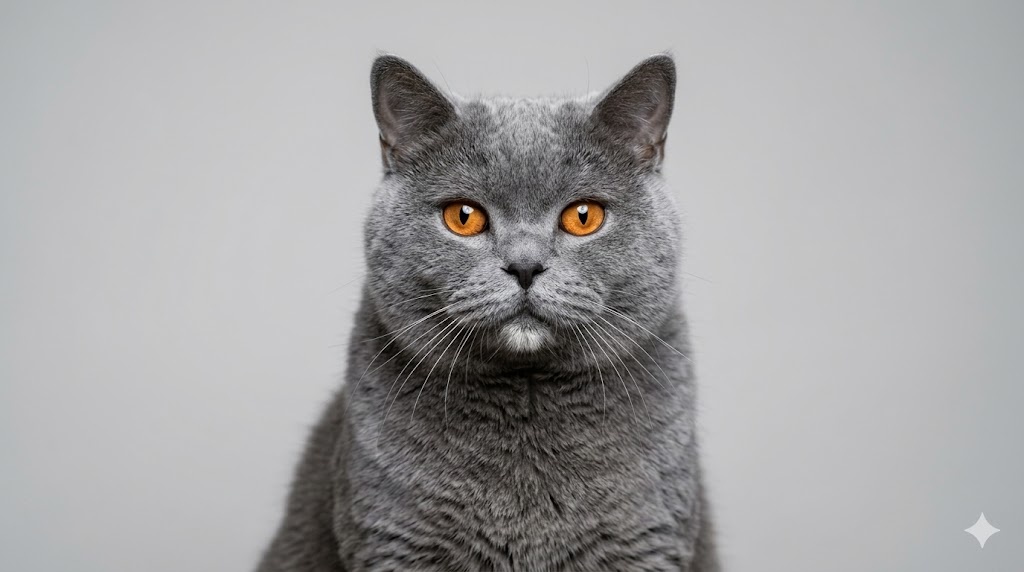
The British Shorthair is a round, plush, teddy-bear-like cat with a calm dignified temperament that matches its appearance. The breed is one of the oldest in the cat fancy - descended from the working cats brought to Britain by Roman legions two thousand years ago - and remains one of the most popular pedigreed cats in Europe and Asia. The famous blue-grey colour ("British Blue") and round-eyed serious expression have made the British Shorthair an icon of cat photography and the inspiration for the Cheshire Cat in Alice in Wonderland.
History & Origins
Cats arrived in Britain with Roman legions around AD 50 and adapted over centuries to British weather and conditions. The hardy, plush-coated working cats they produced became the foundation of the British Shorthair.
Harrison Weir - the "father of cat fancy" - organised the first cat show in London in 1871 and featured British Shorthairs (then simply "British" cats) as foundation stock. World War I and World War II nearly destroyed the breed; surviving cats were crossed with Persians to rebuild numbers, contributing the round face and plush coat of the modern breed.
CFA recognition came in 1980. The British Shorthair is now consistently one of the most popular breeds globally, particularly in China where the famous "Garfield" appearance has made the breed a meme-driven phenomenon.
Appearance
Medium-large, cobby, round, plush. Males weigh 5-8 kg (11-18 lb); females 3.5-5.5 kg. Full size by age 3-5 - late-maturing.
Key features:
- Coat: short, very dense, plush, with a crisp texture standing slightly away from the body. Often called the "teddy bear" coat.
- Colour: all colours and patterns. British Blue (solid blue-grey with copper eyes) is most iconic and most popular; lilac, black, white, cream, golden, silver tabby, and bicolour are also common.
- Head: round, broad, with full cheeks and a short broad muzzle that produces a slight permanent smile.
- Eyes: large, round, copper or gold (blue in white cats; green in silver tabbies).
- Body: cobby, broad, low-stationed, with substantial bone.
- Tail: thick, medium-length, with a rounded tip.
Temperament & Character
Calm, easygoing, and dignified. The British Shorthair is the textbook unflappable cat - friendly with family, polite with strangers, tolerant of other animals. The breed is not particularly demonstrative; many British Shorthairs prefer to sit near you rather than on you.
Most are quiet - soft voices, infrequent vocalisation. They play in moderate bursts as adults and grow more sedate with age.
The breed is independent. British Shorthairs are happy to be alone for several hours, making them good fits for working households. They are not cuddly lap cats in the way Ragdolls are; they appreciate space.
Care
Coat & Grooming
The plush double coat is low-maintenance: brush 1-2 times weekly with a stainless-steel comb; daily during seasonal shedding.
Bathe every 2-3 months or as needed. Many British Shorthairs dislike water. Clean ears monthly. Trim claws every 2 weeks. Brush teeth several times weekly.
The breed sheds notably - particularly during seasonal coat changes.
Exercise & Enrichment
Modest. The breed is not athletic; expect short play bursts followed by long naps. Provide interactive wand toys, low platforms, and puzzle feeders. Tall cat trees are largely wasted; many British Shorthairs cannot or will not jump high.
Health & Lifespan
Average lifespan is 14-17 years.
Common concerns:
- Hypertrophic cardiomyopathy (HCM) - significant breed concern; cardiac screening recommended.
- Polycystic kidney disease (PKD) - DNA test available.
- Haemophilia B - DNA test.
- Obesity - major problem; the breed gains weight effortlessly and dislikes exercise.
- Dental disease.
The breed is generally healthy when responsibly bred.
Feeding & Nutrition
Adults typically eat 50-80 g of quality cat food per day. The breed is prone to obesity - measured meals, weight monitoring, and puzzle feeders to slow eating help significantly.
Living With
Litter
Standard provisions. Easy to litter-train.
Multi-cat households
Tolerant of other cats, especially calm breeds. Can be aloof rather than affectionate with feline housemates.
Indoor vs outdoor
Indoor-only or supervised outdoor (catio, harness). The breed is not a strong defender and can be ambushed by other cats or vehicles.
Pros & Cons
Pros
- Calm, dignified, family-tolerant.
- Adaptable to apartments and homes.
- Tolerant of being alone - good for working households.
- Easy short-coat grooming.
- Long-lived.
Cons
- Late-maturing (3-5 years).
- Strong tendency to obesity.
- HCM risk.
- Not particularly cuddly or interactive.
- Sheds notably.
Best Suited For
- Working singles or couples.
- Quiet families with older children.
- Apartment dwellers.
- Owners wanting a low-key, independent cat.
- First-time cat owners.
Not suited for owners wanting an interactive lap cat or active hunter, or anyone unable to manage weight in a sedentary cat.
British Shorthair - frequently asked questions
Why are British Shorthairs always grumpy-looking?
The round face, full cheeks, and slight downturn at the mouth produce the famous "always slightly disappointed" expression. They are not actually grumpy - many are very content.
Are they good with kids?
With respectful older children, yes. The breed dislikes rough handling and may avoid toddlers.
Do they shed?
Yes - notably during seasonal coat changes. The dense plush undercoat produces significant loose hair.
Are they hypoallergenic?
No - they shed and produce dander.
British Shorthair vs Scottish Fold - what's the difference?
Same essential temperament and body type. Scottish Fold has folded ears (a cartilage defect with health implications); British Shorthair has normal upright ears and no associated health issues. British Shorthair is the healthier choice.
🧠 Test yourself: guess the cat
Three clues from our quiz bank, each about another of our cats. Can you name them?
Clue 1.Bred only in one color, this quiet blue-grey cat appears in centuries-old Thai poetry manuscripts.
It's the Korat - read the full profile →
Clue 2.Named with a French-sounding word for its waves, this rex cat has curly whiskers and a wash-and-wear coat.
It's the LaPerm - read the full profile →
Clue 3.Famous for appearing hairless, this wrinkly cat actually has a fine peach-fuzz coat and needs regular bathing to remove skin oils.
It's the Sphynx - read the full profile →
💛 Adoptable British Shorthairs near you
Real cats of this breed (and close mixes) waiting in shelters and rescues right now, live from Petfinder. We have no affiliation and earn nothing - if someone catches your eye, the link goes straight to their shelter. New to adopting? Start with our adoption guide.
Widget not loading (some ad-blockers hide it)? Search directly on petfinder.com.