🐾 Smart pet care, real pet parent NEW 50+ buyer guides published πŸ“© Weekly newsletter As an Amazon Associate we earn from qualifying purchases
Home/ Pets/ Cats/ Burmese

Burmese

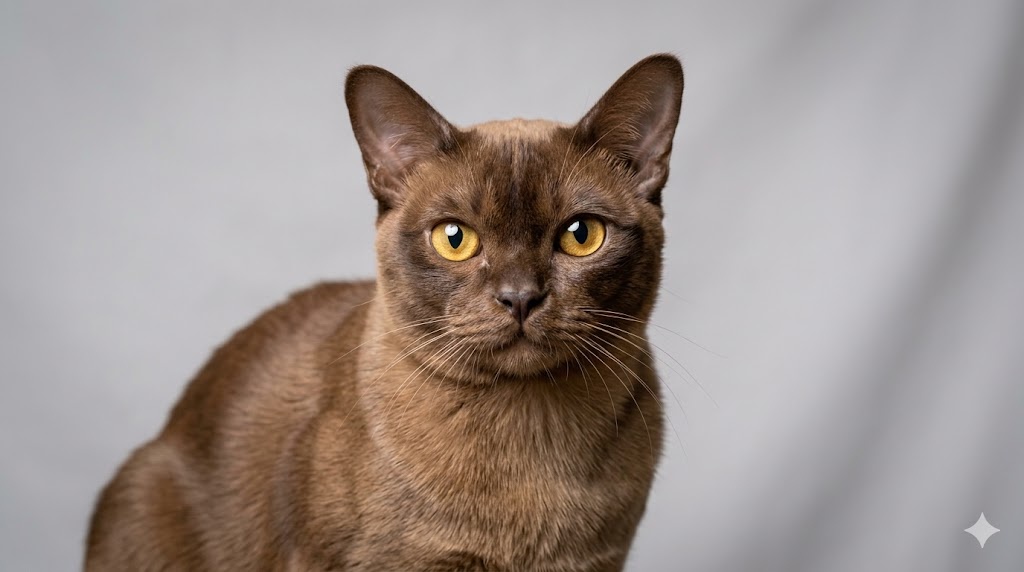
The Burmese is a medium-sized, solid, sleek cat with copper-coloured eyes and a personality that owners universally describe as "people-obsessed." Originally developed in the United States from a single brown female imported from Burma (modern Myanmar) in the 1930s, the modern Burmese combines a velvety short coat with one of the most affectionate, dog-like temperaments in cat breeds.

🐈
🐾
Coming soon
πŸ“Ί Video guide in production

Burmese β€” the full video guide

Coming soon. Subscribe to the newsletter to get notified when this video drops.

Lifespan
14–18 years
Weight
5–6 kg
Category
Cats
Difficulty
See care section

Overview

The Burmese is a medium-sized, solid, sleek cat with copper-coloured eyes and a personality that owners universally describe as "people-obsessed." Originally developed in the United States from a single brown female imported from Burma (modern Myanmar) in the 1930s, the modern Burmese combines a velvety short coat with one of the most affectionate, dog-like temperaments in cat breeds.

History & Origins

A small brown female named Wong Mau was brought from Burma to San Francisco in 1930 by Dr Joseph Thompson. She was bred with a Siamese to produce a foundation programme. The original "sable" (dark brown) Burmese eventually became distinct from the Siamese and was recognised by CFA in 1936. Other colours were developed through further breeding.

Two distinct types now exist. The American (Contemporary) Burmese has a rounder face, shorter body, and shorter muzzle. The European (Traditional) Burmese has a more moderate appearance with a slightly longer face. American Burmese has been linked to a head defect (Burmese head defect β€” a lethal craniofacial abnormality from extreme breeding); reputable breeders test against it.

Appearance

Medium-sized, surprisingly heavy for its size ("brick wrapped in silk"). Adults weigh 3.5–6 kg (8–13 lb).

Key features:

  • Coat: very short, fine, glossy, satin-textured, close-lying.
  • Colour: sable (rich dark brown, most iconic), blue, champagne, platinum, red, cream, tortoiseshell, lilac.
  • Eyes: large, round, brilliant copper or gold.
  • Head: rounded in American type; modified wedge in European type.
  • Body: compact, muscular, surprisingly dense. The breed feels much heavier than it looks.
  • Tail: medium-long, straight, tapering slightly.

Temperament & Character

Affectionate, people-oriented, and intensely social. The Burmese is one of the most demanding cats for human attention β€” many follow their owners constantly, sit in laps, and demand participation in every activity.

The breed is intelligent, playful into old age, and vocal in a softer way than the Siamese. Most Burmese are excellent with children, friendly with strangers, and tolerant of other pets.

The Burmese does not tolerate being alone for long. Many owners get a second cat (often a second Burmese) for company.

Care

Coat & Grooming

Very low-maintenance: weekly rub-down with a soft cloth or rubber mitt. Sheds minimally.

Clean ears monthly. Trim claws every 2 weeks. Brush teeth daily.

Exercise & Enrichment

Moderate-to-high. Provide cat trees, interactive wand toys, puzzle feeders. The breed is playful well into adulthood.

Health & Lifespan

Average lifespan is 14–18 years.

Common concerns:

  • Burmese head defect β€” a lethal craniofacial defect in American type. Reputable breeders DNA-test.
  • Hypokalaemic polymyopathy β€” DNA test.
  • Diabetes mellitus β€” elevated rates.
  • Hypertrophic cardiomyopathy.
  • Flat-chested kitten syndrome.
  • Gingivitis β€” universal without dental care.
  • Glaucoma.

Feeding & Nutrition

60–80 g per day. Burmese maintain weight easily and are prone to diabetes; measured low-carb meals help.

Living With

Multi-cat households

Excellent with other cats, especially other Burmese.

Indoor vs outdoor

Indoor-only or supervised outdoor. The breed's affection toward strangers makes outdoor wandering risky.

Pros & Cons

Pros

  • Extraordinarily affectionate.
  • Dog-like personality.
  • Long-lived.
  • Very low grooming.
  • Trainable.

Cons

  • Cannot tolerate being alone for long.
  • Diabetes risk.
  • Burmese head defect in some American lines.
  • Vocal and demanding.
  • Premium prices.

Best Suited For

  • Households home most of the day.
  • Multi-Burmese homes.
  • Active families wanting an interactive cat.
  • Allergy-sensitive owners (with caution).

Not suited for working households without coverage or owners wanting an independent cat.

FAQ

American vs European Burmese β€” what's the difference? American is rounder, shorter, with a flatter face; European is more moderate. Both share the same essential personality. European is generally healthier; American is the show standard in the US.

Are they good with kids? Excellent β€” patient, friendly, playful.

Burmese vs Siamese β€” what's the difference? Both descend partly from Siamese stock. Burmese is heavier, calmer, more lap-oriented, with a quieter voice and solid coat (not pointed). Siamese is leaner, more athletic, more vocal, with a pointed coat.

Are they hypoallergenic? No.

How long do they live? 14–18 years on average. Lean weight, dental care, and diabetes prevention push the upper end.

🎬 YOUTUBE LONG-FORM SCRIPT

Working title

The Burmese Cat β€” Asia's Warm-Hearted Extrovert

Estimated length

10–11 minutes

Thumbnail concept

Sable Burmese sitting upright with brilliant golden eyes wide, sleek muscular body, warm bronze background. Caption: "THE BRICK IN VELVET".

Thumbnail Image Prompt

Close-up studio photograph of a sable Burmese cat sitting upright, sleek dark brown coat with satin sheen, brilliant golden-yellow round eyes, muscular compact body, rounded head with slight stop, warm bronze background, golden side lighting, 85mm lens at f/2, professional pet portrait photography, ultra-sharp focus on eyes, alert friendly expression.

Description with timestamps

The Burmese is heavier than it looks β€” owners call them "bricks wrapped in silk." In this full breed guide we cover the Burmese roots in Burma and Thailand, the famously warm extrovert temperament, breed health concerns, and whether this affectionate small-but-mighty cat is right for your household.

⏱ Timestamps 00:00 Intro Hook 01:00 Origin: Wong Mau and the San Francisco Breeding Programme 02:30 Temperament: The Warm Extrovert 04:00 Care: Coat, Companionship, Play 05:30 Health: Burmese Head Defect, Diabetes, HCM 07:00 Training: The Eager Student 08:30 3 Biggest Mistakes New Burmese Owners Make 10:00 Is The Burmese Right For You? 11:00 Outro

πŸ”” Subscribe for a new breed each week.

00:00–01:00 INTRO HOOK

"Pick up a Burmese cat and you understand the nickname instantly. They are dense. Compact. Heavier than they look. Breeders call them 'bricks wrapped in silk.' The Burmese is also one of the most affectionate, extroverted, people-loving cats in the pedigreed world. A Burmese will be on your lap in fifteen minutes and your shoulder in an hour. Today: the breed's mysterious Southeast Asian origins, the famous personality, real health concerns, training, classic ownership mistakes, and whether the Burmese is the cat for you."

01:00–02:30 ORIGIN: WONG MAU AND SAN FRANCISCO

"Every modern Burmese descends from one cat β€” a small brown cat named Wong Mau, brought from Burma to San Francisco in 1930 by Dr Joseph Thompson. Wong Mau was not pure Burmese by modern standards. She was a hybrid β€” possibly a Burmese-Siamese cross. Thompson and a team of geneticists at the University of California began a structured breeding programme, crossing Wong Mau to seal-point Siamese males. The kittens revealed three coat types: solid dark brown, pointed like Siamese, and an intermediate type now called Tonkinese. The solid dark brown cats became the foundation of the modern Burmese breed. CFA suspended Burmese registration in 1947 due to ongoing Siamese outcrossing. By 1957 the breed was stabilised and reinstated. Today two distinct Burmese types exist: the American Burmese (rounder, more cobby) and the European/Traditional Burmese (longer, more refined). Health profiles differ β€” the American type has more issues."

02:30–04:00 TEMPERAMENT: THE WARM EXTROVERT

"Burmese cats are extroverted, affectionate, intelligent, and demand to be involved in every household activity. They are lap cats. They are shoulder cats. They are sleep-under-the-blanket cats. They follow their humans from room to room, demand attention, and complain audibly when ignored. Voice is moderate. Not as loud as a Siamese, not as quiet as a Russian Blue. Burmese chirps and conversational meows. Bonding is intense. Burmese form strong attachments to the whole family rather than one person. They greet visitors enthusiastically and rarely hide. Energy is moderate to high in youth, settling to moderate in maturity. Burmese play hard for short bursts, then collapse onto laps. With other animals β€” excellent. Burmese pair beautifully with other Burmese, friendly dogs, and most cat breeds. The breed dislikes being a solitary cat. Children β€” wonderful. Burmese tolerate handling well and engage with respectful children of all ages."

04:00–05:30 CARE: COAT, COMPANIONSHIP, PLAY

"Coat is short, fine, satin-textured, and easy. Weekly stroking with a chamois or rubber mitt. Shedding is minimal. Bath every two or three months. Nails fortnightly. Teeth daily. Ears monthly. Enrichment is moderate. One or two daily play sessions, a tall cat tree, puzzle feeders, and window perches. Burmese love interactive toys and will play fetch. Companionship is essential. A Burmese left alone all day every day becomes depressed. If you work long hours, get two β€” pairs are common and recommended. Indoor only. Friendly trusting nature makes outdoor life dangerous. Litter: standard provisions, clean daily."

05:30–07:00 HEALTH: BURMESE HEAD DEFECT, DIABETES, HCM

"Lifespan twelve to sixteen years with good care. Health concerns: Burmese head defect. A lethal craniofacial deformity found in some American Burmese lines. Reputable breeders test pedigrees and avoid carrier-to-carrier matings. Diabetes mellitus. The Burmese has one of the highest diabetes rates of any pedigreed cat. Diet matters: low-carb, controlled portions, no free-feeding. Hypertrophic cardiomyopathy. Annual cardiac ultrasound from age four in known affected lines. Hypokalaemia β€” a low-potassium disorder found in some European lines. Gingivitis β€” daily tooth brushing essential. Flat-chested kitten syndrome β€” usually resolves but worth knowing. Buy from a breeder who screens for HCM, head defect, and hypokalaemia. The breeder's screening record matters more than the price."

07:00–08:30 TRAINING: THE EAGER STUDENT

"Burmese are intelligent and eager. They love training as social engagement. Targets: name, recall, sit, high-five, fetch, harness wear, jump-through-hoop, agility. Burmese famously play fetch and will continue for as long as you have energy. Leash training works easily. H-style harness, indoor first, then garden walks. Litter training is solved by the breeder. Scratching: provide tall sisal posts. Train from kittenhood. Recall is highly trainable. Practise daily β€” the Burmese loves to be summoned to its person."

08:30–10:00 3 BIGGEST MISTAKES NEW BURMESE OWNERS MAKE

"Mistake one: leaving the Burmese alone all day. The breed is genuinely intolerant of isolation. How to avoid: get two Burmese, or one Burmese plus another social pet. Mistake two: free-feeding. The breed develops diabetes at high rates with constant-access feeding. How to avoid: two measured meals daily, low-carbohydrate diet, slim body condition. Mistake three: skipping cardiac screening. HCM can present suddenly without warning in middle-aged Burmese. How to avoid: insist on cardiac-tested parents. Annual cardiac ultrasound from age four."

10:00–11:00 IS THE BURMESE RIGHT FOR YOU?

"Checklist: You want an extroverted, affectionate, interactive cat. You can provide a feline companion. You will brush teeth daily. You will feed measured low-carb meals. You want a cat that engages with every family member. Tick four β€” the Burmese is perfect. If you want a reserved, independent cat, choose a Russian Blue or British Shorthair."

11:00–11:30 OUTRO AND CTA

"That is the Burmese β€” the warm-hearted extrovert from old Burma. Affectionate. Trainable. Dense as a brick. One of the most engaging cats you can own. Next breed? Drop it below. Subscribe and the bell. Next week: the Norwegian Forest Cat β€” the Viking cat of Scandinavia." (End screen: subscribe button, 'watch next: Norwegian Forest Cat' thumbnail, channel logo)

One smart pet email a week.

Vet-reviewed care, training, and gear. No spam, unsubscribe in one click.

🐢
🐱
🐰