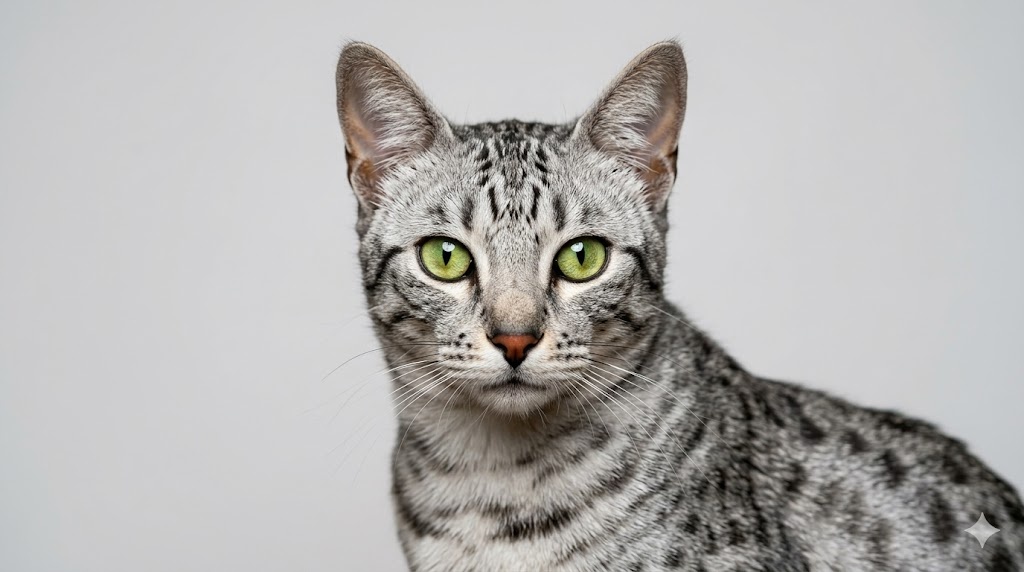
The Egyptian Mau is a medium-sized, naturally spotted shorthaired cat β one of the few naturally spotted breeds (not bred for spots through hybridisation as Bengals were).
Coming soon. Subscribe to the newsletter to get notified when this video drops.
The Egyptian Mau is a medium-sized, naturally spotted shorthaired cat β one of the few naturally spotted breeds (not bred for spots through hybridisation as Bengals were). The breed traces directly to ancient Egyptian cats and is among the fastest domestic cats in the world, capable of running at over 50 km/h.
Cats nearly identical to the modern Mau appear in Egyptian art dating back over 3,000 years. The modern breed was rescued in the 1950s by Russian-born exiled princess Nathalie Troubetskoy, who imported Egyptian Maus to Italy and the US. CFA recognition came in 1977.
Medium-sized, athletic. Adults weigh 3β5 kg (7β10 lb).
Active, affectionate, intelligent. Bonds intensely with family β often with one primary person. Reserved with strangers initially. Vocal but in a softer "chortling" register.
Very low-maintenance: weekly rub-down.
Clean ears monthly. Trim claws every 2 weeks. Brush teeth several times weekly.
12β15 years.
High. The fastest domestic cat needs space, tall cat trees, and interactive play.
Pros: naturally spotted (no wild ancestry), athletic, intelligent, healthy. Cons: reserved with strangers; high exercise needs.
Are they related to Bengals? No β Bengals are hybridised with wild Asian Leopard Cats. The Mau is purely domestic with natural spots.
How fast are they? Among the fastest domestic cats β up to 50 km/h in short bursts.
Are they good with kids? With respectful older children.
Are they hypoallergenic? No.
The Egyptian Mau β Fastest Cat in the World
10β11 minutes
Silver-spotted Egyptian Mau mid-sprint with belly close to ground, gooseberry-green eyes, slim athletic body. Caption: "30 MPH HOUSE CAT".
Action photograph of a silver Egyptian Mau cat in full sprint with belly close to the ground, distinctive random spotted coat, gooseberry-green almond eyes, elegant athletic body, hind legs fully extended, motion-blurred warm desert-like background, golden hour lighting, 85mm lens at f/2.8, professional cat action photography, ultra-sharp focus on face.
The Egyptian Mau is the only naturally spotted domestic cat β and the fastest, reaching 30 mph in short bursts. Today we cover the breed's ancient Egyptian roots, the 1950s Russian-princess rescue, the famous personality, breed health, and whether the Mau is the right cat for you.
β± Timestamps 00:00 Intro Hook 01:00 Origin: Ancient Egypt to a Russian Princess in Italy 02:30 Temperament: Loyal but Reserved 04:00 Care: Coat, Speed, Vertical Space 05:30 Health: Generally Robust 07:00 Training: Trainable but Independent 08:30 3 Biggest Mistakes New Mau Owners Make 10:00 Is The Egyptian Mau Right For You? 11:00 Outro
π Subscribe for a new breed each week.
"If a domestic cat could win a 30-yard dash against any other house cat in the world, it would be the Egyptian Mau. Top speed estimated at 48 km/h β about 30 mph β over short distances. The fastest house cat alive. The Mau is also one of the most ancient. Depicted on Egyptian tomb walls dating to 1550 BCE. Spotted by nature β the only domestic cat with a naturally spotted coat, not introduced by hybridisation. Today: the ancient origin and twentieth-century rescue, temperament, care, health, training, and whether the Mau is your cat."
"Spotted cats appear in Egyptian art and tomb paintings dating from the second millennium BCE. The modern Mau β almost certainly a direct descendant β survived in Egypt as a feral and semi-feral population for thousands of years. The modern pedigreed Mau owes its existence to one person: Princess Nathalie Troubetskoy, a Russian aristocrat living in Rome in the 1950s. She acquired spotted cats from the Egyptian embassy and a small Cairo source population and brought breeding stock to Italy and later the United States. CFA accepted the Mau in 1968. Modern Mau gene pools are small β careful outcrossing programmes have been used to maintain health. Three traditional colours: silver, bronze, smoke. All naturally spotted."
"Egyptian Maus are loyal, intelligent, sensitive, and reserved. They are not the extroverts of the Burmese or Oriental world. They choose their people carefully and devote themselves intensely. Voice is unique. Maus produce a distinctive 'chortle' β a rolling, conversational sound mixed with chirps and trills. Bonding is strong with chosen humans, polite with strangers, sometimes shy with rapid disruption. Energy is high. Maus run, climb, jump, and need outlets. Intelligence is exceptional, especially for problem-solving. With other animals β best with calm confident companions. Pairs of Maus often work well. Some Maus prefer being the only cat. Many enjoy water."
"Coat is short, fine, and easy. Weekly rubber mitt. Bath every two or three months. Nails fortnightly. Teeth daily. Enrichment is essential. Tall cat trees. Wall shelves. Window perches. Catio if possible. Daily interactive play sessions. Indoor only or catio. Litter standard. Stable household preferred. Maus react badly to chaos."
"Lifespan twelve to fifteen years. Health profile is generally robust: Hypertrophic cardiomyopathy β moderate breed risk. Annual cardiac ultrasound from age four. Pyruvate kinase deficiency β DNA testable. Asthma β slightly elevated in this breed. Patellar luxation in some lines. Otherwise a healthy breed with a robust constitution."
"Maus are intelligent and trainable but less eager than Burmese or Aby. Targets: name, recall, sit, fetch, harness wear. Leash training is realistic but the Mau prefers to choose its own pace. Litter solved by the breeder. Scratching: tall sisal posts. Handling tolerance varies β start early."
"Mistake one: chaotic households. The breed is sensitive and dislikes unpredictability. How to avoid: stable routines. Quiet refuge spaces. Slow introductions to new people. Mistake two: not enough space to sprint. A sprint-built cat in a small flat with no climbing options becomes frustrated. How to avoid: cat trees, runways, climbing shelves. Mistake three: harsh handling of a shy kitten. Maus that are pushed become wary adults. How to avoid: gentle patient socialisation. Let the kitten approach you."
"Checklist: You want an athletic, beautiful, sensitive cat. Your home is calm and stable. You can provide vertical space and enrichment. You appreciate a reserved bond over an extroverted one. You want a healthy breed. Tick four β the Mau thrives. If you want an extroverted lap cat, choose a Burmese or Ragdoll."
"That is the Egyptian Mau β the fastest house cat in the world, the spotted survivor of ancient Egypt. Loyal. Athletic. Beautiful. Reserved. Next breed? Comment below. Subscribe and the bell. Next week: the Savannah β the largest pedigree cat, the African Serval hybrid." (End screen: subscribe button, 'watch next: Savannah' thumbnail, channel logo)