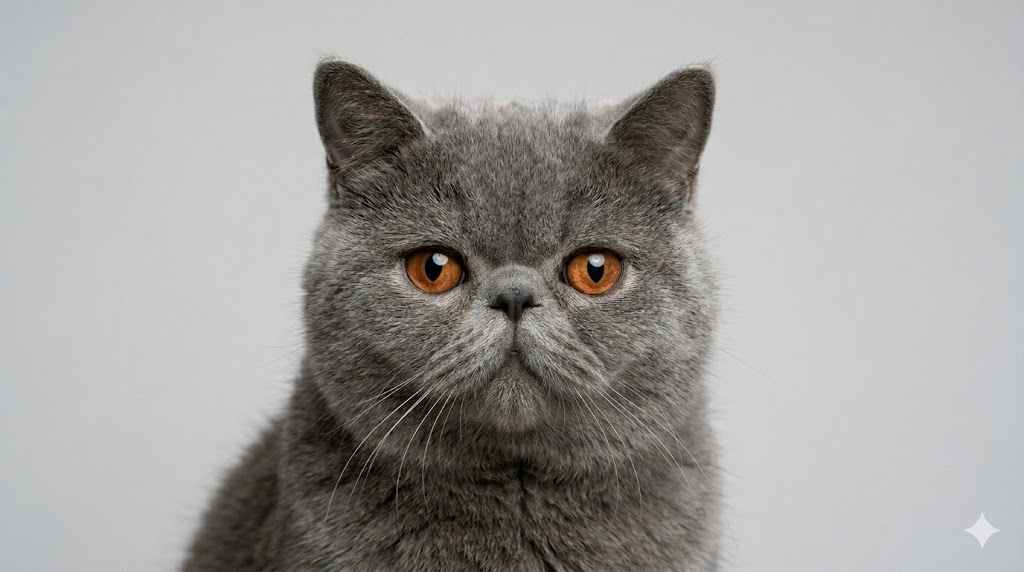
The Exotic Shorthair is the "Persian in pyjamas" β a deliberately bred short-haired version of the Persian cat, retaining the flat face, round head, and calm temperament but with a plush teddy-bear coat that requires far less maintenance.
Coming soon. Subscribe to the newsletter to get notified when this video drops.
The Exotic Shorthair is the "Persian in pyjamas" β a deliberately bred short-haired version of the Persian cat, retaining the flat face, round head, and calm temperament but with a plush teddy-bear coat that requires far less maintenance. Created in the 1960s for owners who loved the Persian look but not the daily brushing, the Exotic Shorthair has become one of the most popular pedigreed breeds globally.
The breed was developed in the 1960s by American Shorthair breeders who crossed their cats with Persians to add silvery colour. The kittens inherited the Persian flat face and round head with American Shorthair short coat. Initially controversial, the new type was eventually accepted and named "Exotic Shorthair" by the CFA in 1966.
Continued outcrossing to Persians and selective breeding has produced a breed identical to the Persian in every respect except coat length. The Exotic Shorthair is sometimes called the "lazy man's Persian."
Identical to Persian except for coat. Adults weigh 3β6 kg (7β13 lb). Cobby, round, plush, flat-faced.
Key features:
Calm, sweet, and dignified β same as the Persian. The Exotic Shorthair is affectionate with family, polite with strangers, and tolerant of children and other pets when introduced calmly.
Most are not lap cats by default but enjoy being near family. The breed is moderately playful in short bursts, quieter than most, and famously easygoing.
The plush short coat is moderate maintenance β far easier than the Persian's. Brush 1β2 times weekly with a stainless-steel comb; daily during seasonal shedding.
Daily face care is required. The flat face produces tear staining; wipe around eyes daily. Clean facial folds 2β3 times weekly. Clean ears monthly. Trim claws every 2 weeks. Brush teeth daily β brachycephalic cats have severe dental crowding.
Modest. Daily play sessions and accessible perches suffice.
Average lifespan is 12β15 years.
Same concerns as Persian:
50β80 g per day. Brachycephalic-friendly kibble shapes help.
Same as Persian. Indoor-only.
Pros
Cons
Not suited for active families wanting an athletic cat or hot climates.
Exotic Shorthair vs Persian β which is easier? Exotic Shorthair coat is much easier (weekly vs daily brushing). Everything else β face care, health risks, temperament β is identical.
Are they good with kids? With respectful older children, yes.
Do they shed? Moderately. Less than Persians but more than typical shorthairs.
Are they hypoallergenic? No.
Why call them "Exotic" if they look like Persians? The name reflects the unusual cross-breeding history rather than the appearance.
The Exotic Shorthair β The Lazy Persian (Full Breed Guide)
10β11 minutes
Round-faced Exotic Shorthair with massive copper eyes staring blankly at camera, flat squashed face, plush teddy-bear coat. Caption: "PERSIAN WITHOUT THE BRUSHING".
Close-up studio photograph of a silver Exotic Shorthair cat with extremely flat squashed face, huge round copper eyes, very short stubby nose, dense plush short coat, sitting upright with paws tucked, soft cream-coloured background, gentle even lighting, 85mm lens at f/2.2, professional pet portrait photography, hyperdetailed fur texture, calm sleepy expression.
The Exotic Shorthair is what happens when you cross a Persian with an American Shorthair β same teddy-bear face, half the grooming. This complete breed guide covers the breed's twentieth-century origins, the famously laid-back temperament, the brachycephalic health concerns, and whether the Exotic is right for your home.
β± Timestamps 00:00 Intro Hook 01:00 Origin: The Lazy Persian 02:30 Temperament: Sweet and Sleepy 04:00 Care: Eyes, Coat, Indoor Living 05:30 Health: Brachycephalic, PKD, HCM 07:00 Training: Realistic Goals 08:30 3 Biggest Mistakes New Exotic Owners Make 10:00 Is The Exotic Right For You? 11:00 Outro
π Subscribe for a new breed each week.
"Imagine a Persian cat. The flat face. The huge round eyes. The plush coat. Now imagine you could keep that cat without daily brushing or matted fur disasters. That is the Exotic Shorthair. Created in the 1960s as a deliberate shorthaired alternative to the Persian, the Exotic delivers the same dreamy face and the same gentle temperament with a coat any first-time owner can manage. Today: the origins, the temperament, the very real health concerns of flat-faced cats, training, the three classic ownership mistakes, and whether the Exotic is the cat for you."
"The Exotic Shorthair was created in the United States in the 1960s. American Shorthair breeders crossed their cats with Persians, originally hoping to introduce the Persian's silver colour into the American Shorthair lines. The kittens looked nothing like American Shorthairs. They had the Persian face, the Persian body, but with a short dense coat. CFA breeder Jane Martinke recognised the new look as marketable and proposed a new breed. CFA accepted the Exotic Shorthair in 1966. Modern Exotics are bred exclusively to the Persian standard for body and face, with only the coat differing. Most outcrosses to Persians are still permitted, so every Exotic litter may include longhaired kittens β these are registered as Persians. The breed has become one of the most popular pedigreed cats in the US, often called the 'lazy man's Persian' for offering the Persian look with shorthair convenience."
"If the Siamese is the loudest cat, the Exotic is the quietest. Calm. Gentle. Sweet-natured. Almost lazy. The Exotic will sit on your knee for hours, watch the world from a windowsill, and never demand anything loudly. Voice is soft and used sparingly. Exotics chirp rather than yowl. Many barely vocalise. Bonding is strong but undemanding. Exotics follow their humans calmly from room to room, prefer adults to children, and tolerate handling well. They are not lap-warmth cats by nature, but they enjoy proximity. Energy is low to moderate. Daily play sessions are appreciated but not essential at high intensity. Many Exotics live happily as gentle apartment companions. With other pets β generally good. Exotics get along with calm dogs, other Exotics, and Persians. High-energy breeds may overwhelm them. They are not climbers. They are not jumpers. They are floor cats who like soft cushions."
"Coat care is genuinely simple. Twice-weekly brushing with a soft slicker, a wipe with a damp cloth, and the Exotic is groomed. No matting, no daily commitment. Eye care, by contrast, is daily and essential. The flat face causes tear duct overflow. Wipe the eye corners every day with a damp cotton pad to prevent staining and skin infections. Nail trim every two weeks. Ear clean monthly. Daily tooth brushing β flat faces crowd the teeth. Climate matters. Brachycephalic cats overheat easily. Keep the home below 26Β°C in summer. Provide cool tile floors. Never leave an Exotic in a hot car or sunlit room. Indoor only. Outdoor life would be a disaster β the short face limits running, the trusting temperament invites trouble, and the coat is meant for sofas. Litter is straightforward. Standard provisions, scooped daily."
"Lifespan is twelve to fifteen years. The big concerns: Brachycephalic airway syndrome. The flat face narrows nasal passages and the soft palate. Snoring, snuffling, heat intolerance, and exercise intolerance are common. In severe cases, surgical correction is needed. Polycystic kidney disease. Common in Persian lines and Exotic Shorthairs. DNA test available β only buy from breeders who test. Hypertrophic cardiomyopathy. Annual cardiac ultrasound from age three onwards in known affected lines. Eye conditions. Cherry eye, entropion, chronic tear staining. Daily eye cleaning prevents most issues. Dental crowding. Daily brushing. Annual professional cleaning under anaesthesia is often needed. Pet insurance is genuinely worth it for this breed. Veterinary care can become substantial in middle age."
"Exotics are intelligent but not eager. They learn at their own pace, motivated by food, not enthusiasm. Realistic targets: name recognition, basic sit, accepting a carrier without fuss, accepting nail trims and grooming, coming when called for food. Skip leash walks. Exotics do not enjoy outdoor exploration. A harness can be used for vet trips but not for daily walks. Litter training is rarely an issue. If problems appear, the cause is almost always medical β particularly urinary issues, which are common in this breed. Scratching: provide soft sisal posts and cardboard scratchers at floor level. Most Exotics scratch lightly compared to active breeds. Handling tolerance is high. Brush, trim, and bathe regularly from kittenhood so adult grooming is uneventful."
"Mistake one: ignoring the heat. Brachycephalic cats can collapse in summer. How to avoid: air conditioning above 24Β°C ambient, cool floor space, never closed in hot rooms, never carried outdoors in summer afternoons. Mistake two: skipping eye care. Tear staining becomes infected skin within weeks. How to avoid: daily eye wipe with a damp pad. Annual ophthalmology check. Mistake three: assuming low energy means low maintenance. Exotics need careful health monitoring, daily dental care, and excellent diet to manage flat-face problems. How to avoid: budget for premium vet care. Insurance. Annual workups. Quality diet."
"Checklist: You want a calm, gentle, low-energy cat. You can manage daily eye and dental care. You can keep the home cool in summer. You can budget for brachycephalic health care. You want a quiet companion, not an athletic one. Tick four β the Exotic fits beautifully. If you want a playful, active, climbing cat β choose a Bengal, an Abyssinian, or a Maine Coon instead."
"That is the Exotic Shorthair β the gentle teddy bear of the cat world. Sweet. Quiet. Beautiful. Needs careful health support, but rewards the careful owner with one of the most affectionate cats you can own. Which breed next? Comment below. Subscribe and the bell. Next week: the Abyssinian β the ancient ticked-coat athlete." (End screen: subscribe button, 'watch next: Abyssinian' thumbnail, channel logo)