Japanese Bobtail
The Japanese Bobtail is an ancient breed from Japan, famous for its distinctive pom-pom tail and as the inspiration for the "Maneki-neko" - the beckoning cat figurine seen in countless Japanese shops and restaurants.
🗓️ Last reviewed: June 2026
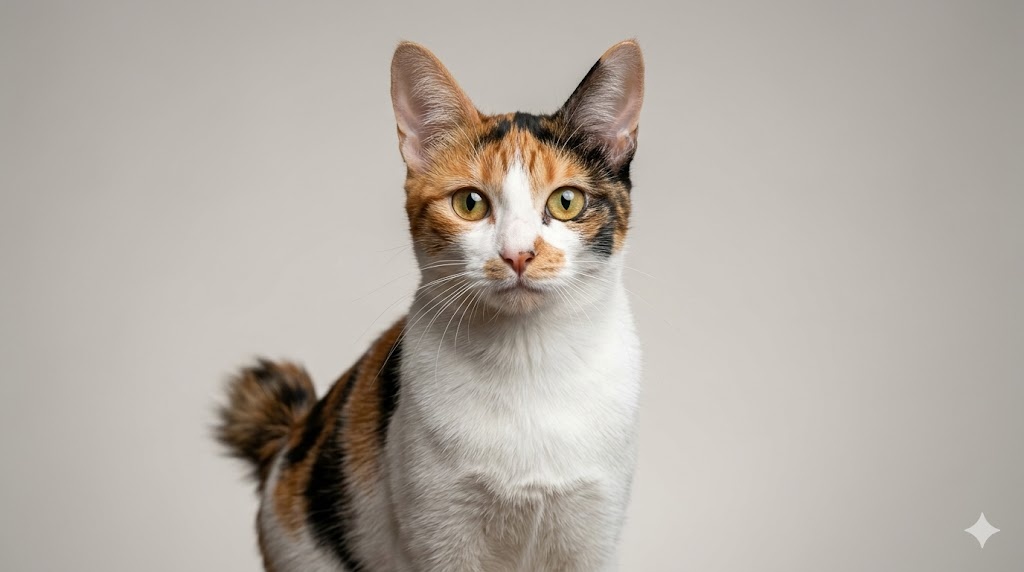
Overview
The Japanese Bobtail is an ancient breed from Japan, famous for its distinctive pom-pom tail and as the inspiration for the "Maneki-neko" - the beckoning cat figurine seen in countless Japanese shops and restaurants. Active, sociable, and intelligent, the breed has lived alongside Japanese people for at least a thousand years.
History & Origins
Bobtailed cats arrived in Japan from China and Korea around the 6th century. The bobtail mutation became common in the isolated island population. Japanese folklore and art feature these cats prominently. CFA recognition came in 1976.
The bobbed tail is genetically distinct from the Manx mutation - the Japanese Bobtail gene affects only the tail, with no associated spinal disease.
Appearance
Medium-sized, slender, athletic. Adults weigh 2.5-4.5 kg (6-10 lb).
- Coat: two varieties - shorthair (silky, close) and longhair (silky, semi-long with feathered tail).
- Colour: all colours. Calico ("mi-ke" - three-colour) is iconic and the basis of the Maneki-neko.
- Tail: the signature - short (5-8 cm), often kinked, pom-pom of fur. Every bobtail is unique.
- Body: lean, athletic.
- Eyes: large, oval, slightly slanted. Odd-eyed (one blue, one gold) is common in white cats.
Temperament & Character
Active, intelligent, sociable, vocal. The breed bonds strongly with family and is excellent with children and other pets. Many learn to fetch and enjoy interactive play.
Care
Coat & Grooming
Shorthair: weekly. Longhair: 2-3 times weekly.
Health & Lifespan
14-18 years.
The breed is generally healthy - no major breed-specific genetic diseases.
Pros & Cons
Pros: healthy, long-lived, sociable, distinctive tail, no welfare issues from the bobtail gene. Cons: active and vocal - not for quiet households.
Japanese Bobtail - frequently asked questions
Are they related to the Manx?
No - different genes, both producing short tails but independently. The Japanese Bobtail gene affects only the tail; the Manx gene causes spinal disease.
What is Maneki-neko?
The "beckoning cat" figurine - a calico Japanese Bobtail with one paw raised, traditionally placed at shop entrances to invite good fortune.
🧠 Test yourself: guess the cat
Three clues from our quiz bank, each about another of our cats. Can you name them?
Clue 1.A curly-coated affectionate cat, this breed may molt its whole coat before it grows back even curlier.
It's the LaPerm - read the full profile →
Clue 2.A sleek, vocal, and affectionate cat with a plume-like tail, it loves to chat with its owner and follow them around the house.
It's the Balinese - read the full profile →
Clue 3.This quiet blue-gray French cat, linked by legend to Carthusian monks, has a dense woolly coat and a faint smiling muzzle.
It's the Chartreux - read the full profile →
💛 Adoptable Japanese Bobtails near you
Real cats of this breed (and close mixes) waiting in shelters and rescues right now, live from Petfinder. We have no affiliation and earn nothing - if someone catches your eye, the link goes straight to their shelter. New to adopting? Start with our adoption guide.
Widget not loading (some ad-blockers hide it)? Search directly on petfinder.com.