Korat
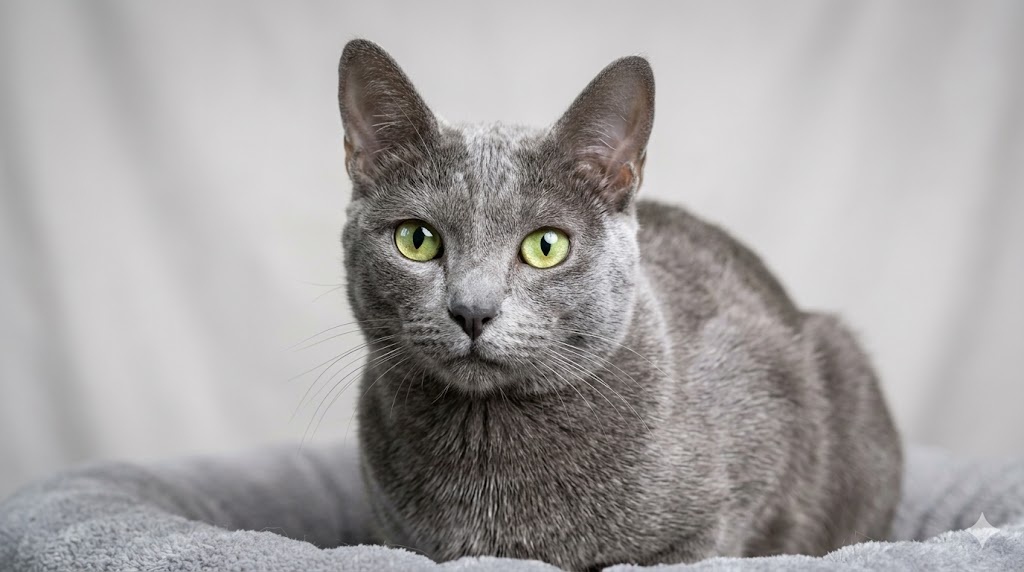
The Korat is one of the oldest natural cat breeds in the world - a small, silver-blue, green-eyed Thai cat considered a "good luck cat" in its native Thailand.
🗓️ Last reviewed: June 2026
Overview
The Korat is one of the oldest natural cat breeds in the world - a small, silver-blue, green-eyed Thai cat considered a "good luck cat" in its native Thailand. The breed has remained essentially unchanged for at least 600 years and is one of the few breeds where new genetic diversity is not introduced through outcrossing.
History & Origins
The Korat appears in the Tamra Maew (Cat Book Poems) of Thailand, a manuscript dating to the 14th century. The breed was historically given as wedding gifts to bring good fortune. The first Korats reached the US in 1959; CFA recognition came in 1966.
Appearance
Small to medium, muscular, heart-shaped face. Adults weigh 3-4.5 kg (6-10 lb).
- Coat: short, single-layered, glossy silver-blue.
- Colour: silver-blue only - slate-grey with silver tipping.
- Eyes: brilliant peridot green (kittens born yellow; eye colour develops over 2 years).
- Head: heart-shaped from the front - broad cheeks, gentle eyebrow curve, pointed muzzle.
- Body: semi-cobby, muscular, surprisingly heavy.
Temperament & Character
Affectionate, intelligent, intensely bonded. Korats form strong attachments - often with one primary person. The breed is reserved with strangers and prefers calm households.
Care
Coat & Grooming
Very low-maintenance: weekly rub-down.
Health & Lifespan
12-16 years.
- Gangliosidosis (GM1 and GM2) - fatal storage diseases; DNA test essential.
- Hypertrophic cardiomyopathy.
Pros & Cons
Pros: ancient natural breed, devoted, low grooming. Cons: GM1/GM2 risk (DNA test); reserved with strangers; uncommon.
Korat - frequently asked questions
Korat vs Russian Blue vs Chartreux?
All three are blue-grey. Korat: Thai, heart-shaped face, single-layered silvery coat, peridot green eyes. Russian Blue: green eyes too, but with a denser plush double coat and longer wedge head. Chartreux: copper eyes, dense water-resistant coat, smiling face.
🧠 Test yourself: guess the cat
Three clues from our quiz bank, each about another of our cats. Can you name them?
Clue 1.A real cat of this breed inspired the grumpy comic-strip lasagna lover Garfield in some adaptations.
It's the Exotic Shorthair - read the full profile →
Clue 2.Essentially a long-haired version of a famous slender, blue-eyed breed, this elegant cat shares the same dark points on a pale body but has a silky, flowing coat.
It's the Balinese - read the full profile →
Clue 3.This affectionate cat is a deliberate hybrid of two Asian-derived breeds, producing a medium 'mink' coat with aqua-colored eyes.
It's the Tonkinese - read the full profile →
💛 Adoptable Korats near you
Real cats of this breed (and close mixes) waiting in shelters and rescues right now, live from Petfinder. We have no affiliation and earn nothing - if someone catches your eye, the link goes straight to their shelter. New to adopting? Start with our adoption guide.
Widget not loading (some ad-blockers hide it)? Search directly on petfinder.com.