Manx
The Manx is a medium-sized tailless cat originating on the Isle of Man in the Irish Sea.
🗓️ Last reviewed: June 2026
Overview
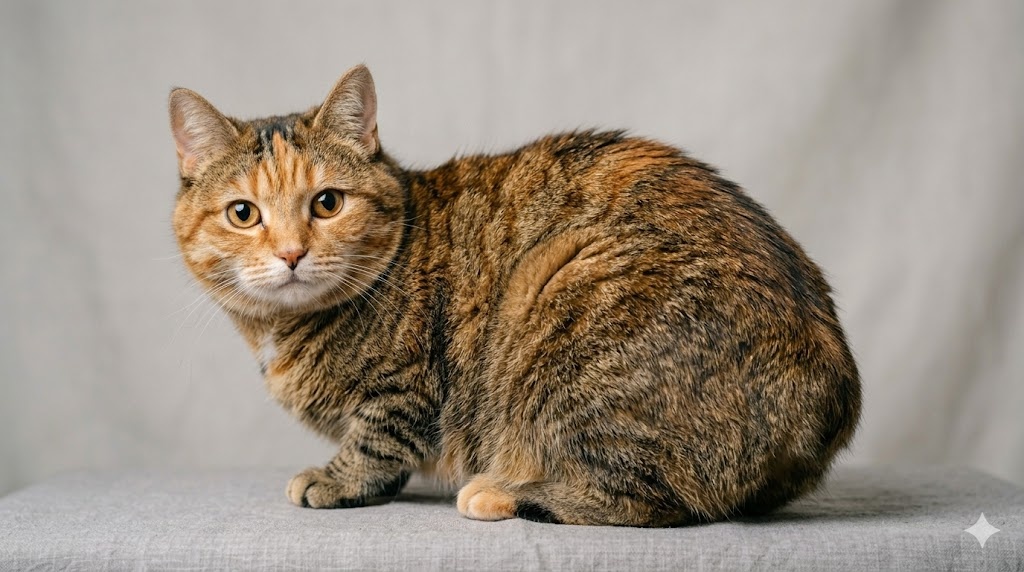
The Manx is a medium-sized tailless cat originating on the Isle of Man in the Irish Sea. The breed's defining feature - the missing tail - comes from a natural mutation that fixed in the isolated island population centuries ago. The Manx is also a robust, intelligent, dog-like cat with a playful temperament and a unique "bunny hop" gait produced by longer hind legs.
History & Origins
The Manx mutation arose on the Isle of Man, where the island's geographic isolation locked in the genetic trait centuries ago. Records of tailless cats on the island go back at least to the early 1800s.
The Manx was one of the earliest pedigreed cat breeds, recognised at the first British cat show in 1871. CFA recognition came in 1906. The breed is the national symbol of the Isle of Man.
Appearance
Medium-sized, round, with a partially or fully missing tail. Adults weigh 3.5-5.5 kg (8-12 lb).
Key features:
- Coat: two varieties - Manx (short, dense, double-layered) and Cymric (semi-longhaired Manx).
- Colour: all colours and patterns.
- Head: round with full cheeks.
- Tail: four official categories - Rumpy (no tail), Rumpy-Riser (tiny stub), Stumpy (short partial tail), Longy (nearly full tail).
- Body: rounded ("a circle when viewed from the side"), with hindquarters higher than the front (the famous Manx hop).
- Hindquarters: longer hind legs than front, producing a rabbit-like gait.
Temperament & Character
Calm, intelligent, dog-like. The Manx is famously friendly - affectionate with family, tolerant of children, polite with strangers. The breed bonds strongly and is often described as "more dog than cat" - many learn fetch, walk on harnesses, and follow owners constantly.
Care
Coat & Grooming
Manx: weekly brushing. Cymric: 2-3 times weekly.
Clean ears monthly. Trim claws every 2 weeks. Brush teeth several times weekly.
Exercise & Enrichment
Moderate-high. Provide climbing structures and interactive play. The Manx is athletic despite the lack of tail.
Health & Lifespan
Average lifespan is 8-14 years.
The defining concern is Manx syndrome - the same gene that produces taillessness causes spinal cord, nerve, and pelvic abnormalities to varying degrees. Severe cases produce incontinence, hind-leg paralysis, and digestive issues; these usually manifest by 6 months.
Homozygous Manx kittens (two copies of the gene) die in utero - every Manx is heterozygous. Reputable breeders never breed Rumpy × Rumpy, monitor kittens for early signs, and openly discuss the welfare implications.
Other concerns:
- Megacolon - chronic constipation due to nerve issues.
- Spina bifida.
- Arthritis in older cats.
- Hypertrophic cardiomyopathy.
Feeding & Nutrition
50-80 g per day. High-fibre diets help if megacolon develops.
Living With
Indoor/outdoor
Indoor-only is safest given potential nerve issues.
Pros & Cons
Pros
- Dog-like personality.
- Trainable and interactive.
- Distinctive, charming appearance.
- Sturdy, athletic.
Cons
- Manx syndrome - genuine welfare concern.
- Choose carefully from a responsible breeder.
- Reduced lifespan in affected cats.
Best Suited For
- Owners aware of and accepting of breed welfare considerations.
- Active households wanting a dog-like cat.
- Multi-pet homes.
Not suited for owners uncomfortable with the breed's health welfare issues.
Manx - frequently asked questions
Are all Manx tailless?
No. The breed has four tail categories - Rumpy (no tail) to Longy (nearly full tail). Show-quality Manx are typically Rumpy or Rumpy-Riser.
What is Manx syndrome?
A collection of spinal and nerve abnormalities caused by the same gene that produces taillessness. Severity varies from undetectable to severe. Affected cats may have incontinence, paralysis, or megacolon.
Why do they hop like rabbits?
The longer hind legs produce a distinctive bouncing gait. Whether they "hop" varies by individual - some look almost normal, others very rabbit-like.
How long do they live?
8-14 years. Affected cats may live shorter; unaffected Manx live typical cat lifespans.
Are they hypoallergenic?
No.
🧠 Test yourself: guess the cat
Three clues from our quiz bank, each about another of our cats. Can you name them?
Clue 1.This long-haired cat blends a flat-faced body type with the blue eyes and dark color points of a Siamese.
It's the Himalayan - read the full profile →
Clue 2.One of the oldest natural longhair breeds, this elegant cat from a Turkish capital region is often pure white with a silky single coat.
It's the Turkish Angora - read the full profile →
Clue 3.This sleek, vocal cat has a pale body with darker 'points' on the ears, face, paws, and tail caused by a temperature-sensitive gene.
It's the Siamese - read the full profile →
💛 Adoptable Manxs near you
Real cats of this breed (and close mixes) waiting in shelters and rescues right now, live from Petfinder. We have no affiliation and earn nothing - if someone catches your eye, the link goes straight to their shelter. New to adopting? Start with our adoption guide.
Widget not loading (some ad-blockers hide it)? Search directly on petfinder.com.