🐾 Smart pet care, real pet parent NEW 50+ buyer guides published πŸ“© Weekly newsletter As an Amazon Associate we earn from qualifying purchases
Home/ Pets/ Cats/ Norwegian Forest Cat

Norwegian Forest Cat

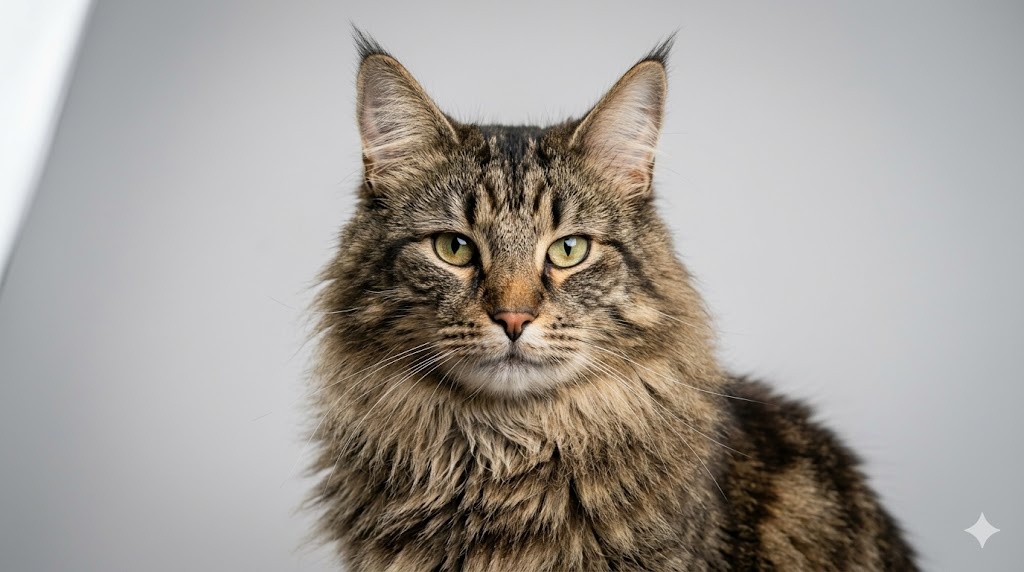
The Norwegian Forest Cat β€” universally called the "Wegie" β€” is a large, long-coated Scandinavian breed that has evolved over centuries to survive the freezing forests of Norway.

🐈
🐾
Coming soon
πŸ“Ί Video guide in production

Norwegian Forest Cat β€” the full video guide

Coming soon. Subscribe to the newsletter to get notified when this video drops.

Lifespan
14–16 years
Weight
5–8 kg
Category
Cats
Difficulty
See care section

Overview

The Norwegian Forest Cat β€” universally called the "Wegie" β€” is a large, long-coated Scandinavian breed that has evolved over centuries to survive the freezing forests of Norway. With a thick weatherproof double coat, tufted ears and paws, and a powerful athletic build, the breed combines the appearance of a small lynx with a calm, affectionate temperament. The Norwegian Forest Cat is one of Norway's national symbols and features in Viking-era mythology β€” the goddess Freya's chariot was reportedly pulled by two giant cats often identified with this breed.

History & Origins

The breed has lived in Norway's forests for at least a thousand years, probably descended from longhaired cats brought by Crusaders, Byzantine traders, or Viking settlers. Adaptation to Scandinavian winters produced the distinctive water-repellent double coat.

The breed nearly disappeared during World War II through cross-breeding with farm cats. King Olav V designated the Norwegian Forest Cat the official national cat in the 1970s, helping rebuild numbers. The breed reached North America in 1979; CFA recognition came in 1993.

Appearance

Large, muscular, long-coated. Males weigh 5.5–8 kg (12–18 lb); females 4–6 kg. Slow-maturing β€” full size by age 4–5.

Key features:

  • Coat: long, dense, water-resistant double coat. Glossy outer "guard hair" repels water; thick woolly undercoat insulates. Heavy ruff, britches, and plumed tail. The coat changes dramatically with seasons β€” full and substantial in winter, slimmer in summer.
  • Colour: all colours and patterns except pointed (Siamese-style). Most common: brown tabby with white.
  • Head: triangular when viewed from the front, with a straight profile.
  • Eyes: large, almond-shaped, slightly slanted.
  • Ears: large, set high, heavily tufted (lynx tips).
  • Body: long, powerful, with substantial bone.
  • Tail: as long as the body, heavily plumed.
  • Paws: large, with tufts of fur between toes (snowshoes).

Temperament & Character

Calm, gentle, and friendly. The Norwegian Forest Cat bonds with family without being overly demanding. The breed is independent β€” affectionate when it wants attention, content alone when it doesn't.

Most are excellent with children, tolerant of other cats and dogs, and polite with strangers (though some are reserved with new people).

The breed retains strong working-cat instincts. Wegies climb trees enthusiastically (head-first descents are common), hunt mice with skill, and many enjoy water. Cat trees should be tall and sturdy.

Care

Coat & Grooming

The double coat is significant maintenance. Brush 2–3 times weekly with a long-toothed metal comb and a de-shedding tool. Daily during the dramatic spring shed.

Bathe every 2–3 months. The water-resistant coat actually resists shampoo too; double-soap baths may be needed. Clean ears monthly. Trim claws every 2 weeks. Brush teeth several times weekly.

Never shave a Norwegian Forest Cat β€” the double coat is essential thermoregulation.

Exercise & Enrichment

High. Provide tall cat trees, climbing structures, and interactive play. Many Wegies enjoy harness walks and outdoor catios. The breed is athletic and benefits from real activity.

Health & Lifespan

Average lifespan is 14–16 years.

Common concerns:

  • Glycogen storage disease type IV (GSD-IV) β€” fatal in homozygous kittens; DNA test essential.
  • Hypertrophic cardiomyopathy.
  • Polycystic kidney disease.
  • Hip dysplasia β€” uncommon in cats but elevated in large breeds.
  • Dental disease.
  • Obesity.

Choose a breeder DNA-testing for GSD-IV.

Feeding & Nutrition

70–100 g of quality cat food per day. The breed is large and food-motivated.

Living With

Multi-cat households

Tolerant; many do well with other cats and dogs.

Indoor vs outdoor

Adapts to either. Indoor-only is safest; the breed's climbing makes catios excellent. Cold tolerance is exceptional β€” many Wegies enjoy snow.

Pros & Cons

Pros

  • Calm, family-tolerant temperament.
  • Excellent with children.
  • Sturdy and generally healthy.
  • Beautiful, distinctive appearance.
  • Cold-tolerant.

Cons

  • Heavy seasonal shedding.
  • Slow to mature (4–5 years).
  • Large size; expensive to feed.
  • Requires real climbing space.
  • GSD-IV risk; choose tested breeder.

Best Suited For

  • Families with children of any age.
  • Active homes with space for climbing.
  • Multi-pet households.
  • Cold or mild climates.

Not suited for small apartments without vertical space or owners unable to commit to seasonal grooming.

FAQ

Norwegian Forest Cat vs Maine Coon vs Siberian β€” what's the difference? All three are large longhaired natural breeds adapted to cold climates. Norwegian has the most water-resistant coat, double coat with separate guard and wool layers, and the most triangular face. Maine Coon is largest, more rectangular, and lion-maned. Siberian has the densest coat and may be lower-allergen.

Are they good with kids? Excellent β€” gentle, sturdy, patient.

Do they really climb trees head-first down? Yes. The breed has slightly more flexible ankle joints than most cats, allowing head-first descent of trees and tall structures.

Are they hypoallergenic? No. The coat sheds heavily and produces dander like most longhaired breeds.

How long do they live? 14–16 years on average. Lean weight, cardiac screening push the upper end.

🎬 YOUTUBE LONG-FORM SCRIPT

Working title

The Norwegian Forest Cat β€” The Viking's Companion

Estimated length

10–11 minutes

Thumbnail concept

Majestic Norwegian Forest Cat on a snowy log, thick double coat, ruff and tufted ears, mountain backdrop. Caption: "THE VIKING CAT".

Thumbnail Image Prompt

A majestic brown tabby Norwegian Forest Cat perched on a snow-covered fallen log, massive thick double coat with long ruff and tufted ears and bushy tail, large almond green-gold eyes, alert noble pose, pine forest and snow background, soft Nordic winter light, 85mm lens at f/2.8, cinematic professional cat photography, ultra-sharp focus on eyes.

Description with timestamps

The Norwegian Forest Cat β€” Skogkatt β€” is a thousand-year-old breed bred by the Norwegian climate itself. Massive coat, hardy build, gentle temperament. Today's guide covers the Viking origins, climbing-cat temperament, coat care, health profile, and whether the Wegie fits your home.

⏱ Timestamps 00:00 Intro Hook 01:00 Origin: A Thousand Years in the Norwegian Forest 02:30 Temperament: Gentle Climber 04:00 Care: That Coat, Vertical Space 05:30 Health: HCM, GSD IV, Hip Dysplasia 07:00 Training: Patient Progress 08:30 3 Biggest Mistakes New Wegie Owners Make 10:00 Is The Norwegian Forest Cat Right For You? 11:00 Outro

πŸ”” Subscribe for a new breed each week.

00:00–01:00 INTRO HOOK

"Imagine a cat bred not by humans but by a thousand years of Norwegian winters. Thick double coat. Tufted ears. Bushy tail. Powerful build. Climbing claws. That is the Norwegian Forest Cat β€” the Skogkatt of Viking sagas. Often confused with the Maine Coon, but a distinct, ancient, Scandinavian breed in its own right. Today: the Viking origins, the gentle temperament, the coat care reality, breed health, training, mistakes, and whether the Wegie is your cat."

01:00–02:30 ORIGIN: A THOUSAND YEARS IN THE NORWEGIAN FOREST

"The Skogkatt β€” 'forest cat' in Norwegian β€” appears in Norse mythology and folklore as the cat that drew Freya's chariot. Bones from semi-longhaired cats have been found in Viking-era Norwegian sites, suggesting the breed has existed for at least a thousand years. The cats were working farm and ship cats throughout Scandinavia. The harsh climate selected for thick water-repellent double coats, large strong bodies, and tufted protective ears. By the early twentieth century crossbreeding with shorthairs threatened the type. King Olav V declared the Skogkatt the official cat of Norway, and a structured preservation breeding programme began in the 1930s. FIFe recognised the breed in 1977. CFA accepted it in 1993. Today the Wegie is one of the most popular cats in Scandinavia and increasingly popular worldwide. The closely-related Maine Coon and the Siberian share some genetic background but the Wegie is a distinct breed."

02:30–04:00 TEMPERAMENT: GENTLE CLIMBER

"Norwegian Forest Cats are gentle, friendly, intelligent, and quietly affectionate. They are not the lap-on-arrival cats of the Ragdoll, but they are warm, calm, and deeply bonded to their families. Voice is soft. Chirps and trills. Quiet by most standards. Bonding is family-wide rather than one-person. Wegies greet everyone, sit near everyone, and rarely hide. They take their time warming up to strangers but are not nervous. Energy is moderate. Wegies are excellent climbers β€” they descend trees head-first, unusually for cats β€” and love to be up high. They are not sprinters or hunters by modern temperament; they are calm observers. With other animals β€” good. Wegies pair well with other Wegies, calm dogs, and most cat breeds. Their size can intimidate timid pets but their temperament is gentle. Children β€” excellent. Patient, tolerant, gentle even with toddlers."

04:00–05:30 CARE: THAT COAT, VERTICAL SPACE

"The coat is the most labour-intensive part of Wegie ownership. The double coat β€” long water-repellent guard hairs over a dense woolly undercoat β€” needs: Twice-weekly brushing minimum. Daily during the spring coat-shed (March–May), when the entire undercoat sheds out over six weeks. Slicker brush plus metal comb. Never let mats form. Pay attention to armpits, britches, ruff, and the belly. Bath every two or three months. The water-repellent coat resists wetting β€” use a degreasing pre-shampoo. Nails fortnightly. Teeth daily. Ears monthly. Vertical space is essential. Wegies want to climb. Tall cat trees, bookshelves, wall shelves. A house with no climbing options will frustrate the cat. Indoor with catio is ideal. Wegies can live as indoor-outdoor cats in safe rural areas but indoor-only is safest. Litter: large open boxes β€” these are big cats."

05:30–07:00 HEALTH: HCM, GSD IV, HIP DYSPLASIA

"Lifespan twelve to sixteen years. Health concerns: Hypertrophic cardiomyopathy. Annual cardiac ultrasound from age three to four in affected lines. Glycogen storage disease type IV β€” a fatal metabolic disease, fortunately rare and DNA-testable. Hip dysplasia β€” common in large cats. Reputable breeders screen. Polycystic kidney disease β€” occasional. Pyruvate kinase deficiency β€” DNA testable. Otherwise the breed is generally robust and long-lived. The combination of an ancient working-cat genetic background and conscientious modern breeding keeps the breed healthy. Diet: high-quality with adequate calories β€” Wegies are large active cats. Watch the weight; large frames hide obesity easily."

07:00–08:30 TRAINING: PATIENT PROGRESS

"Wegies are intelligent but unhurried. They train slowly and on their own terms. Realistic targets: name, recall, sit, accepting handling, harness wear, basic tricks. Leash training is realistic but Wegies prefer climbing to walking on a lead. Litter training is rarely a problem. Scratching: provide thick tall sisal posts and large horizontal scratchers β€” small posts are inadequate for cats this size. Handling and grooming tolerance must be trained from kittenhood. An adult Wegie that refuses brushing becomes a serious matting problem."

08:30–10:00 3 BIGGEST MISTAKES NEW WEGIE OWNERS MAKE

"Mistake one: underestimating the coat. Two weeks of skipped brushing equals serious matting and a vet appointment for shaving. How to avoid: schedule twice-weekly brushing as a fixed routine. Daily in spring. Mistake two: no vertical space. Wegies need height. A flat low-ceilinged apartment without climbing options frustrates the cat. How to avoid: install wall shelves, tall cat trees, bookshelf access. Mistake three: skipping cardiac screening. HCM is the major Wegie health risk and is silent until late stages. How to avoid: buy from cardiac-screened lines. Annual ultrasound from age four."

10:00–11:00 IS THE NORWEGIAN FOREST CAT RIGHT FOR YOU?

"Checklist: You want a large, calm, gentle cat. You can manage twice-weekly grooming. You have vertical climbing space. You can budget for cardiac screening and high-quality diet. You want a family cat rather than a one-person bond. Tick four β€” the Wegie is wonderful. If you want a low-maintenance shorthair, choose a British Shorthair or Russian Blue."

11:00–11:30 OUTRO AND CTA

"That is the Norwegian Forest Cat β€” the Viking's companion, the Skogkatt of the Norse sagas. Large. Gentle. Coat for days. A thousand-year breed for the patient family. Next breed? Comment below. Subscribe and the bell. Next week: the Oriental Shorthair β€” the elegant rainbow cousin of the Siamese." (End screen: subscribe button, 'watch next: Oriental Shorthair' thumbnail, channel logo)

One smart pet email a week.

Vet-reviewed care, training, and gear. No spam, unsubscribe in one click.

🐢
🐱
🐰