Oriental Shorthair
The Oriental Shorthair is the Siamese in every colour and pattern except the iconic pointed coat.
🗓️ Last reviewed: June 2026
Overview
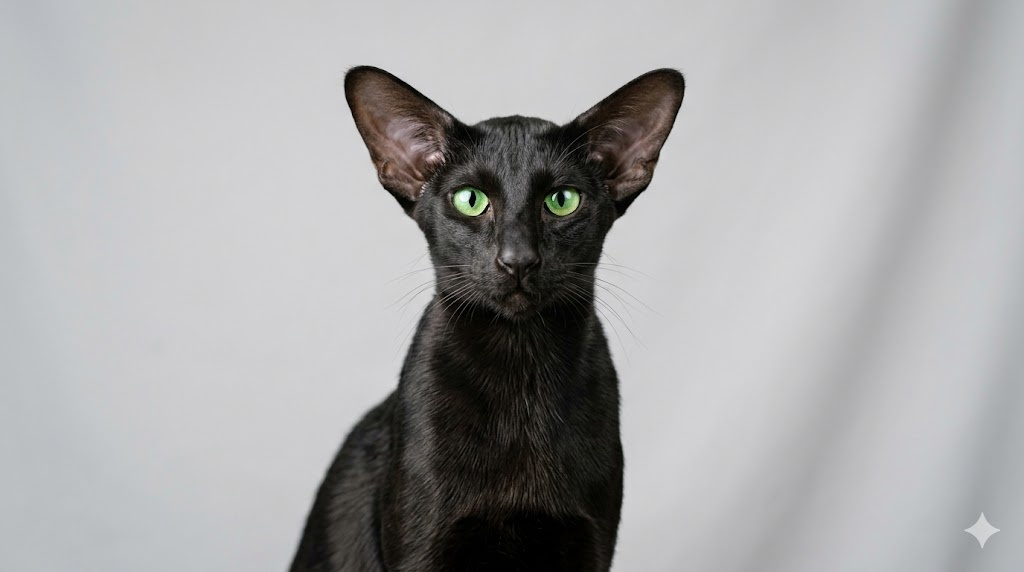
The Oriental Shorthair is the Siamese in every colour and pattern except the iconic pointed coat. Sleek, fine-boned, large-eared, and intensely social, the breed shares the Siamese temperament - vocal, intelligent, deeply bonded, demanding - while offering an enormous palette of coat colours (over 300 recognised variations). For Siamese lovers who want the personality without the pointed pattern, the Oriental Shorthair is the answer.
History & Origins
The breed was developed in 1950s Britain from outcrosses between Siamese and other breeds (Russian Blue, British Shorthair, Abyssinian) to introduce new colours after the breed pool nearly collapsed in World War II. The resulting non-pointed cats were originally called "Foreign Shorthairs." CFA recognition came in 1977.
The Oriental Longhair is the same breed with long hair. The Balinese is the long-haired Siamese. All three are essentially the same breed with different coat varieties.
Appearance
Medium-sized, very slender, fine-boned. Adults weigh 3.5-5 kg (8-11 lb).
Key features:
- Coat: very short, fine, glossy.
- Colour: over 300 recognised colours and patterns - solid, tabby, smoke, parti-colour, bicolour, in every shade.
- Head: long, tapering wedge - sharper than even the Siamese show standard.
- Eyes: brilliant green almond-shaped (blue in white cats).
- Ears: very large, set wide.
- Body: long, slender, fine-boned, tubular.
- Tail: very long, thin, whip-like.
Temperament & Character
Vocal, intelligent, demanding, intensely affectionate. Identical to Siamese temperament. The breed bonds intensely with family, demands attention, follows owners constantly, and dislikes being alone.
Care
Coat & Grooming
Very low-maintenance: weekly rub-down. Sheds minimally.
Clean ears monthly (large ears collect debris). Trim claws every 2 weeks. Brush teeth daily.
Exercise & Enrichment
High. Cat trees, interactive toys, training. The breed needs significant engagement.
Health & Lifespan
Average lifespan is 12-18 years. Same concerns as Siamese:
- Amyloidosis, asthma, dental disease, HCM, PRA, dilated cardiomyopathy.
Feeding & Nutrition
40-70 g per day.
Living With
Multi-cat
Excellent with other Orientals or Siamese.
Indoor only.
Pros & Cons
Pros
- Siamese personality in every colour.
- Long-lived.
- Highly intelligent.
- Very low grooming.
Cons
- Loud and demanding.
- Cannot tolerate being alone.
- Same health risks as Siamese.
Best Suited For
- Siamese lovers wanting different colour.
- Active households.
- Multi-cat homes.
Not suited for noise-sensitive households or working homes.
Oriental Shorthair - frequently asked questions
Oriental Shorthair vs Siamese - what's the difference?
Same breed, different coat. Oriental has solid, tabby, or other non-pointed patterns. Siamese has the pointed coat. Personality identical.
Are they hypoallergenic?
No.
Do they bark?
They are extremely vocal - loud, persistent, conversational meowing.
🧠 Test yourself: guess the cat
Three clues from our quiz bank, each about another of our cats. Can you name them?
Clue 1.This large Scandinavian breed has a thick, waterproof double coat that helped it survive harsh northern winters.
It's the Norwegian Forest Cat - read the full profile →
Clue 2.This elegant cat is prized for its dense, shimmering silver-blue coat and vivid green eyes.
It's the Russian Blue - read the full profile →
Clue 3.The tri-color 'mi-ke' pattern of this Asian breed inspired the waving lucky-cat figurine.
It's the Japanese Bobtail - read the full profile →
💛 Adoptable Oriental Shorthairs near you
Real cats of this breed (and close mixes) waiting in shelters and rescues right now, live from Petfinder. We have no affiliation and earn nothing - if someone catches your eye, the link goes straight to their shelter. New to adopting? Start with our adoption guide.
Widget not loading (some ad-blockers hide it)? Search directly on petfinder.com.