Pixie-bob
The Pixie-bob is a large, wild-looking American breed designed to resemble the North American Bobcat - though genetic testing has confirmed the breed is fully domestic with no wildcat ancestry.
🗓️ Last reviewed: June 2026
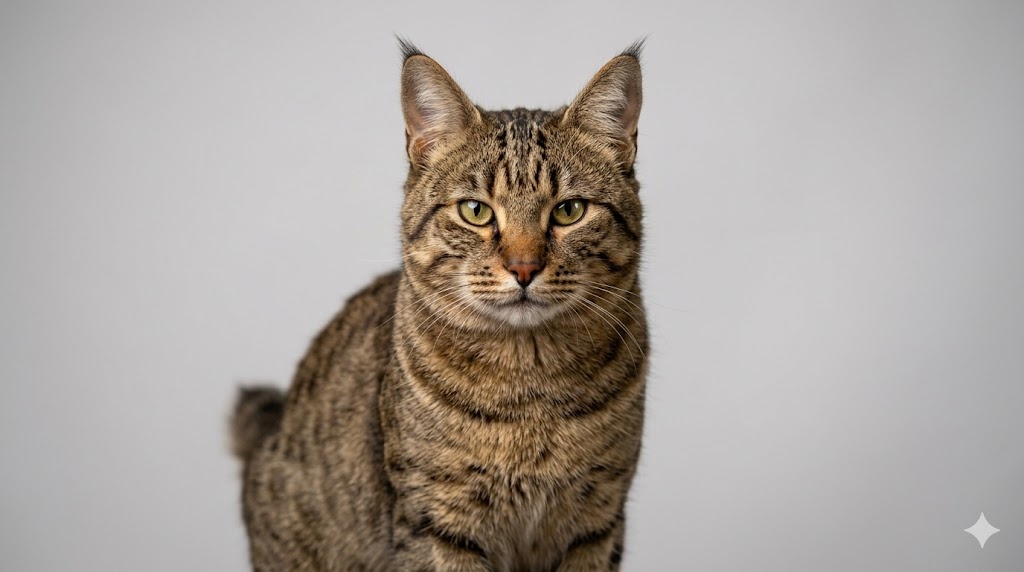
Overview
The Pixie-bob is a large, wild-looking American breed designed to resemble the North American Bobcat - though genetic testing has confirmed the breed is fully domestic with no wildcat ancestry. Sturdy, intelligent, and dog-like, the Pixie-bob is loyal, vocal, and unusually polydactyl-friendly (the breed standard accepts up to seven toes per paw).
History & Origins
The breed was created by Carol Ann Brewer in Washington state in 1985, starting with a spotted polydactyl barn cat she believed had wildcat ancestry. Genetic testing has since shown no wildcat genes. TICA recognised the breed in 1998.
Appearance
Medium-large, robust. Adults weigh 4-8 kg (9-18 lb); males up to 11 kg.
- Coat: short or long, dense.
- Colour: brown spotted tabby only.
- Tail: short, bobbed (2-15 cm).
- Toes: polydactylism accepted - up to seven toes per paw.
- Eyes: medium-sized, gold or hazel.
Temperament & Character
Loyal, intelligent, dog-like. Most Pixie-bobs are devoted to family, learn fetch and tricks, walk on harnesses, and bond with one or two primary people.
Care
Standard cat care. Coat varies by variety.
Health & Lifespan
12-15 years.
- Hypertrophic cardiomyopathy (uncommon).
- The bobtail and polydactyl traits don't appear to cause health issues.
Pros & Cons
Pros: wild appearance with domestic temperament, loyal, intelligent. Cons: uncommon; some lines have inconsistent type.
Pixie-bob - frequently asked questions
Are they part bobcat?
No - genetic testing confirmed fully domestic ancestry despite the resemblance.
Why polydactyl?
Accepted as part of the breed standard. Doesn't cause health issues.
🧠 Test yourself: guess the cat
Three clues from our quiz bank, each about another of our cats. Can you name them?
Clue 1.Descended from working cats that sailed to North America with early European settlers to control rodents aboard ship, this sturdy breed was prized for its hunting skill.
It's the American Shorthair - read the full profile →
Clue 2.Often called the 'lazy man's Persian,' this flat-faced cat offers the same squashed look with a dense, plush, low-maintenance coat.
It's the Exotic Shorthair - read the full profile →
Clue 3.Famously curious and energetic, this short-haired breed is nicknamed the clown of the cat world and loves climbing to the highest perch in the room.
It's the Abyssinian - read the full profile →
💛 Adoptable Pixie-bobs near you
Real cats of this breed (and close mixes) waiting in shelters and rescues right now, live from Petfinder. We have no affiliation and earn nothing - if someone catches your eye, the link goes straight to their shelter. New to adopting? Start with our adoption guide.
Widget not loading (some ad-blockers hide it)? Search directly on petfinder.com.