🐾 Smart pet care, real pet parent NEW 50+ buyer guides published πŸ“© Weekly newsletter As an Amazon Associate we earn from qualifying purchases
Home/ Pets/ Cats/ Russian Blue

Russian Blue

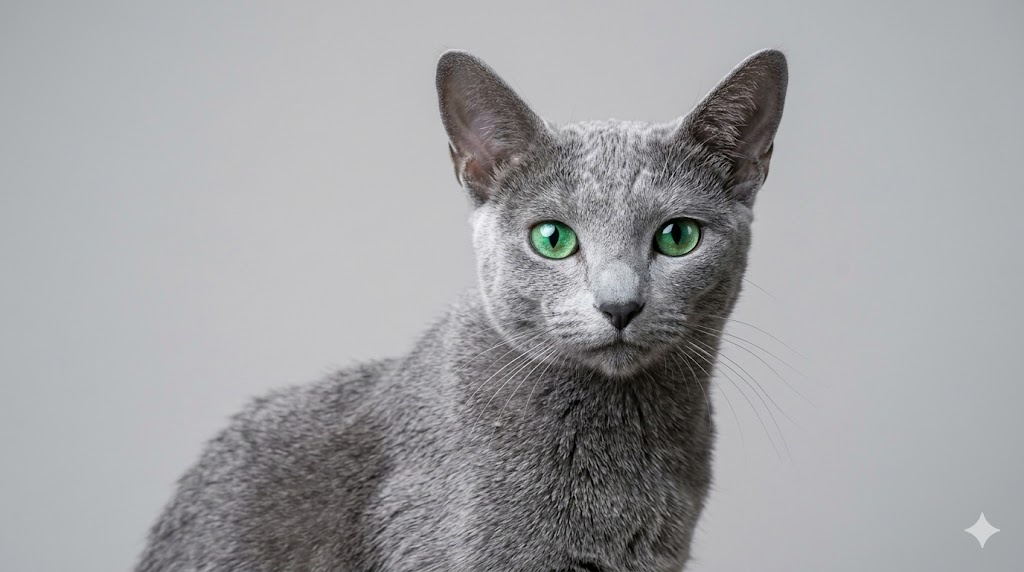
The Russian Blue is an elegant, silver-blue, green-eyed cat with a refined manner and a famously soft "smile." Originating in the cold port city of Arkhangelsk in northwestern Russia, the breed combines a uniquely dense double coat with a gentle, reserved temperament that makes it one of the most quietly devoted of the pedigreed breeds.

🐈
🐾
Coming soon
πŸ“Ί Video guide in production

Russian Blue β€” the full video guide

Coming soon. Subscribe to the newsletter to get notified when this video drops.

Lifespan
15–20 years
Weight
3–5 kg
Category
Cats
Difficulty
See care section

Overview

The Russian Blue is an elegant, silver-blue, green-eyed cat with a refined manner and a famously soft "smile." Originating in the cold port city of Arkhangelsk in northwestern Russia, the breed combines a uniquely dense double coat with a gentle, reserved temperament that makes it one of the most quietly devoted of the pedigreed breeds. The Russian Blue is also one of the lower-allergen cats β€” many allergy sufferers tolerate the breed better than others.

History & Origins

The breed's origins are in Arkhangelsk, a port city in northwestern Russia near the Arctic Circle. Sailors are believed to have brought the cats to Britain in the 1860s. The breed was originally called the "Archangel Cat" before adopting the modern name.

World War II devastated the breed in Britain. Surviving cats were crossed with Siamese (for type) and British Shorthairs (for substance) to rebuild. The CFA recognised the modern Russian Blue in 1949. Outcrossing continues at a low level to maintain genetic diversity.

Appearance

Medium-sized, slender, elegant. Adults weigh 3–5 kg (7–11 lb).

Key features:

  • Coat: short, dense, plush, with a distinctive silvery sheen. The coat stands away from the body β€” owners can run their fingers through it and the impression remains briefly. Truly double-layered.
  • Colour: solid blue (a slate-grey colour) only. Silver tips on the guard hairs produce the trademark sheen.
  • Eyes: brilliant emerald green (kittens are born yellow; adult eye colour develops by 4 months).
  • Head: seven flat planes in show standard β€” a uniquely angular skull.
  • Body: slender, fine-boned, muscular.
  • Tail: medium-long, tapering.

The famous "Russian smile" comes from the slight upturn at the mouth corners.

Temperament & Character

Gentle, reserved, intelligent, affectionate. The Russian Blue bonds strongly with family β€” often with one or two primary people β€” and is famously shy with strangers. The breed will retreat when guests arrive and re-emerge when the household returns to normal.

Within the family Russian Blues are demonstratively affectionate but quiet β€” soft voices, gentle requests, light play. The breed is intelligent and can learn fetch, sit, and simple tricks.

The Russian Blue is independent. Most tolerate alone-time well, making the breed suitable for working households.

Care

Coat & Grooming

The dense double coat is moderate-maintenance: brush 1–2 times weekly. Sheds modestly, more during seasonal coat changes.

Clean ears monthly. Trim claws every 2 weeks. Brush teeth several times weekly.

Exercise & Enrichment

Moderate. Daily play sessions, accessible perches, puzzle feeders. The breed is less active than Abyssinians or Bengals but enjoys interactive engagement.

Health & Lifespan

Average lifespan is 15–20 years β€” among the longest of any breed.

The Russian Blue is one of the healthiest pedigreed cats. Common concerns:

  • Bladder stones β€” slightly elevated rates.
  • Dental disease.
  • Obesity.

The breed has no major breed-specific genetic diseases.

Feeding & Nutrition

50–70 g per day. Measured meals; the breed gains weight easily.

Living With

Litter, multi-cat, indoor

Standard provisions. Excellent with other cats when properly introduced. Indoor-only is safest.

Pros & Cons

Pros

  • Healthiest of the pedigreed breeds.
  • Long-lived (often 17–20 years).
  • Quiet, gentle, devoted.
  • Often tolerated by allergy sufferers.
  • Adaptable to working households.

Cons

  • Shy with strangers; may hide from guests.
  • Conservative β€” dislikes household changes.
  • Not particularly playful or interactive.

Best Suited For

  • Quiet households.
  • Working singles or couples.
  • Allergy-sensitive owners (with caution).
  • First-time cat owners willing to accept a reserved cat.

Not suited for households with constant visitors, owners wanting an outgoing cat, or homes with chaotic schedules.

FAQ

Are Russian Blues hypoallergenic? Not fully, but the breed produces lower levels of Fel d 1 protein than most. Many allergy sufferers tolerate Russian Blues better than other breeds.

Are they good with kids? With respectful older children, yes. The breed's shyness makes households with toddlers or constant visitors difficult.

Do they shed? Moderately. The dense coat produces visible loose hair, especially during seasonal coat changes.

Why are they so shy? Breed-typical β€” Russian Blues are sensitive and prefer routine. Most warm up within a few visits to a regular guest.

How long do they live? Often 17–20 years. Among the longest-lived pedigreed cats.

🎬 YOUTUBE LONG-FORM SCRIPT

Working title

The Russian Blue β€” The Silent Aristocrat (Complete Breed Guide)

Estimated length

10–11 minutes

Thumbnail concept

Russian Blue in elegant studio pose, vivid green eyes, plush silver-blue coat catching backlight, regal calm expression. Caption: "THE QUIET ONE".

Thumbnail Image Prompt

Studio photograph of a Russian Blue cat sitting upright in elegant pose, plush double silver-blue coat with iridescent sheen, brilliant emerald-green almond eyes, slight Mona Lisa smile, refined wedge head shape, dark grey gradient background, rim lighting picking up coat shimmer, 85mm lens at f/2, professional pet portrait photography, ultra-sharp focus on eyes.

Description with timestamps

The Russian Blue is the quiet aristocrat of the cat world β€” plush silver-blue coat, vivid green eyes, gentle reserved personality. In this complete breed guide we cover the Archangel Isles origins, the famously calm temperament, the hypoallergenic claim, health profile, and whether this elegant breed is right for your household.

⏱ Timestamps 00:00 Intro Hook 01:00 Origin: From Arkhangelsk to Crystal Palace 02:30 Temperament: Reserved and Devoted 04:00 Care: Plush Coat, Calm Home 05:30 Health: One of the Healthiest Breeds 07:00 Training: The Gentle Learner 08:30 3 Biggest Mistakes New Russian Blue Owners Make 10:00 Is The Russian Blue Right For You? 11:00 Outro

πŸ”” Subscribe for a new breed each week.

00:00–01:00 INTRO HOOK

"If you want a cat that looks like it was sculpted from silver and behaves like a gentle aristocrat, you want the Russian Blue. Plush double coat shimmering blue-silver. Brilliant green eyes. A famously calm and reserved personality. Not the loudest cat. Not the most active. But possibly the most loyal one-person cat in the pedigreed world. Today: the Russian port origins, the temperament, the famous hypoallergenic claim, health, training, classic mistakes, and whether the Russian Blue is the cat for you."

01:00–02:30 ORIGIN: FROM ARKHANGELSK TO CRYSTAL PALACE

"The Russian Blue's traditional origin story places the breed on the islands around Arkhangelsk β€” the Archangel Isles β€” in northern Russia. Sailors brought the cats to Britain in the 1860s, where they were exhibited at the Crystal Palace Cat Show in 1875 as the 'Archangel Cat.' The breed competed alongside other blue cats β€” the British Blue and the Maltese β€” and was nearly indistinguishable in early shows. By 1912 the GCCF separated the foreign blue cats into their own class. The breed nearly went extinct during the Second World War. Post-war breeders in Britain, Scandinavia, and the United States rebuilt the gene pool using a small number of surviving cats. Scandinavian breeders crossed in Siamese β€” that infusion is the reason modern Russian Blues sometimes have a slightly Oriental head shape. Today the breed is recognised worldwide. The plush double coat and brilliant green eyes are the breed-defining traits."

02:30–04:00 TEMPERAMENT: RESERVED AND DEVOTED

"Russian Blues are reserved, gentle, intelligent, and deeply loyal β€” but on their own terms. They are not lap-on-first-meeting cats. A Russian Blue will spend the first week of a new household hiding under the bed. Within a month it will choose a person β€” usually one, occasionally two β€” and bond intensely with that person for life. With strangers, the Russian Blue is polite but disappears. Voice is soft. The breed barely vocalises. A quiet chirp at mealtime. No yowling. Bonding pattern: the Russian Blue follows you from room to room, sits two feet away watching, occasionally jumps onto your lap, then leaves to sit on the chair across from you. Devoted, not clingy. Intelligence is high. They open doors, remember routines, and dislike change. A predictable household suits them best. With other animals β€” generally tolerant. They prefer calm households, calm dogs, and one or two other quiet cats. High-energy pets and chaotic homes do not suit the breed. Children β€” Russian Blues prefer older, respectful children. Toddlers may stress them."

04:00–05:30 CARE: PLUSH COAT, CALM HOME

"Coat care is genuinely easy despite the plush double coat. Twice-weekly brushing with a slicker or rubber mitt. Shedding is moderate, with two short seasonal coat changes per year. Bath every three or four months. Trim claws fortnightly. Brush teeth daily. Clean ears monthly. Enrichment is moderate. One or two daily play sessions, a cat tree, a window perch, and a puzzle feeder are enough. Russian Blues do not need the vertical jungles of an Aby or a Bengal. The environment matters more than equipment. A calm, quiet, predictable household is the single most important care item. Loud parties, frequent moves, constant guests β€” the breed handles all of these poorly. Indoor only. Russian Blues are too valuable, too trusting, and too easily stressed for outdoor life. Litter is standard. Russian Blues are famously fastidious. Daily scooping required."

05:30–07:00 HEALTH: ONE OF THE HEALTHIEST BREEDS

"The Russian Blue is one of the healthiest pedigreed cats in the world. Lifespan averages fifteen to twenty years. The breed has no major breed-specific genetic diseases. No PKD, no PRA, no HCM predisposition in well-bred lines. Standard feline health concerns apply: dental disease, obesity, kidney disease in old age, hyperthyroidism. Annual vet checks. Daily tooth brushing. Watch the weight. Russian Blues love food and are easy to overfeed. Many become obese. Measure portions, avoid free-feeding, and use puzzle feeders to slow eating. Stress is the closest thing to a breed health issue. Russian Blues react badly to disruption β€” moves, new pets, schedule changes β€” with reduced appetite, hiding, and sometimes urinary issues. A predictable home prevents most problems. The hypoallergenic claim: Russian Blues are often reported to produce less Fel d 1 protein than average cats. Some allergic owners tolerate them well. The claim is anecdotal β€” no breed is truly hypoallergenic. Spend time with adult Russian Blues before buying if allergies are a concern."

07:00–08:30 TRAINING: THE GENTLE LEARNER

"Russian Blues are intelligent but not eager performers. They train slowly, motivated by food and gentle voice rewards. Realistic targets: name recognition, recall, accepting a carrier, accepting nail trims, sit and high-five with patience. Skip energetic agility goals. Russian Blues are not show-off cats. Leash training is realistic for confident individuals but many Russian Blues prefer windowsill observation. Litter training is rarely needed. Russian Blues are clean by instinct. Scratching: provide tall sisal posts. The breed scratches lightly. Handling tolerance is moderate. Start grooming, nail trims, and ear cleaning in kittenhood. Adult Russian Blues who were not handled regularly as kittens may refuse to be examined."

08:30–10:00 3 BIGGEST MISTAKES NEW RUSSIAN BLUE OWNERS MAKE

"Mistake one: chaos in the household. Russian Blues react badly to noise, new visitors, frequent disruption. How to avoid: provide a calm room as a refuge. Maintain consistent feeding and play times. Introduce new people slowly. Mistake two: free-feeding. The breed becomes obese easily, which destroys joints and shortens life. How to avoid: measured portions, two meals a day, puzzle feeders. Mistake three: expecting a cuddly lap cat. The Russian Blue is devoted but reserved. Owners who wanted a Ragdoll are disappointed. How to avoid: meet adult Russian Blues before buying. Understand the bond is loyal but quiet."

10:00–11:00 IS THE RUSSIAN BLUE RIGHT FOR YOU?

"Checklist: You want a quiet, calm, dignified cat. Your home is stable and predictable. You prefer one-person bonding to chaotic affection. You can commit to a fifteen-plus-year quiet companion. You enjoy watching a cat be elegant rather than performing tricks. Tick four β€” the Russian Blue is perfect. If you want a vocal, athletic, training-heavy cat β€” choose an Aby or Bengal instead."

11:00–11:30 OUTRO AND CTA

"That is the Russian Blue β€” the silver aristocrat from Archangel. Quiet. Loyal. Healthy. Long-lived. The breed for the calm household. Next breed? Drop it below. Subscribe and the bell. Next week: the Burmese β€” the warm golden-eyed extrovert of Asia." (End screen: subscribe button, 'watch next: Burmese' thumbnail, channel logo)

One smart pet email a week.

Vet-reviewed care, training, and gear. No spam, unsubscribe in one click.

🐢
🐱
🐰