Selkirk Rex
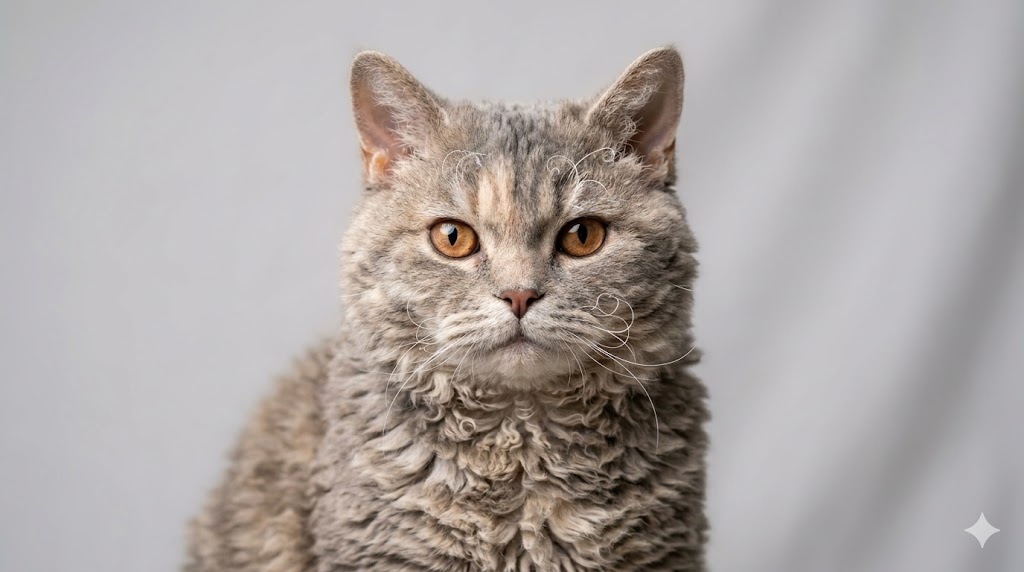
The Selkirk Rex is a sturdy, plush-built rex breed with a uniquely curly coat that looks like a permed sheep.
🗓️ Last reviewed: June 2026
Overview
The Selkirk Rex is a sturdy, plush-built rex breed with a uniquely curly coat that looks like a permed sheep. Sometimes called the "cat in sheep's clothing," the breed has a dense double curly coat - unlike the thin Devon or Cornish Rex coats - and a calm, patient temperament inherited from British Shorthair ancestry.
History & Origins
In 1987 a curly-coated kitten was born in a Montana animal shelter. The kitten - Miss DePesto - was adopted by Persian breeder Jeri Newman and bred to a Persian, producing the foundation of the breed. CFA recognition came in 2000.
Unlike the Devon and Cornish Rex (where the curl gene is recessive), the Selkirk curl gene is dominant. One curly parent produces some curly kittens.
Appearance
Medium-large, sturdy, cobby. Adults weigh 3.5-6 kg (8-13 lb).
- Coat: short or long, in dense loose curls all over the body. Two coat varieties - Selkirk Rex (short) and Selkirk Rex Longhair.
- Colour: all colours and patterns.
- Head: round, broad.
- Body: muscular, similar to British Shorthair.
Temperament & Character
Calm, patient, affectionate. The Selkirk has the British Shorthair's easygoing nature with a slightly more playful streak. Tolerant of children and other pets.
Care
Coat & Grooming
2-3 times weekly brushing for shorthair; daily for longhair. Don't over-brush - disrupts the curl. Bathe every 4-6 weeks.
Health & Lifespan
12-16 years.
- Hypertrophic cardiomyopathy (Persian inheritance).
- Polycystic kidney disease (Persian inheritance).
- Hip dysplasia.
Choose a breeder DNA-testing for HCM and PKD.
Pros & Cons
Pros: unique curly coat, calm temperament, family-tolerant. Cons: PKD and HCM risks; moderate grooming.
Selkirk Rex - frequently asked questions
Selkirk vs Devon vs Cornish Rex?
Selkirk is the chunky, double-coated, cobby curly cat (British Shorthair build). Devon and Cornish are slim, sparse-coated, elf-like.
Are they hypoallergenic?
No - dense curly coat actually sheds more than typical rex.
🧠 Test yourself: guess the cat
Three clues from our quiz bank, each about another of our cats. Can you name them?
Clue 1.Famous for going limp and relaxed when picked up, this big walnut-eyed cat was developed as an offshoot of the Ragdoll.
It's the Ragamuffin - read the full profile →
Clue 2.This large, thick-coated Russian cat is a national treasure of its homeland and is often considered more tolerant for allergy sufferers.
It's the Siberian - read the full profile →
Clue 3.This large cat from eastern Turkey is unusual for enjoying water, and its body is mostly white with colored markings only on head and tail.
It's the Turkish Van - read the full profile →
💛 Adoptable Selkirk Rexs near you
Real cats of this breed (and close mixes) waiting in shelters and rescues right now, live from Petfinder. We have no affiliation and earn nothing - if someone catches your eye, the link goes straight to their shelter. New to adopting? Start with our adoption guide.
Widget not loading (some ad-blockers hide it)? Search directly on petfinder.com.