Sphynx
The Sphynx is the world's most famous hairless cat - a wrinkled, warm-skinned, large-eared, extraordinarily affectionate breed that has become one of the most recognisable cats in popular culture.
🗓️ Last reviewed: June 2026
Overview
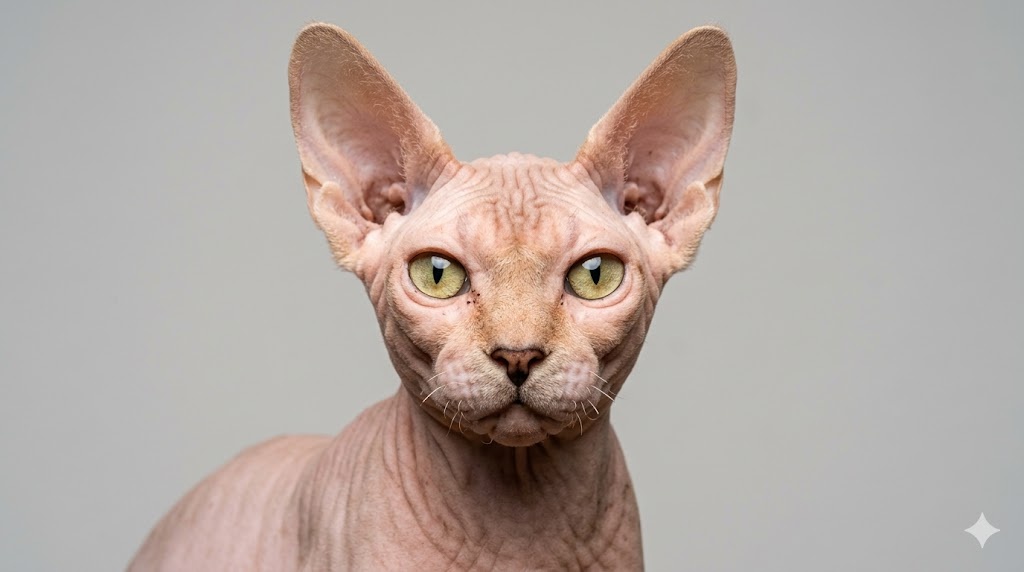
The Sphynx is the world's most famous hairless cat - a wrinkled, warm-skinned, large-eared, extraordinarily affectionate breed that has become one of the most recognisable cats in popular culture. Behind the alien appearance is a remarkably people-oriented, energetic, dog-like personality. The Sphynx is also a high-maintenance breed: hairlessness means weekly bathing, sun protection, indoor confinement, and a long list of skin and dietary issues that occasional pet stores rarely mention.
History & Origins
Hairless cats have appeared spontaneously throughout history - the Aztecs reportedly kept some. The modern Sphynx breed began in 1966 in Toronto, Canada, when a black-and-white domestic cat named Elizabeth gave birth to a hairless kitten named Prune. Prune and his offspring were crossed with shorthaired cats; further hairless cats found in 1975 in Minnesota and 1978 in Toronto added genetic diversity. The breed was developed primarily through outcrosses to Devon Rex and Cornish Rex.
CFA recognition came in 2002 after decades of controversy. The breed has grown rapidly in popularity, particularly via internet culture and celebrity ownership.
Appearance
Medium-sized, muscular, hairless (or near-hairless). Adults weigh 3.5-5.5 kg (8-12 lb).
Key features:
- Coat: apparently hairless. Most Sphynx have a fine peach-fuzz coat invisible at a glance; some have slightly longer fuzz on the muzzle, tail tip, and feet. Skin is warm to the touch (1-2°C warmer than normal cat surface temperature).
- Colour: all coat colours and patterns express through skin pigment - black, white, tabby, tortie, pointed, all visible as skin tones.
- Skin: wrinkled, particularly on the face, neck, and shoulders. Skin oils are abundant.
- Head: wedge-shaped with prominent cheekbones, large lemon-shaped eyes, and very large ears.
- Body: muscular, medium-boned, with a pot-belly typical of the breed.
- Tail: long, tapering, often whip-like.
Temperament & Character
Affectionate, energetic, and dog-like. The Sphynx is among the most people-oriented cats - friendly with everyone, demanding of attention, and intensely social. The breed is often called a "Velcro cat" for its constant attachment to humans.
Most Sphynx are playful well into adulthood and enjoy fetch, harness walks, and trick training. The breed is vocal - chirping, chattering, and meowing readily.
The Sphynx does not tolerate being alone for long. Many owners get a second cat (often a second Sphynx) for company.
Care
Coat & Grooming
Hairless does not mean low-maintenance. The skin produces oils continuously (normally absorbed by fur) that build up rapidly. Weekly baths are essential to prevent oil accumulation, blackheads, skin infections, and the characteristic "Sphynx smell."
Wipe between bath days with damp cloths, especially in skin folds and around the ears (which produce wax abundantly - clean weekly).
Trim claws every 2 weeks - the nail beds also produce oil. Brush teeth daily.
Sunburn risk is significant. Indoor sunny windows can burn Sphynx skin; window UV film and sun-safe positioning help. Outdoor access requires sunscreen and limited duration.
Cold tolerance is poor. The breed needs heated beds, sweaters in winter (many homes are too cool for an unclothed Sphynx), and warm laps.
Exercise & Enrichment
High playfulness. Provide cat trees, interactive toys, puzzle feeders, and scheduled play sessions. Many Sphynx enjoy harness walks and clicker training.
Health & Lifespan
Average lifespan is 9-15 years.
Common concerns:
- Hypertrophic cardiomyopathy (HCM) - Sphynx-specific gene variants identified; cardiac screening essential.
- Skin issues - urticaria pigmentosa, fungal infections, sunburn.
- Dental disease - severe and early-onset. Daily brushing essential.
- Hereditary myopathy - DNA test.
- Urticaria pigmentosa - skin condition.
- Periodontal disease - universal.
- Heat-related issues in summer (despite hairlessness, can overheat).
Feeding & Nutrition
Adults typically eat 60-90 g of quality cat food per day - more than other breeds of similar weight, because hairless skin requires more calories for thermoregulation.
High-protein, calorie-dense diets suit the breed. Many Sphynx have sensitive digestion; gradual diet changes.
Living With
Litter
Standard provisions. Most are easy to litter-train.
Multi-cat households
Excellent with other cats, especially other Sphynx. Many owners keep pairs.
Indoor vs outdoor
Strictly indoor. The breed cannot tolerate cold, sun, or rough outdoor conditions. Catios with shade and limited sun-time are acceptable.
Pros & Cons
Pros
- Extraordinarily affectionate and people-oriented.
- Dog-like personality.
- Striking, photogenic appearance.
- Often tolerated by allergy sufferers (less dander; though not truly hypoallergenic).
- Highly trainable.
Cons
- Weekly bathing non-negotiable.
- Severe dental disease without daily brushing.
- Cold-sensitive - heated beds and sweaters required.
- Sun-sensitive - sunburn risk.
- HCM risk significant.
- Higher food and vet costs than most breeds.
- Cannot be left alone for long.
Best Suited For
- Owners home most of the day.
- Households tolerant of weekly grooming.
- Multi-cat homes (Sphynx prefer Sphynx company).
- Allergy-sensitive households (with caution).
- Active owners wanting an interactive, trainable cat.
Not suited for working households without coverage, cold homes, owners unwilling to bathe weekly, or anyone expecting a low-maintenance pet.
Sphynx - frequently asked questions
Are Sphynx hypoallergenic?
No. Cat allergies are caused by Fel d 1 protein in saliva and skin secretions, not fur. Sphynx produce Fel d 1 normally. Some allergy sufferers tolerate them better because they shed less, but many do not.
Do they really need weekly baths?
Yes. Without bathing, skin oils accumulate, the cat develops blackheads, infections, and characteristic odour, and clothing/furniture become oily.
Are they warm to touch?
Yes - about 1-2°C warmer than haired cats at the skin surface, partly because the skin temperature is the body temperature (no insulating fur in between).
Are they good with kids?
Excellent - sociable, playful, tolerant.
How long do they live?
9-15 years. HCM and dental disease are the main lifespan limiters. Lean weight, cardiac screening, and daily dental care push the upper end.
🧠 Test yourself: guess the cat
Three clues from our quiz bank, each about another of our cats. Can you name them?
Clue 1.This Russian longhair tends to produce less of the Fel d 1 protein, the allergen most responsible for cat allergies.
It's the Siberian - read the full profile →
Clue 2.This slender, athletic cat has a warm ruddy coat where every hair is banded with several colors, giving a shimmering, wild-rabbit-like appearance.
It's the Abyssinian - read the full profile →
Clue 3.Bred as a hardy New England farm cat, this breed has snowshoe-like furry paws and matures slowly over years.
It's the Maine Coon - read the full profile →
💛 Adoptable Sphynxs near you
Real cats of this breed (and close mixes) waiting in shelters and rescues right now, live from Petfinder. We have no affiliation and earn nothing - if someone catches your eye, the link goes straight to their shelter. New to adopting? Start with our adoption guide.
Widget not loading (some ad-blockers hide it)? Search directly on petfinder.com.