Tonkinese
The Tonkinese is the deliberate hybrid of Siamese and Burmese - combining the elegance of the Siamese with the warmer build and personality of the Burmese.
🗓️ Last reviewed: June 2026
Overview
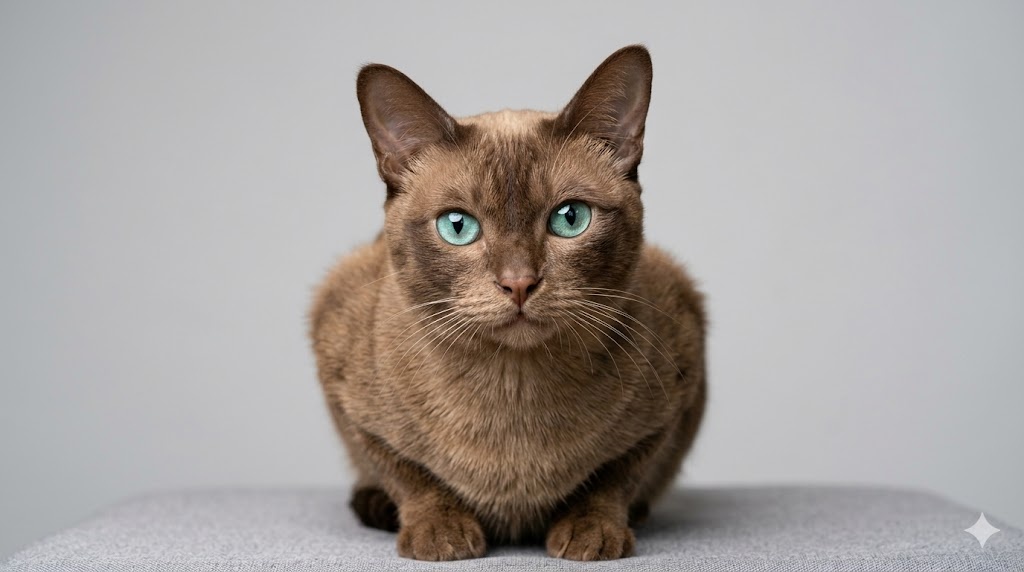
The Tonkinese is the deliberate hybrid of Siamese and Burmese - combining the elegance of the Siamese with the warmer build and personality of the Burmese. The result is a mid-toned "mink"-coated cat with aqua eyes and one of the most affectionate, sociable temperaments in any pedigreed breed.
History & Origins
Siamese × Burmese crosses occurred informally for decades. Canadian breeder Margaret Conroy developed the modern Tonkinese in the 1960s. CFA recognition came in 1979.
The breed comes in three coat patterns: pointed (Siamese-like), mink (the iconic intermediate), and solid (Burmese-like). All three appear in the same litters.
Appearance
Medium-sized, balanced between Siamese and Burmese. Adults weigh 3-5.5 kg (6-12 lb).
- Coat: short, silky, dense.
- Colour: natural mink (warm brown points on cream), champagne, blue, platinum, plus pointed and solid variants.
- Eyes: aqua (mink), blue (pointed), gold (solid).
- Body: medium, muscular, surprisingly heavy for its size.
Temperament & Character
Affectionate, social, vocal. The Tonkinese is intensely people-oriented - follows owners, demands attention, talks constantly (though softer than Siamese). Most are excellent with children and other pets.
Cannot tolerate being alone for long. Many owners get two Tonkinese.
Care
Coat & Grooming
Very low-maintenance: weekly rub-down.
Exercise & Enrichment
High. Cat trees, interactive play, daily engagement.
Health & Lifespan
14-18 years.
- Hypertrophic cardiomyopathy.
- Asthma.
- Dental disease.
Pros & Cons
Pros: affectionate, social, intelligent, long-lived. Cons: demanding, vocal, cannot be left alone.
Tonkinese - frequently asked questions
Tonkinese vs Siamese vs Burmese?
Tonkinese is the balanced middle - Siamese elegance plus Burmese substance. Mink coat is the breed signature.
🧠 Test yourself: guess the cat
Three clues from our quiz bank, each about another of our cats. Can you name them?
Clue 1.A gentle, silky-coated cat with sapphire eyes and snowy gloved paws, it is affectionate and quieter than many pointed breeds.
It's the Birman - read the full profile →
Clue 2.This nearly bald breed arose from a natural genetic mutation in Canada and craves warmth, often seeking blankets or laps.
It's the Sphynx - read the full profile →
Clue 3.Lacking the two outer coat layers, this mutation-born breed feels hot to the touch and loves to burrow under blankets.
It's the Cornish Rex - read the full profile →
💛 Adoptable Tonkineses near you
Real cats of this breed (and close mixes) waiting in shelters and rescues right now, live from Petfinder. We have no affiliation and earn nothing - if someone catches your eye, the link goes straight to their shelter. New to adopting? Start with our adoption guide.
Widget not loading (some ad-blockers hide it)? Search directly on petfinder.com.