Alaskan Malamute
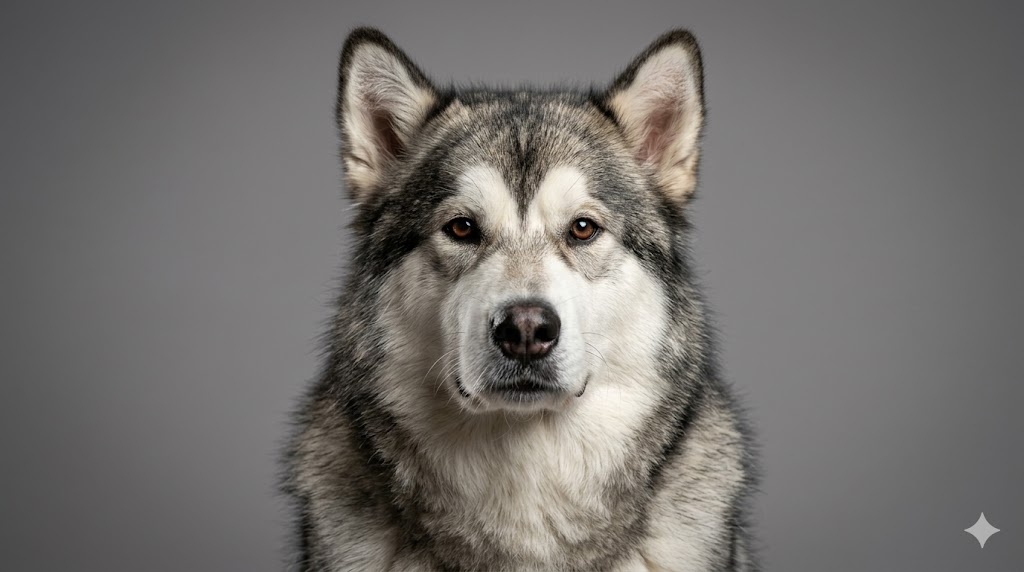
The Alaskan Malamute is one of the oldest and largest of the Arctic sled-dog breeds - a powerful, heavily built working dog developed by the Mahlemut people of Alaska's Norton Sound to haul heavy loads over long distances in extreme cold.
🗓️ Last reviewed: June 2026
Overview
The Alaskan Malamute is one of the oldest and largest of the Arctic sled-dog breeds - a powerful, heavily built working dog developed by the Mahlemut people of Alaska's Norton Sound to haul heavy loads over long distances in extreme cold. The breed is the heavy-freight specialist of the sled-dog world (where the Siberian Husky is the lightweight sprinter), and it remains one of the most physically capable dogs ever bred. The Malamute is affectionate, sociable, and famously stubborn - a dog of immense character that demands serious owners.
History & Origins
The breed lived alongside the Mahlemut (sometimes spelled Malemute) people of northwestern Alaska for at least 3,000 years. The dogs hauled heavy sleds, hunted seal and bear with their humans, and slept inside dwellings against the cold. Unlike Siberian Huskies bred for speed and endurance with light loads, Malamutes were bred for raw power - capable of moving cargo loads that smaller sled dogs could not.
The Gold Rush of the 1890s nearly destroyed the breed through crossbreeding with imported dogs. A few enthusiasts in the 1920s gathered remaining purebred-type Malamutes and rebuilt the breed. The AKC recognised the breed in 1935. Malamutes served in both World Wars as Arctic search-and-rescue and freight dogs.
Appearance
Large, powerful, heavily built. Males stand 64 cm (25 in) and weigh 38 kg (85 lb) by standard; many working Malamutes are significantly larger (45-55 kg). Females are smaller.
Key features:
- Coat: dense thick double coat - woolly soft undercoat with coarse guard hairs.
- Colour: various shades of grey, black, sable, or red, always with white markings on the underside, legs, feet, and face. Solid white is allowed; piebald is not.
- Head: broad, deep, with small erect triangular ears and almond brown eyes (blue eyes are a disqualifying fault).
- Tail: plumed, carried over the back like a "waving plume."
- Build: stockier, heavier-boned, and more powerful than a Siberian Husky.
Temperament & Character
Affectionate, sociable, dignified, and stubborn. Malamutes bond strongly with family and are typically friendly with people - they are not natural guard dogs. With other dogs, especially same-sex, they can be combative; many Malamutes do not tolerate other dogs in the household.
Prey drive is high. Cats, rabbits, and small animals are at risk; the breed has been documented to harm livestock.
Stubbornness is the defining cognitive trait. Sled dogs were bred to think for themselves on the trail, and Malamutes take this further than most. Recall is famously aspirational. The breed escapes - digging, climbing, opening gates - and follows scent or curiosity for kilometres.
Care
Coat & Grooming
The double coat sheds spectacularly. Brush 2-3 times weekly normally; daily during the twice-yearly heavy "coat blow" that lasts several weeks each time.
Bathe every 8-10 weeks. The coat is largely self-cleaning. Never shave a Malamute - the coat is essential thermoregulation in both cold and heat.
Clean ears weekly. Trim nails every 3 weeks (heavy nails). Brush teeth several times weekly.
Exercise & Activity Needs
Enormous. Adults need 90-120 minutes of vigorous daily exercise - walking, running, pulling, hiking, sledding, or weight-pull work. Walking alone is preparation, not exercise.
The breed thrives at canicross, bikejoring, dog scootering, sledding, weight pull, and serious hiking. Under-exercised Malamutes become destructive on a scale that few breeds match - digging, chewing, and escaping.
Heat tolerance is very poor. The breed evolved for sub-Arctic cold and overheats easily. Summer exercise only in early morning and late evening; air conditioning is essential in warm climates.
Health & Lifespan
Average lifespan is 10-14 years.
Common concerns:
- Hip dysplasia - moderate.
- Cataracts and progressive retinal atrophy.
- Hypothyroidism - common.
- Chondrodysplasia (dwarfism) - DNA test available; affected dogs have shortened legs and joint problems.
- Polyneuropathy - a neurological condition; DNA test available.
- Day blindness (cone degeneration) - DNA test.
- Bloat (GDV).
- Cancer in older dogs.
Feeding & Nutrition
Adults typically eat 3-4 cups of quality food per day in two meals. Working dogs need significantly more. The breed evolved on minimal food and burns calories efficiently; pet Malamutes need less than the size suggests.
Bloat prevention: multiple smaller meals, no vigorous exercise around meals.
Pros & Cons
Pros
- Capable of remarkable work - sledding, freight, weight pull.
- Affectionate with family.
- Beautiful, dignified appearance.
- Sociable with familiar people.
- Long-lived for the size.
Cons
- Enormous exercise needs.
- Stubborn - slow to train, unreliable off-lead.
- Strong prey drive; danger to cats, small pets, livestock.
- Same-sex dog aggression common.
- High escape drive - fence and gate must be secure.
- Heavy seasonal shedding.
- Heat-intolerant.
- Vocal - howling and "talking."
Best Suited For
- Active rural homes in cold climates.
- Sled, pulling, and weight-pull enthusiasts.
- Outdoor-oriented owners with hours daily for the dog.
- Single-dog households or opposite-sex pairs.
- Owners experienced with Arctic working breeds.
Not suited for apartment dwellers, hot climates, urban or suburban families wanting an easy pet, households with cats or livestock, full-time-office homes, or first-time owners.
Alaskan Malamute puppy growth chart
A typical growth curve for a giant breed like the Alaskan Malamute, estimated from its adult weight of 45-55 kg. Puppies vary with sex, genetics and diet, so treat this as a guide - for your own puppy, use the puppy weight predictor.
| Age | Typical weight | % of adult |
|---|---|---|
| 2 mo | 8.1-9.9 kg | 18% |
| 3 mo | 12.6-15.4 kg | 28% |
| 4 mo | 16.7-20.4 kg | 37% |
| 6 mo | 23.4-28.6 kg | 52% |
| 9 mo | 31.5-38.5 kg | 70% |
| 12 mo | 37.4-45.7 kg | 83% |
| Adult | 45-55 kg | 100% |
Alaskan Malamute - frequently asked questions
Malamute vs Husky - what's the difference?
Malamute is larger (35-45+ kg vs 20-27 kg), heavier-boned, slower, built for freight rather than speed. Husky is lighter, faster, built for endurance running. Both are Arctic sled dogs; Malamute is the heavy specialist, Husky the lightweight sprinter.
Are Malamutes good family dogs?
With active outdoor families in cold climates - yes. For ordinary households - usually no. The exercise needs and prey drive overwhelm most homes.
Can they live with cats?
Almost never safely. The prey drive is significant and training rarely overrides it. Many Malamutes have harmed cats they cohabited with for years.
How tall do they get?
Standard males 64 cm at the shoulder, many working dogs 70+ cm. Substantial bone and muscle on a tall frame.
Are they aggressive?
Not typically toward humans, though they are reserved with strangers and can be dog-aggressive. The breed's size, strength, and stubbornness require experienced ownership regardless of human-friendliness.
🧠 Test yourself: guess the dog
Three clues from our quiz bank, each about another of our dogs. Can you name them?
Clue 1.This non-shedding curly dog's elaborate continental trim left fur over the joints and chest to protect them in cold water.
It's the Poodle (Standard, Miniature, Toy) - read the full profile →
Clue 2.A large gray-and-white companion, this dog of paint-advert fame needs hours of grooming to prevent matting.
It's the Old English Sheepdog - read the full profile →
Clue 3.A small, floppy-eared hound that inspired a famous cartoon comic-strip dog, it is one of the most popular family pets in the world.
It's the Beagle - read the full profile →
💛 Adoptable Alaskan Malamutes near you
Real dogs of this breed (and close mixes) waiting in shelters and rescues right now, live from Petfinder. We have no affiliation and earn nothing - if someone catches your eye, the link goes straight to their shelter. New to adopting? Start with our adoption guide.
Widget not loading (some ad-blockers hide it)? Search directly on petfinder.com.