Basset Hound
The Basset Hound is a low-slung, long-eared French scent hound with one of the most distinctive silhouettes in the dog world.
🗓️ Last reviewed: June 2026
Overview
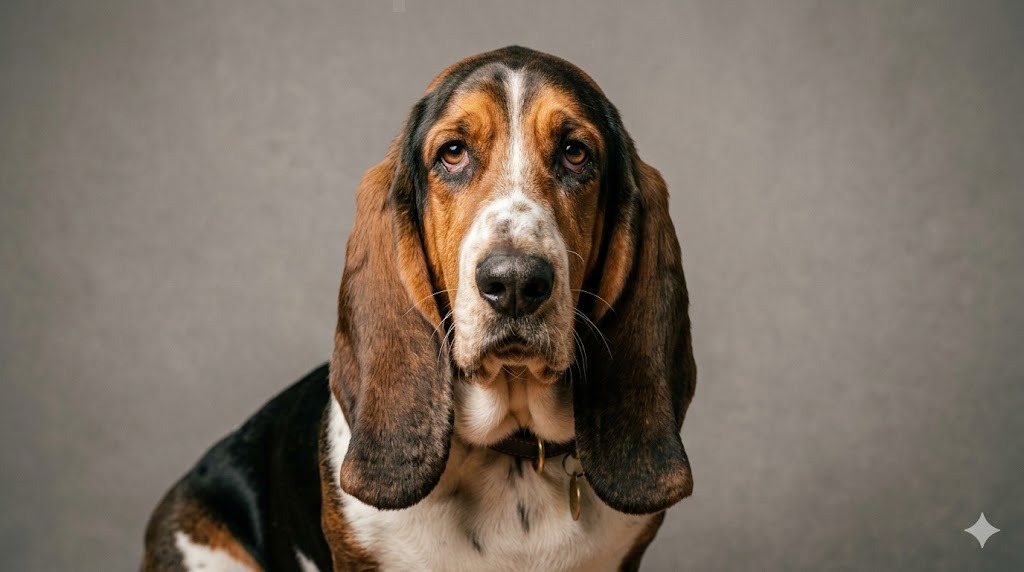
The Basset Hound is a low-slung, long-eared French scent hound with one of the most distinctive silhouettes in the dog world. Bred to track rabbit and hare on foot at slow pace, the Basset is short-legged so a person walking behind could keep up. Behind the comically droopy face and ground-sweeping ears is a serious working hound with a nose second only to the Bloodhound and a stubbornness that makes training a multi-year project. The breed is gentle, friendly, and famously laid-back at home - a sort of canine grandfather who has seen it all and would like a snack, please.
History & Origins
The breed descends from older French hounds bred by Benedictine monks at the Abbey of St. Hubert in Ardennes in the 6th-8th centuries - the same lineage that produced the Bloodhound. The short-legged "basset" type (from French bas, meaning "low") was developed for hunters on foot rather than horseback, particularly during the French Revolution when ordinary citizens were permitted to hunt for the first time.
The breed reached England in the mid-1800s and was further developed by British and American breeders. The AKC recognised the Basset in 1885. The breed became broadly familiar to English-speaking households through the long-running Hush Puppies shoe advertising campaign (mascot, the famous "Jason" the Basset).
Appearance
Long, low, heavy-boned. Adults stand 30-38 cm (12-15 in) and weigh 20-30 kg (45-65 lb). The Basset is heavier than it looks - substantial bone and muscle on a low frame.
Key features:
- Body: long, deep chest, short legs, heavy bone.
- Head: large, dome-shaped, with deep wrinkles, soulful eyes, and extremely long pendulous ears (the breed standard requires ears that extend past the nose tip).
- Coat: short, dense, weather-resistant.
- Colour: tricolour (black, white, tan), red-and-white, lemon-and-white, or any hound colour. White on legs and tip of tail is typical.
- Tail: carried up like a sabre with a white tip - historically so hunters could spot the dog in long grass.
Temperament & Character
Friendly, gentle, and stubborn. Bassets are typically excellent with children, sociable with other dogs (they were bred to hunt in packs), and tolerant of cats. They are not natural alarm dogs and rarely guard - but the loud baying voice startles strangers.
The breed is laid-back at home but has more energy in the field than the silhouette suggests. Bassets are scent-driven first and family-driven second; a Basset on a scent is essentially uncontrollable.
Stubbornness is the defining character trait. Bassets do exactly what they want at exactly the pace they choose. Training is possible but slow.
Care
Coat & Grooming
The short coat is easy: weekly brush with a rubber curry, baths every 4-6 weeks. Sheds moderately year-round.
The long ears require careful attention. Trapped moisture and warmth cause infections quickly. Clean weekly with a vet-approved solution and dry thoroughly. Some Bassets need weekly cleaning even with diligent care.
The deep facial wrinkles and the loose lower lip should be wiped 2-3 times weekly. Drooling is significant - keep towels handy.
Clean ears weekly. Trim nails every 3 weeks (heavy nails on a heavy dog). Brush teeth several times weekly.
Exercise & Activity Needs
Modest but real. Adults need 45-60 minutes of daily exercise - walks (no jogging - Basset legs aren't built for it), sniffing time, scent games. Off-leash freedom is unsafe in unfenced areas; the breed will follow a scent for kilometres.
Avoid jumping (on/off furniture, into and out of cars), repeated stairs, and rough play. The long back is vulnerable to disc disease. Use ramps where possible.
The breed swims poorly. Top-heavy, short-legged, and not built for buoyancy.
Health & Lifespan
Average lifespan is 10-12 years.
Common concerns:
- Intervertebral disc disease (IVDD) - long-back risk.
- Ear infections - universal without diligent care.
- Obesity - major problem; affects joints, back, and lifespan dramatically.
- Hip and elbow dysplasia.
- Bloat (GDV) - deep chest, moderate risk.
- Eye conditions - glaucoma, cherry eye, ectropion, entropion.
- Skin fold dermatitis - wrinkles trap moisture.
- Thrombopathia - a clotting disorder; DNA test available.
- Hypothyroidism.
Feeding & Nutrition
Adults typically eat 1½-2½ cups of quality food per day in two meals. The breed gains weight effortlessly - obesity is the Basset's single biggest health risk.
Measure portions; treats counted into daily calories. A lean Basset - ribs felt without seeing them - moves better, breathes better, and avoids back trouble. Many vets recommend feeding 10-20% less than the bag suggests.
Pros & Cons
Pros
- Friendly, gentle family companion.
- Excellent with children.
- Sociable with other dogs.
- Calm in the house.
- Distinctive, charming appearance.
Cons
- Stubborn - slow to train, slow to house-train.
- Loud baying voice.
- Prone to obesity, back problems, ear infections.
- Drools and sheds.
- Cannot tolerate jumping or stairs safely.
- Follows scent obsessively; recall unreliable.
Best Suited For
- Calm families with children of any age.
- Suburban and rural homes with secure fencing.
- Multi-dog households (Bassets love pack life).
- Owners who enjoy slow companion walks and scent games.
Not suited for apartment dwellers in noise-sensitive buildings, athletic owners wanting a running partner, or anyone who can't resist feeding treats.
Basset Hound puppy growth chart
A typical growth curve for a large breed like the Basset Hound, estimated from its adult weight of 20-30 kg. Puppies vary with sex, genetics and diet, so treat this as a guide - for your own puppy, use the puppy weight predictor.
| Age | Typical weight | % of adult |
|---|---|---|
| 2 mo | 4.4-6.6 kg | 22% |
| 3 mo | 6.6-9.9 kg | 33% |
| 4 mo | 8.6-12.9 kg | 43% |
| 6 mo | 12-18 kg | 60% |
| 9 mo | 16-24 kg | 80% |
| 12 mo | 18.4-27.6 kg | 92% |
| Adult | 20-30 kg | 100% |
Basset Hound - frequently asked questions
Are Basset Hounds good with kids?
Excellent - patient, sturdy, gentle. Supervise to prevent rough handling of the long back.
Do Bassets bark a lot?
They bay rather than bark - a loud, musical hound voice. Alarm-bay at strangers; not chronic barkers, but loud when they go.
Why do they have such long ears?
The ears were bred long to sweep scent up from the ground toward the nose during tracking. Functional, if comical.
Can Bassets jump on the couch?
They shouldn't. Long backs combined with weight create significant disc disease risk. Use ramps for furniture and the car.
How long do they live?
10-12 years on average. Lean weight and good back care push the upper end.
🧠 Test yourself: guess the dog
Three clues from our quiz bank, each about another of our dogs. Can you name them?
Clue 1.An all-purpose Irish farm dog whose flowing, silky coat lacks the harsh wiry texture typical of most terriers.
It's the Soft Coated Wheaten Terrier - read the full profile →
Clue 2.This small white-bodied terrier was bred by an English parson to bolt foxes from their dens.
It's the Jack Russell Terrier - read the full profile →
Clue 3.Nicknamed the 'Velcro dog,' this toy breed sticks so closely to its owner that it dislikes being left alone.
It's the Havanese - read the full profile →
💛 Adoptable Basset Hounds near you
Real dogs of this breed (and close mixes) waiting in shelters and rescues right now, live from Petfinder. We have no affiliation and earn nothing - if someone catches your eye, the link goes straight to their shelter. New to adopting? Start with our adoption guide.
Widget not loading (some ad-blockers hide it)? Search directly on petfinder.com.