Bernese Mountain Dog
The Bernese Mountain Dog is a large, tricoloured Swiss farm dog famous for its gentle temperament, striking appearance, and tragically short lifespan.
🗓️ Last reviewed: June 2026
Overview
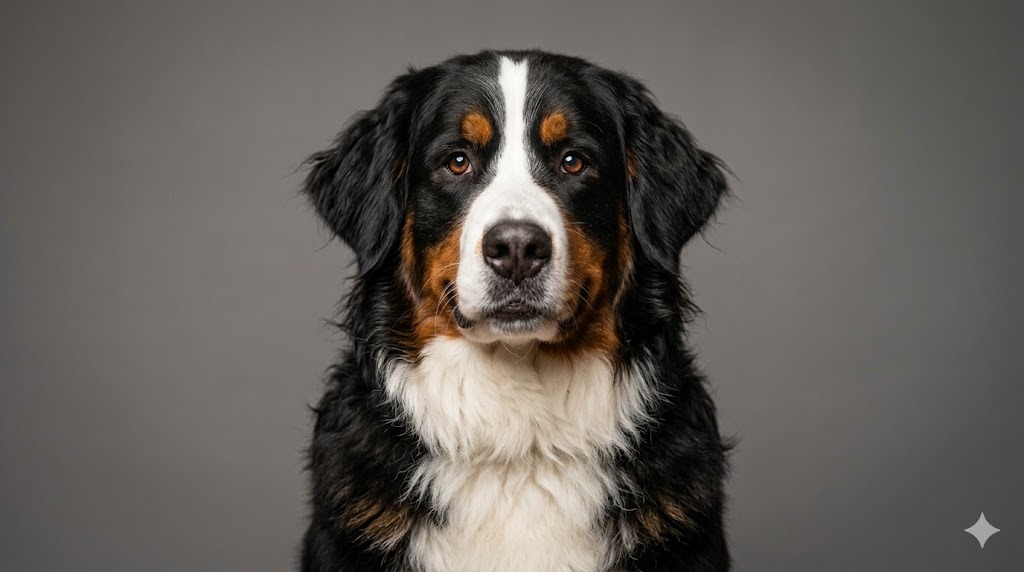
The Bernese Mountain Dog is a large, tricoloured Swiss farm dog famous for its gentle temperament, striking appearance, and tragically short lifespan. Bred to pull carts, herd cattle, and guard farms in the Swiss canton of Bern, the "Berner" is calm, devoted, and remarkably patient - one of the most popular giant family dogs in the world. The breed's beauty and personality come at a real cost: lifespans are among the shortest of any popular breed, and ownership requires emotional preparation.
History & Origins
The breed descends from large Roman mastiff-type dogs that travelled into the Alps with the Roman legions and were used as farm and drover dogs. In the Swiss mountains four similar regional types developed: the Bernese (Berner Sennenhund), the Greater Swiss (Grosser Schweizer Sennenhund), the Appenzeller, and the Entlebucher. The Bernese was the longest-coated and the favourite around the canton of Bern.
By the late 1800s the breed was nearly extinct, replaced by mechanisation. The Swiss professor Albert Heim led the recovery in 1907; by the 1920s the breed had stabilised. The AKC recognised it in 1937.
Appearance
Large, sturdy, tricoloured. Males stand 64-70 cm (25-28 in) and weigh 38-52 kg (85-115 lb); females are smaller. The build is balanced and substantial without being ponderous.
Key features:
- Coat: medium-long, slightly wavy or straight double coat with feathering on legs and tail.
- Colour: the iconic tricolour - jet black base with rich rust markings on cheeks, eyebrows, chest, and legs, and crisp white blaze on the face, chest, feet, and tail tip. This pattern is unique and unmistakable.
- Head: broad with a moderate stop, expressive brown eyes, and triangular drop ears.
- Tail: bushy, carried low.
Temperament & Character
Calm, affectionate, and unflappable. The Berner is one of the most gentle large breeds - patient with children, friendly with other dogs and cats, polite with strangers (sometimes reserved with new people). The breed is not a guard dog by drive, though the size deters most intruders.
Bonds are intense. Berners are "Velcro dogs" - they follow their people from room to room, lean against legs (the famous "Berner lean"), and dislike being left alone. Many bond particularly closely with one family member while remaining loving to all.
The breed matures slowly (3-4 years) and remains puppyish in spirit far longer.
Care
Coat & Grooming
The double coat is significant work. Brush 2-3 times weekly with a slicker, pin brush, and undercoat rake. Daily during the twice-yearly heavy shed when the coat falls out in clouds.
Bathe every 6-8 weeks. Trim feathering around the rear and feet as needed. Never shave the double coat - it provides essential insulation in both heat and cold.
Clean ears weekly. Trim nails every 3 weeks. Brush teeth several times weekly. Drooling is moderate.
Exercise & Activity Needs
Moderate. Adults need 45-60 minutes of daily exercise - walks, low-impact play, hiking. The breed enjoys carting, drafting, swimming, and gentle scent work.
Puppies require controlled exercise. No forced running, no jumping from height, no stairs until joints close (12-18 months). Fast growth and giant size make joint disease easy to trigger. Many breeders provide an exercise schedule for the first 18 months.
Heat tolerance is limited - the breed was built for Alpine weather, not summer heat. Avoid midday summer exercise, provide cool resting areas, and watch for overheating.
Health & Lifespan
Average lifespan is 6-9 years - among the shortest of any breed. This is the defining ownership challenge.
Common concerns:
- Histiocytic sarcoma - a fast-moving cancer that disproportionately affects Bernese; the breed's leading cause of death. Genetic markers are being studied.
- Cancer broadly - approximately 50-60% of Bernese die of cancer.
- Hip and elbow dysplasia - common; demand certified parents.
- Bloat (GDV) - moderate to high risk.
- Heart disease - subaortic stenosis, others.
- Progressive retinal atrophy and cataracts.
- Von Willebrand's disease.
- Mast cell tumours.
Choose a breeder who openly tracks cancer history in their lines, screens for hips, elbows, eyes, and heart, and discusses lifespan honestly.
Feeding & Nutrition
Adults typically eat 4-5 cups of quality large-breed food per day in two or three meals. Puppies must be on a large-breed puppy formula to control growth rate.
Avoid heavy exercise within an hour of meals (bloat risk). Slow-feeder bowls help. Keep the dog lean - extra weight worsens joint disease, heart problems, and lifespan.
Joint and cardiac support diets with EPA/DHA, glucosamine, and L-carnitine are reasonable from early adulthood.
Pros & Cons
Pros
- Calm, gentle, family-devoted companion.
- Excellent with children and other animals.
- Striking, instantly recognisable appearance.
- Moderate exercise needs for the size.
- Highly trainable.
Cons
- Short lifespan (6-9 years).
- High cancer rates.
- Heavy shedding.
- Drools moderately.
- Limited heat tolerance.
- Cannot tolerate being alone for long periods.
Best Suited For
- Families with children of any age.
- Active rural or suburban homes with secure outdoor space.
- Cold or mild climates.
- Owners emotionally prepared for a short, intense relationship.
- Carting, drafting, and therapy enthusiasts.
Not suited for hot climates, apartment dwellers, full-time-office households, or owners unable to face heartbreak in 7-9 years.
Bernese Mountain Dog puppy growth chart
A typical growth curve for a giant breed like the Bernese Mountain Dog, estimated from its adult weight of 38-52 kg. Puppies vary with sex, genetics and diet, so treat this as a guide - for your own puppy, use the puppy weight predictor.
| Age | Typical weight | % of adult |
|---|---|---|
| 2 mo | 6.8-9.4 kg | 18% |
| 3 mo | 10.6-14.6 kg | 28% |
| 4 mo | 14.1-19.2 kg | 37% |
| 6 mo | 19.8-27 kg | 52% |
| 9 mo | 26.6-36.4 kg | 70% |
| 12 mo | 31.5-43.2 kg | 83% |
| Adult | 38-52 kg | 100% |
Bernese Mountain Dog - frequently asked questions
How long do Bernese Mountain Dogs live?
Sadly, 6-9 years on average. Some live to 10-12. The short lifespan is the breed's greatest tragedy. Choose a breeder who tracks longevity and cancer rates in their lines.
Are Bernese good with children?
Outstanding. Among the most patient, gentle giant breeds. Supervise toddlers around large puppies - accidental knockdowns happen.
Do they shed a lot?
Yes - moderate year-round and heavy twice a year. Daily brushing during shed seasons.
Do they drool?
Moderately. Less than mastiffs, more than retrievers. Heavier after meals and drinking.
Why is the cancer rate so high?
The Bernese breed is genetically narrow with a high prevalence of histiocytic sarcoma and other cancers. Ongoing research aims to identify genetic markers; for now, choose lines with the best longevity history available.
🧠 Test yourself: guess the dog
Three clues from our quiz bank, each about another of our dogs. Can you name them?
Clue 1.A favorite of Renaissance nobility, this slender toy breed appears in many old European portraits.
It's the Italian Greyhound - read the full profile →
Clue 2.Named for a region of northwestern France, this leggy, tailless-or-bobtailed gun dog both points and retrieves upland birds.
It's the Brittany - read the full profile →
Clue 3.Caesar's troops reportedly noted these massive war dogs when they invaded Britain.
It's the English Mastiff - read the full profile →
💛 Adoptable Bernese Mountain Dogs near you
Real dogs of this breed (and close mixes) waiting in shelters and rescues right now, live from Petfinder. We have no affiliation and earn nothing - if someone catches your eye, the link goes straight to their shelter. New to adopting? Start with our adoption guide.
Widget not loading (some ad-blockers hide it)? Search directly on petfinder.com.