Bichon Frise
The Bichon Frise is a small, cheerful, white, curly-coated companion dog with a centuries-long history of charming European nobility, performing in circuses, and delighting modern families.
🗓️ Last reviewed: June 2026
Overview
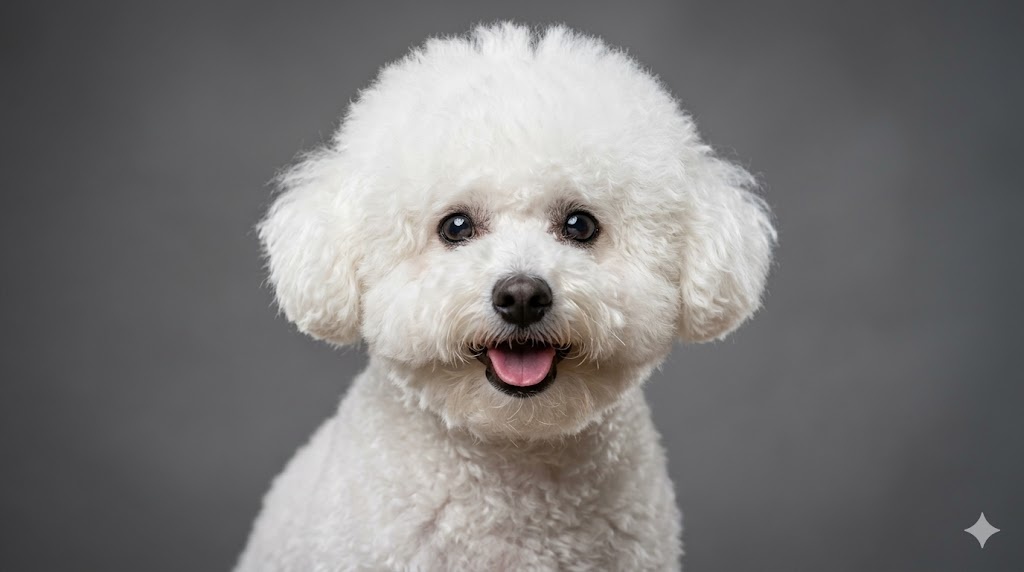
The Bichon Frise is a small, cheerful, white, curly-coated companion dog with a centuries-long history of charming European nobility, performing in circuses, and delighting modern families. The name - pronounced "BEE-shon free-ZAY" - translates roughly as "curly lap dog" in French. Genuinely friendly, low-shedding, and well-suited to allergy-sensitive households, the Bichon is one of the most family-tolerant toy breeds and one of the most consistently cheerful dogs you'll meet.
History & Origins
The Bichon descends from the Barbet, a medium-sized French water dog. Smaller Barbet types were known as "Barbichons" - little Barbets - and four sister breeds developed from this stock: the Bichon Frise, the Maltese, the Bolognese, and the Havanese. All four are small white or mostly-white companion dogs with similar history.
The breed's modern form was refined in Tenerife in the 14th and 15th centuries, after Spanish traders brought the dogs to the Canary Islands. From there it spread back to continental Europe, becoming popular in Italian and French Renaissance courts. The breed appears in paintings by Goya and Titian.
After the French Revolution the Bichon lost noble patronage and worked as street and circus performers - the breed's natural cheerfulness and trainability made them excellent entertainers. The First World War nearly destroyed the breed; French enthusiasts rescued it in the 1930s. The AKC recognised the Bichon Frise in 1972.
Appearance
Small, white, curly. Adults stand 23-30 cm (9-12 in) and weigh 5-8 kg (12-18 lb).
Key features:
- Coat: soft, dense, curly double coat with a velvety texture. The trademark show clip "powder puff" rounds the head and body into soft cloud-like shapes.
- Colour: pure white in show standards. Cream, buff, or apricot shadings around the ears or body are acceptable in puppies but should not exceed 10% of the coat in adults.
- Head: rounded with a short muzzle, dark round eyes, and drop ears completely hidden under coat in show condition.
- Tail: carried curled over the back, plumed.
Temperament & Character
Cheerful, friendly, and easygoing. The Bichon is one of the most sociable toy breeds - typically excellent with children, friendly with strangers, and agreeable with other dogs and cats. The breed bonds strongly with family but spreads affection generously.
Bichons are intelligent and trainable. They were the classic circus dog for centuries and remain natural performers - many enjoy trick training, agility, and rally. The breed is moderately vocal, prone to "Bichon blitzes" (wild bursts of zooming through the house), and surprisingly playful well into old age.
The breed needs company. Bichons do poorly when left alone for long periods; separation anxiety is common.
Care
Coat & Grooming
High maintenance. The curly double coat mats easily and requires significant work.
Brushing 3-4 times weekly with a slicker and metal comb, daily during heavy shedding periods (which are subtle in this breed - the coat sheds into itself rather than onto floors).
Professional grooming every 4-6 weeks: bathe, blow-dry, clip, scissor the famous round head and body, sanitary trim, ear care, nails. The traditional Bichon "powder puff" round head and body is iconic but labour-intensive; many pet owners choose a shorter, easier "teddy bear" cut.
Tear staining on the white face is a constant battle. Wipe around eyes daily; some use specialised stain removers. Brush teeth daily - dental disease is universal in toy breeds. Clean ears weekly; pluck or trim ear-canal hair as needed.
Many allergy sufferers tolerate the Bichon well due to low shedding.
Exercise & Activity Needs
Modest. Adults need 30-45 minutes of daily exercise - walks, indoor play, training games. Bichons enjoy agility, rally, and trick competition scaled to their size.
Health & Lifespan
Average lifespan is 14-16 years.
Common concerns:
- Allergies - common; skin and food sensitivities frequent.
- Dental disease - universal without daily brushing.
- Patellar luxation.
- Hip dysplasia and Legg-Calvé-Perthes (rare).
- Cataracts and progressive retinal atrophy.
- Bladder stones.
- Hyperadrenocorticism (Cushing's disease) in older dogs.
- Liver shunt - uncommon but documented.
Feeding & Nutrition
Adults typically eat 1/2 to 1 cup of quality small-breed food per day in two meals. The breed gains weight easily; measure portions.
Many Bichons have food sensitivities. Chronic ear or skin issues often respond to a novel-protein or hydrolysed diet under veterinary guidance.
Pros & Cons
Pros
- Friendly, cheerful, family-oriented.
- Excellent with children and other pets.
- Low-shedding; often suitable for allergy sufferers.
- Long-lived.
- Adaptable to apartments and homes alike.
Cons
- High grooming demands; professional grooming non-optional.
- Prone to separation anxiety.
- Slow to house-train.
- Allergies and dental issues common.
- Persistent tear staining.
Best Suited For
- Families with children of any age.
- Allergy-sensitive households.
- Apartment dwellers and city homes.
- Retirees wanting a constant companion.
- Multi-pet households.
- Therapy programmes.
Not suited for households empty all day, owners unwilling to budget for grooming, or anyone wanting a low-maintenance coat.
Bichon Frise puppy growth chart
A typical growth curve for a toy breed like the Bichon Frise, estimated from its adult weight of 5-8 kg. Puppies vary with sex, genetics and diet, so treat this as a guide - for your own puppy, use the puppy weight predictor.
| Age | Typical weight | % of adult |
|---|---|---|
| 2 mo | 1.7-2.6 kg | 33% |
| 3 mo | 2.3-3.6 kg | 45% |
| 4 mo | 2.8-4.4 kg | 55% |
| 6 mo | 3.8-6 kg | 75% |
| 9 mo | 4.8-7.6 kg | 95% |
| 12 mo | 5-8 kg | 100% |
| Adult | 5-8 kg | 100% |
Bichon Frise - frequently asked questions
Are Bichons hypoallergenic?
No dog is fully hypoallergenic, but Bichons shed very little and produce low dander. Many allergy sufferers tolerate them well - spend time with one before committing.
Are they good with kids?
Excellent - patient, gentle, playful. Among the best toy breeds for families.
Do they bark a lot?
Moderately. The breed alarm-barks but is not chronic. Training reduces unwanted vocalisation.
How often do they need grooming?
Professional grooming every 4-6 weeks plus brushing 3-4 times weekly at home. Skipping a few days creates painful mats that require shaving.
Bichon Frise vs Maltese - what's the difference?
Bichon is slightly larger, curly-coated, white only. Maltese is smaller, straight silky coat, also white. Bichon tends to be more outgoing and circus-like in personality; Maltese more refined and reserved.
🧠 Test yourself: guess the dog
Three clues from our quiz bank, each about another of our dogs. Can you name them?
Clue 1.This rugged, non-shedding working dog has webbed feet and was once a fisherman's helper, even carrying messages between boats.
It's the Portuguese Water Dog - read the full profile →
Clue 2.Once a much larger sled-type dog, this breed was miniaturized into a toy after Queen Victoria fell for a small one.
It's the Pomeranian - read the full profile →
Clue 3.Bred to dig into setts and burrows after badgers, this dog's name literally means 'badger dog' in German.
It's the Dachshund - read the full profile →
💛 Adoptable Bichon Frises near you
Real dogs of this breed (and close mixes) waiting in shelters and rescues right now, live from Petfinder. We have no affiliation and earn nothing - if someone catches your eye, the link goes straight to their shelter. New to adopting? Start with our adoption guide.
Widget not loading (some ad-blockers hide it)? Search directly on petfinder.com.