Border Collie
The Border Collie is the most intelligent dog in the world - a hardworking, intense, single-minded herding dog from the Anglo-Scottish border country.
🗓️ Last reviewed: June 2026
Overview
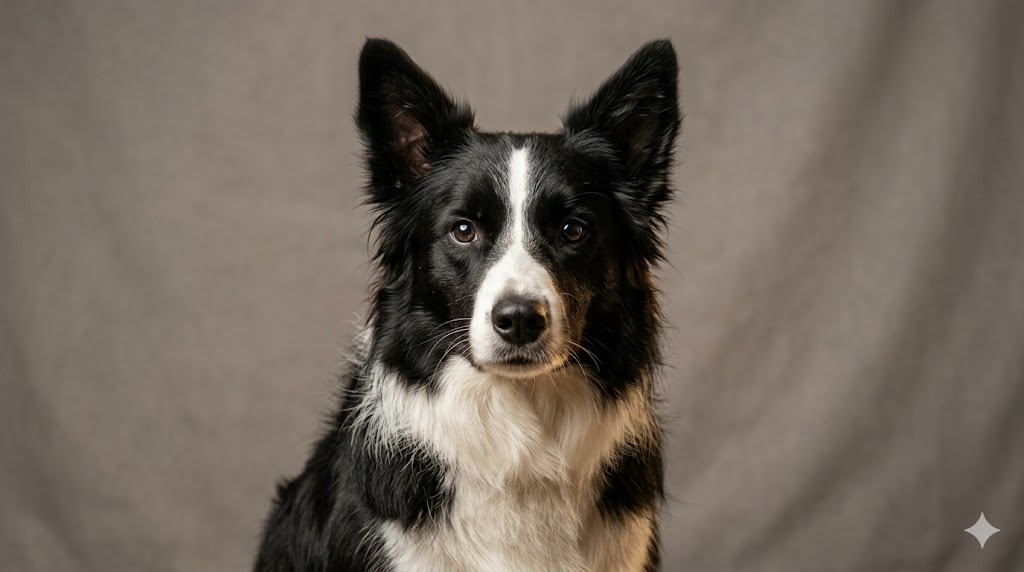
The Border Collie is the most intelligent dog in the world - a hardworking, intense, single-minded herding dog from the Anglo-Scottish border country. The breed dominates sheepdog trials, agility competitions, frisbee championships, and almost every measure of canine intelligence ever devised. Border Collies are not a pet breed; they are a working tool that some people manage to live with. A Border Collie without a job is one of the most miserable dogs in existence - and the misery becomes the household's problem.
History & Origins
Working herding dogs have existed in Britain for over a thousand years. The modern Border Collie was shaped in the late 19th century from old "collie" (Scottish for "useful") herding dogs of the Anglo-Scottish border region. The defining moment came in 1894 when a dog named Old Hemp, owned by Adam Telfer of Northumberland, demonstrated the modern Border Collie style - controlling sheep with an intense focused stare ("eye") rather than barking and circling. Old Hemp sired about 200 offspring, and every modern Border Collie descends from him.
The breed has been preserved primarily as a working dog. The International Sheep Dog Society (founded 1906) registers Border Collies based on working ability rather than conformation. The AKC controversially recognised the Border Collie as a show breed in 1995, splitting the breed's enthusiast community - working trial communities largely reject AKC-only Border Collies.
Appearance
Medium-sized, athletic, balanced. Adults stand 46-56 cm (18-22 in) and weigh 14-22 kg (30-50 lb). The build varies more in working lines than in show lines.
Key features:
- Coat: two varieties - rough (medium-length with feathering) and smooth (short, dense). Both are double-coated and weather-resistant.
- Colour: any pattern allowed. Black-and-white most iconic; also red-and-white, tricolour, blue merle, red merle, sable, brindle. Working dogs come in any colour.
- Head: wedge-shaped with semi-erect or fully erect ears and intelligent intent eyes - often two colours or one of each.
- Tail: moderately long, set low, with feathering.
Temperament & Character
Intense, focused, driven. The Border Collie is bred to think - to control livestock by reading subtle cues and responding instantly. In a herding context this is breathtaking. In a pet context the same focus becomes obsessive: chasing shadows, fixating on lights, herding children and pets, controlling household movement.
With family, well-raised Border Collies are devoted, sensitive, and emotionally tuned. With strangers many are reserved or aloof. With other dogs they range from sociable to barely tolerant.
The breed is highly sensitive - harsh handling damages working ability and causes shutdown. Chaotic households produce anxious, reactive adults.
Care
Coat & Grooming
The double coat sheds steadily. Brush 2-3 times weekly with a slicker and undercoat rake. Daily during the twice-yearly coat blow.
Bathe every 6-8 weeks. Trim feathering on feet and sanitary area. Never shave the double coat.
Clean ears weekly. Trim nails every 3 weeks. Brush teeth several times weekly.
Exercise & Activity Needs
Vast - and the wrong question. The right question is whether the dog has a job. Even hours of running don't satisfy a Border Collie if the brain is bored.
Daily plan must include: physical exercise (60-90 minutes minimum, ideally running, agility, or actual herding), mental work (structured training, problem-solving), and impulse control practice (off-switch, calm down-stays, settling on cue).
The breed excels at every dog sport - agility (dominant), obedience (dominant), flyball, disc, herding trials, scent work, treibball. Most need at least one sport to function as a pet.
Health & Lifespan
Average lifespan is 12-15 years.
Common concerns:
- Collie eye anomaly (CEA) - hereditary; DNA test essential.
- Hip dysplasia - moderate.
- Progressive retinal atrophy.
- Epilepsy.
- MDR1 (multidrug sensitivity) mutation - present in some lines; DNA test.
- Neuronal ceroid lipofuscinosis (NCL) - a fatal neurological disease; DNA test.
- Trapped neutrophil syndrome (TNS) - DNA test.
- Imerslund-Gräsbeck syndrome (IGS) - DNA test.
The breed has unusually many DNA-testable conditions - choose a breeder who runs the full panel on both parents.
Feeding & Nutrition
Adults typically eat 1½-2½ cups of quality food per day in two meals. Working dogs need much more. The breed maintains lean condition naturally when exercised.
Some lines have mild food sensitivities. The breed is otherwise hardy on a wide range of diets.
Pros & Cons
Pros
- Most intelligent breed; learns anything quickly.
- Devoted, sensitive partner.
- Dominant in dog sports.
- Long-lived for a working breed.
- Healthy when responsibly bred.
Cons
- Industrial-scale mental and physical needs.
- Develops obsessive compulsions when bored.
- Reactive, anxious, or destructive without enough work.
- Herding behaviour around children, cats, cars.
- Sensitive - not for chaotic households.
- Sheds heavily.
Best Suited For
- Active shepherds and working livestock homes.
- Sport homes (agility, obedience, disc, herding trials).
- Outdoor-oriented owners with multiple hours daily for the dog.
- Households committed to lifelong training and engagement.
Not suited for sedentary owners, apartment dwellers without serious daily activity, full-time-office homes, families with very young children, or first-time owners.
Border Collie puppy growth chart
A typical growth curve for a medium breed like the Border Collie, estimated from its adult weight of 14-22 kg. Puppies vary with sex, genetics and diet, so treat this as a guide - for your own puppy, use the puppy weight predictor.
| Age | Typical weight | % of adult |
|---|---|---|
| 2 mo | 3.8-5.9 kg | 27% |
| 3 mo | 5.6-8.8 kg | 40% |
| 4 mo | 7-11 kg | 50% |
| 6 mo | 9.5-15 kg | 68% |
| 9 mo | 11.9-18.7 kg | 85% |
| 12 mo | 13.6-21.3 kg | 97% |
| Adult | 14-22 kg | 100% |
Border Collie - frequently asked questions
Are Border Collies good first-time dogs?
Almost never. The intelligence and drive overwhelm most novice owners. Rescue rates are very high.
Are they good with kids?
Older children, often yes. Toddlers - many Border Collies herd, nip at heels, and circle running children obsessively. Supervise and train.
Why do they stare at things?
The "eye" is the breed's signature herding tool - intense, focused gaze that controls sheep. The same instinct produces shadow-chasing, light-fixation, and obsessive stare at household pets.
Can a Border Collie live in an apartment?
Possible only with extreme commitment - multiple daily training sessions, off-leash running, a sport. Most apartment Border Collies are unhappy.
Are they hypoallergenic?
No - they shed and produce dander.
🧠 Test yourself: guess the dog
Three clues from our quiz bank, each about another of our dogs. Can you name them?
Clue 1.This intelligent working dog has a distinctive sloping back and is a favorite for guide and search-and-rescue roles.
It's the German Shepherd - read the full profile →
Clue 2.One of the oldest Arctic sled dogs, this powerful freighting breed was developed by an Inuit people to haul heavy loads over long distances, not to race for speed.
It's the Alaskan Malamute - read the full profile →
Clue 3.Bred in Wales to drive cattle, this short-legged dog has large erect ears and a fox-like face.
It's the Pembroke Welsh Corgi - read the full profile →
💛 Adoptable Border Collies near you
Real dogs of this breed (and close mixes) waiting in shelters and rescues right now, live from Petfinder. We have no affiliation and earn nothing - if someone catches your eye, the link goes straight to their shelter. New to adopting? Start with our adoption guide.
Widget not loading (some ad-blockers hide it)? Search directly on petfinder.com.