Chesapeake Bay Retriever
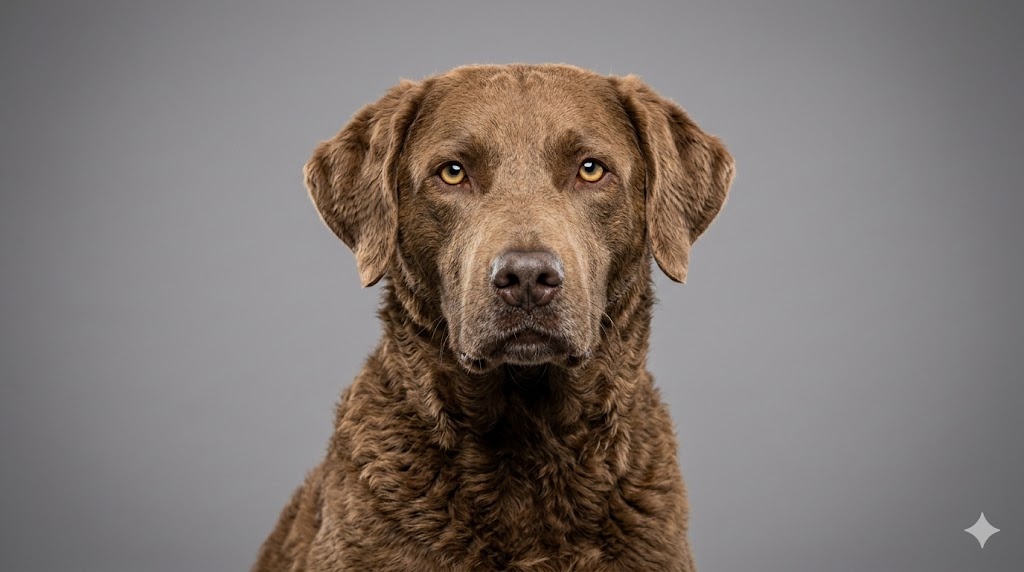
The Chesapeake Bay Retriever - universally called the "Chessie" - is the toughest of the retriever breeds.
🗓️ Last reviewed: June 2026
Overview
The Chesapeake Bay Retriever - universally called the "Chessie" - is the toughest of the retriever breeds. Developed on the Chesapeake Bay of Maryland in the early 1800s to retrieve hundreds of ducks per day from icy bay waters, the Chessie combines a uniquely water-resistant oily coat, exceptional swimming power, and a more independent, protective temperament than its retriever cousins. The breed is rare compared to Labs or Goldens, partly because the Chessie is a serious working dog rather than a casual family pet.
History & Origins
In 1807 an English ship wrecked off the coast of Maryland. Two Newfoundland-type puppies - a male named Sailor and a female named Canton - survived and were given to local families. The dogs proved remarkable at retrieving ducks from the cold Chesapeake Bay, and their offspring were crossed with local retrievers, hounds, and water dogs (probably including Curly-Coated Retrievers and Irish Water Spaniels) over the next half-century.
By the 1880s the Chesapeake Bay Retriever was a recognised breed, capable of retrieving 100-200 ducks per day from waters cold enough to ice over. The breed was admitted to the AKC in 1878 - among the earliest American breeds. It became the official state dog of Maryland in 1964.
The Chessie remains relatively uncommon, kept primarily by waterfowl hunters and dedicated enthusiasts.
Appearance
Medium-large, muscular, athletic. Males stand 58-66 cm (23-26 in) and weigh 29-36 kg (65-80 lb); females are smaller. The build is powerful and slightly higher in the rear than the shoulders - providing swimming power.
Key features:
- Coat: the breed's signature. Short, harsh, slightly wavy outer coat with a dense oily, woolly undercoat. The oil makes the coat water-resistant; water beads off like a duck's feathers. The coat has a distinctive doggy odour, especially when wet.
- Colour: any shade of brown, sedge (reddish-yellow), or deadgrass (straw to tan). The colour matches the breed's hunting environment.
- Head: broad with a moderate stop, amber or yellowish eyes (matching the coat), and small drop ears.
- Tail: medium-length, straight or slightly curved, never docked.
- Feet: webbed for swimming.
Temperament & Character
Confident, independent, and deeply loyal. The Chessie is the most reserved of the retriever breeds - friendly with family, watchful with strangers, and naturally protective. They are not the universally friendly Labs and Goldens; they assess strangers before deciding.
Around children, well-raised Chessies are typically excellent within their own family. Around other dogs they range from sociable to dominant, especially same-sex. Around small pets prey drive is moderate to high.
The breed is intelligent and biddable but stubborn. Chessies need a confident, fair handler - they do not tolerate harshness, and they do not respect indecision.
Care
Coat & Grooming
The double coat is low-maintenance but distinctive. Brush 1-2 times weekly with a slicker. The oily undercoat resists matting and water but produces the characteristic "Chessie smell" - especially after swims.
Bathe infrequently - every 8-12 weeks at most. Frequent bathing strips coat oils and destroys water resistance. Most owners simply rinse with fresh water after salt or muddy swims.
Clean ears weekly. Trim nails every 3 weeks. Brush teeth several times weekly.
Exercise & Activity Needs
High. Adults need 60-90 minutes of vigorous daily exercise - swimming, retrieving, hiking, structured training. The breed thrives in any water-related work.
Mental work is essential. The breed excels at hunt tests, dock diving, agility, obedience, and field trials.
Health & Lifespan
Average lifespan is 10-13 years.
Common concerns:
- Hip dysplasia - moderate.
- Progressive retinal atrophy - DNA test available.
- Exercise-induced collapse (EIC) - DNA test available.
- Degenerative myelopathy - DNA test.
- Cataracts.
- Bloat (GDV) - moderate risk.
- Hypothyroidism.
- Cancer in older dogs.
Feeding & Nutrition
Adults typically eat 2½-3½ cups of quality food per day in two meals. Working dogs need more. The breed maintains lean condition naturally when exercised.
Pros & Cons
Pros
- Tough, weatherproof, capable of work in any conditions.
- Devoted family companion.
- Naturally watchful - unique among retrievers.
- Outstanding swimmer and retriever.
- Long-lived for a working breed.
Cons
- Reserved with strangers; not friendly by default.
- High exercise and engagement needs.
- Distinctive doggy odour.
- More dog-on-dog reactivity than Labs/Goldens.
- Higher prey drive than other retrievers.
Best Suited For
- Waterfowl hunters.
- Active families committed to daily exercise.
- Sport homes (dock diving, field, hunt tests).
- Owners experienced with independent working breeds.
- Cold-climate homes with water access.
Not suited for first-time owners expecting Lab-like friendliness, sedentary households, or homes with small pets.
Chesapeake Bay Retriever puppy growth chart
A typical growth curve for a large breed like the Chesapeake Bay Retriever, estimated from its adult weight of 29-36 kg. Puppies vary with sex, genetics and diet, so treat this as a guide - for your own puppy, use the puppy weight predictor.
| Age | Typical weight | % of adult |
|---|---|---|
| 2 mo | 6.4-7.9 kg | 22% |
| 3 mo | 9.6-11.9 kg | 33% |
| 4 mo | 12.5-15.5 kg | 43% |
| 6 mo | 17.4-21.6 kg | 60% |
| 9 mo | 23.2-28.8 kg | 80% |
| 12 mo | 26.7-33.1 kg | 92% |
| Adult | 29-36 kg | 100% |
Chesapeake Bay Retriever - frequently asked questions
Chessie vs Labrador - what's the difference?
The Chessie is tougher in cold water, more protective, more independent, and more reserved. The Lab is friendlier, more biddable, more universally suited to pet life. The Chessie is the working specialist; the Lab is the all-purpose companion.
Are Chesapeakes good family dogs?
Yes, with active families who understand the breed. They are devoted within the family but not the universally friendly dog Labs are.
Do they smell?
Yes, more than most short-coated breeds. The oily water-resistant coat produces a distinct doggy odour, especially when wet. Owners largely consider this charming rather than problematic.
How cold can they swim?
Chessies were bred to break ice and retrieve in temperatures that would kill most retrievers. Healthy adults swim comfortably in near-freezing water for short durations.
Are they aggressive?
Not by temperament toward family. They are more naturally protective and more reactive to strangers and unfamiliar dogs than other retrievers. Proper socialisation produces a stable, confident adult.
🧠 Test yourself: guess the dog
Three clues from our quiz bank, each about another of our dogs. Can you name them?
Clue 1.A lean, short-coated pointing breed from Hungary prized for both pointing and retrieving game, with a self-colored nose blending into its coat.
It's the Vizsla - read the full profile →
Clue 2.Famously energetic, this compact hunting terrier of TV fame can leap five times its own height.
It's the Jack Russell Terrier - read the full profile →
Clue 3.This silky-coated, long-eared dog needs frequent grooming and ear care, and was once America's most popular breed for years.
It's the Cocker Spaniel (American) - read the full profile →
💛 Adoptable Chesapeake Bay Retrievers near you
Real dogs of this breed (and close mixes) waiting in shelters and rescues right now, live from Petfinder. We have no affiliation and earn nothing - if someone catches your eye, the link goes straight to their shelter. New to adopting? Start with our adoption guide.
Widget not loading (some ad-blockers hide it)? Search directly on petfinder.com.