Doberman Pinscher
The Doberman Pinscher is a sleek, athletic, and intensely intelligent German working dog created in the 1880s as the perfect personal protection dog.
🗓️ Last reviewed: June 2026
Overview
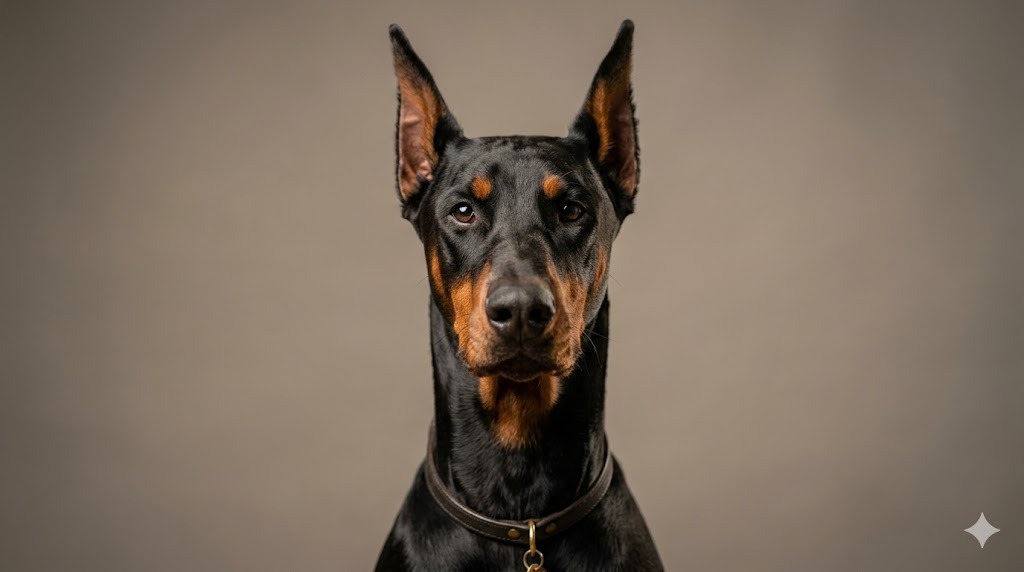
The Doberman Pinscher is a sleek, athletic, and intensely intelligent German working dog created in the 1880s as the perfect personal protection dog. Elegant in appearance and serious in temperament, the Doberman is one of the most capable and versatile working breeds in the world - used in police, military, search-and-rescue, service, and protection work, while also serving as a devoted, sometimes startlingly affectionate family companion. The reputation for aggression is largely a relic of media; modern Dobermans are stable, biddable, and bonded to their humans far more than the cinema would suggest.
History & Origins
Created in Apolda, Germany, in the late 1880s by Karl Friedrich Louis Dobermann - a tax collector and night watchman who wanted the perfect protective companion for his rounds. He blended Rottweiler, German Pinscher, Weimaraner, Manchester Terrier, Greyhound, and probably Beauceron and Black-and-Tan Terrier to create a dog with the size, intelligence, drive, and confidence he wanted.
The German Doberman Club was founded in 1899; the AKC recognised the breed in 1908. Dobermans served extensively in both World Wars - most famously as US Marine Corps dogs in the Pacific Theatre, where the breed earned a permanent place in military history.
After 1945 the breed split into "European" working lines (heavier, calmer, harder drive) and "American" show lines (lighter, finer, often softer). Both share the essential temperament.
Appearance
Medium-large, athletic, elegant. Males stand 66-72 cm (26-28 in) and weigh 35-45 kg (75-100 lb); females are smaller. The build is lean, muscular, square - no excess substance.
Key features:
- Coat: very short, smooth, hard, glossy. Single-coated.
- Colour: black, red (brown), blue, or fawn (Isabella), always with rust markings above the eyes, on muzzle, throat, chest, legs, and feet. White Dobermans (albino-related) exist but carry serious health and welfare issues; ethical breeders avoid them.
- Head: long, clean, wedge-shaped with a long muzzle.
- Ears: traditionally cropped to a tall point in the US; natural drop ears standard in Europe and increasingly elsewhere.
- Tail: historically docked; natural tails (long, carried at moderate height) increasingly common.
Temperament & Character
Confident, alert, deeply bonded to family. Dobermans are intensely loyal - they form profound attachments to their people and want to be near them at all times. The breed is famously "Velcro" for a large working dog.
A well-bred Doberman is friendly at home, polite with strangers when introduced calmly, and naturally watchful. The breed is intelligent and biddable - one of the easiest large breeds to train. Modern temperament is much softer than the breed's pre-war reputation; aggression in a Doberman today usually signals bad breeding or poor handling.
Care
Coat & Grooming
The short single coat is very low-maintenance: weekly rub-down with a rubber curry, baths every 6-8 weeks. Sheds steadily but moderately.
The single coat provides little insulation. Dobermans need coats in cold weather and shade in summer heat. Clean ears weekly, trim nails every 3 weeks, brush teeth several times weekly.
Exercise & Activity Needs
High. Adults need 60-90 minutes of vigorous daily exercise combining brisk walking or jogging, structured training, and either off-leash running, swimming, or sport work. The breed excels at IGP/Schutzhund, obedience, agility, dock diving, tracking, and weight pull.
Mental work is essential. A bored Doberman becomes destructive, anxious, and develops obsessive behaviours. Daily training, varied environments, and structured engagement keep the dog balanced.
Health & Lifespan
Average lifespan is 10-12 years.
Common concerns:
- Dilated cardiomyopathy (DCM) - a devastating heart condition affecting up to 50% of Dobermans during their lifetime. Annual cardiac screening (echocardiogram and Holter monitor) is essential. DNA tests for two associated mutations (PDK4, TTN) are available but do not catch all cases.
- Von Willebrand's disease - clotting disorder; DNA test essential.
- Hip dysplasia - moderate.
- Wobbler syndrome (cervical spondylomyelopathy) - neck spinal disease.
- Hypothyroidism - common.
- Gastric dilatation-volvulus (bloat) - high risk.
- Cancer - particularly osteosarcoma and lymphoma in older dogs.
- Chronic active hepatitis.
Choose a breeder who openly publishes cardiac screening, vWD results, and longevity in their lines. The DCM crisis is the single biggest challenge in the breed.
Feeding & Nutrition
Adults typically eat 3-4 cups of quality large-breed food per day in two or three meals. Working dogs need more.
The DCM situation has driven careful attention to diet. Grain-free, legume-heavy diets have been associated with diet-related DCM in this breed; most cardiologists now recommend a traditional grain-inclusive diet from a long-established manufacturer with veterinary nutritionist research backing.
Avoid heavy exercise around meals (bloat risk). Slow-feeder bowls help. Keep the dog lean.
Pros & Cons
Pros
- Highly intelligent, easy to train.
- Devoted, family-bonded companion.
- Naturally watchful guardian without training to be aggressive.
- Striking, elegant appearance.
- Short coat is easy to maintain.
Cons
- High cancer and cardiac risk; reduced lifespan.
- High exercise and engagement needs.
- Insurance and legal restrictions in some regions.
- Cannot tolerate cold or being left alone.
- Strong attachment can become separation anxiety.
Best Suited For
- Active, committed owners.
- Sport homes (IGP, obedience, agility, tracking).
- Service, protection, and working roles.
- Active families with older children.
- Households where someone is home most of the day.
Not suited for sedentary owners, cold-climate outdoor lifestyles, full-time-office homes without coverage, or owners uncomfortable with a serious working breed.
Doberman Pinscher puppy growth chart
A typical growth curve for a large breed like the Doberman Pinscher, estimated from its adult weight of 35-45 kg. Puppies vary with sex, genetics and diet, so treat this as a guide - for your own puppy, use the puppy weight predictor.
| Age | Typical weight | % of adult |
|---|---|---|
| 2 mo | 7.7-9.9 kg | 22% |
| 3 mo | 11.6-14.9 kg | 33% |
| 4 mo | 15.1-19.4 kg | 43% |
| 6 mo | 21-27 kg | 60% |
| 9 mo | 28-36 kg | 80% |
| 12 mo | 32.2-41.4 kg | 92% |
| Adult | 35-45 kg | 100% |
Doberman Pinscher - frequently asked questions
Are Dobermans dangerous?
Modern Dobermans are stable, biddable, and devoted family dogs. Pre-war breeding produced sharper, more reactive dogs, but selective breeding has largely corrected this. Poorly bred or mishandled dogs of any large breed can be dangerous; choose a temperament-tested line.
How serious is the DCM problem?
Very. Up to half of Dobermans develop cardiomyopathy. Annual cardiac screening from age 3, DNA testing for known mutations, and choice of a breeder with long-lived lines are essential. The condition can be silent until it kills suddenly; early detection enables treatment that significantly extends life.
Are Dobermans good with kids?
Generally yes with their own family. Their size, strength, and intensity require supervision around small children.
Doberman vs Rottweiler - which is better?
Doberman is lighter, faster, more biddable, more "Velcro" attached. Rottweiler is heavier, calmer in adulthood, slightly more independent. Both are serious working breeds.
Do they shed a lot?
Moderately for a short-coated dog. The fine hairs are tenacious in fabric.
🧠 Test yourself: guess the dog
Three clues from our quiz bank, each about another of our dogs. Can you name them?
Clue 1.Famously energetic, this compact hunting terrier of TV fame can leap five times its own height.
It's the Jack Russell Terrier - read the full profile →
Clue 2.A massive yet agile estate-guarding breed, it combines mastiff bulk with bulldog tenacity in a roughly 60/40 ancestral mix.
It's the Bullmastiff - read the full profile →
Clue 3.Weighing under seven pounds, this gentle white toy breed is bold and fearless despite its delicate looks.
It's the Maltese - read the full profile →
💛 Adoptable Doberman Pinschers near you
Real dogs of this breed (and close mixes) waiting in shelters and rescues right now, live from Petfinder. We have no affiliation and earn nothing - if someone catches your eye, the link goes straight to their shelter. New to adopting? Start with our adoption guide.
Widget not loading (some ad-blockers hide it)? Search directly on petfinder.com.