English Springer Spaniel
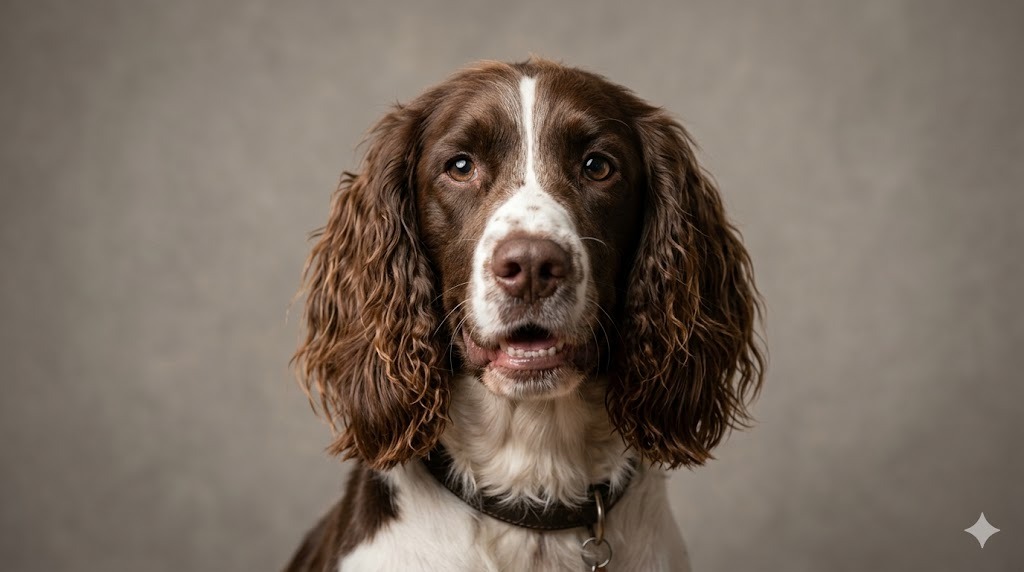
The English Springer Spaniel is a medium-sized, energetic gundog with a wagging tail, soft expression, and centuries of working pedigree.
🗓️ Last reviewed: June 2026
Overview
The English Springer Spaniel is a medium-sized, energetic gundog with a wagging tail, soft expression, and centuries of working pedigree. The breed has been used for "springing" game from cover - flushing pheasants and partridges into the air - since the 1500s, and modern field-bred Springers remain among the finest working spaniels in the world. The breed also exists in a heavier, longer-coated show form, used mostly as a family pet. Both share an affectionate, eager-to-please temperament that makes the breed one of the most rewarding gundogs to live with.
History & Origins
Spaniels of various types have worked British fields for at least 500 years. Originally, "springer" and "cocker" simply described function rather than breed - springers flushed larger game, cockers flushed smaller. Distinct breeds emerged in the 19th century when conformation standards crystallised. The English Springer Spaniel was officially recognised by the Kennel Club in 1902.
In the early 20th century, working and show lines diverged sharply. Field-bred Springers are lighter, faster, with shorter coats and less ear feathering; show-bred dogs are heavier, slower, with abundant feathering. Both retain working ancestry, but field and show lines now rarely interbreed.
The AKC recognised the breed in 1910. The English Springer became one of America's most popular gundog and family breeds throughout the 20th century.
Appearance
Medium-sized, balanced, athletic. Males stand 48-56 cm (19-22 in) and weigh 18-25 kg (40-55 lb); females slightly smaller.
Key features:
- Coat: medium-length, flat or slightly wavy, weather-resistant double coat with feathering on the ears, chest, legs, and tail.
- Colour: liver-and-white or black-and-white most common; sometimes tricolour (with tan markings on eyebrows, cheeks, vent). Solid colours are not recognised.
- Head: medium length with a soft expression, long pendant ears, and warm hazel or brown eyes.
- Tail: historically docked to about 50% of natural length for working purposes; natural tails increasingly common.
Temperament & Character
Friendly, affectionate, and people-oriented. The Springer bonds intensely with family and is typically excellent with children and other dogs. Strangers receive a wagging welcome rather than suspicion - this is not a guard breed.
The defining trait is partnership drive. Springers were bred to work closely with a hunter, checking in, responding to subtle cues, and reading the handler constantly. In a pet home this translates to a dog that follows you everywhere ("Velcro spaniel"), watches your face, and lives to please.
The breed has a long-known but well-documented condition called "rage syndrome" (sudden onset aggression) in certain bloodlines - extremely rare but historically real. Reputable breeders test for temperament; buy carefully.
Care
Coat & Grooming
The feathered coat is moderate maintenance. Brush 2-3 times weekly with a pin brush and metal comb, paying special attention to ears, leg furnishings, chest, and tail. Trim feathering on feet and around the ears every few weeks. Many working homes keep the dog clipped short for practicality.
Bathe every 4-6 weeks; the dog will smell "doggy" by then. Clean ears weekly - heavy, hairy ears trap moisture and infect quickly. Trim nails every 3 weeks. Brush teeth several times weekly.
Exercise & Activity Needs
High. Adults need 60-90 minutes of vigorous daily exercise - walking alone is not enough. The breed thrives on retrieving, swimming, scent work, hunting tests, agility, obedience, and tracking. Field-line Springers need more activity than show-line dogs.
Mental stimulation is essential. A bored Springer becomes destructive, vocal, and develops obsessive behaviours. Daily training, varied walks, and structured games keep the dog balanced.
Health & Lifespan
Average lifespan is 12-14 years.
Common concerns:
- Hip and elbow dysplasia.
- Progressive retinal atrophy and retinal dysplasia.
- Ear infections - heavy ears in a swimming breed.
- Phosphofructokinase (PFK) deficiency - a metabolic condition; DNA test available.
- Fucosidosis - a rare neurological storage disease; DNA test available.
- Hypothyroidism.
- Skin allergies.
- Cancer in older dogs.
- Sudden onset aggression ("rage syndrome") in some bloodlines - choose a temperament-tested breeder.
Feeding & Nutrition
Adults typically eat 1½-2½ cups of quality food per day in two meals; working dogs need more. The breed gains weight easily in pet homes; measure portions.
Spaniels are prone to ear and food sensitivities. Many do best on novel-protein or hydrolysed diets if chronic ear or skin issues appear.
Pros & Cons
Pros
- Friendly, affectionate, eager to please.
- Highly trainable.
- Versatile - sport, hunting, service, family.
- Good with children and other dogs.
- Long-lived for a medium breed.
Cons
- High exercise and engagement needs.
- Heavy ear maintenance; prone to ear infections.
- Coat requires regular grooming.
- Can develop separation issues.
- Some bloodlines carry "rage syndrome" - choose carefully.
Best Suited For
- Active families with children.
- Hunters and gundog enthusiasts.
- Sport homes (obedience, agility, scent work).
- Service and therapy programmes.
- Households where someone is home most of the day.
Not suited for sedentary owners, full-time-office homes without coverage, or anyone wanting a low-maintenance pet.
English Springer Spaniel puppy growth chart
A typical growth curve for a medium breed like the English Springer Spaniel, estimated from its adult weight of 18-25 kg. Puppies vary with sex, genetics and diet, so treat this as a guide - for your own puppy, use the puppy weight predictor.
| Age | Typical weight | % of adult |
|---|---|---|
| 2 mo | 4.9-6.8 kg | 27% |
| 3 mo | 7.2-10 kg | 40% |
| 4 mo | 9-12.5 kg | 50% |
| 6 mo | 12.2-17 kg | 68% |
| 9 mo | 15.3-21.3 kg | 85% |
| 12 mo | 17.5-24.3 kg | 97% |
| Adult | 18-25 kg | 100% |
English Springer Spaniel - frequently asked questions
Show line vs field line - what's the difference?
Field-line Springers are lighter, faster, shorter-coated, with less ear feathering and more drive. Show-line dogs are heavier, slower, with abundant coat and feathering. Field lines need much more exercise; show lines suit family life more easily.
Are Springers good with kids?
Excellent - patient, gentle, playful. Watch the size mismatch with toddlers; an enthusiastic Springer can bowl over a small child.
What is "rage syndrome"?
A rare neurological condition causing sudden, unprovoked aggression. It has historically been linked to specific bloodlines, particularly red-and-white show Springers. Choose a breeder who openly discusses temperament history.
Do Springers swim?
Most love water - the breed was developed to retrieve from water. Many enjoy swimming as their favourite exercise.
Are Springers hypoallergenic?
No - they shed moderately and produce dander.
🧠 Test yourself: guess the dog
Three clues from our quiz bank, each about another of our dogs. Can you name them?
Clue 1.This enormous, droopy-jowled mastiff is famed for a calm, affectionate temperament despite its intimidating bulk.
It's the English Mastiff - read the full profile →
Clue 2.This low-slung herding dog with a famously docked or naturally short tail was the beloved breed of Queen Elizabeth II.
It's the Pembroke Welsh Corgi - read the full profile →
Clue 3.Bred down from fighting stock in 19th-century Massachusetts, this compact breed shares its city's name and is its state's official dog.
It's the Boston Terrier - read the full profile →
💛 Adoptable English Springer Spaniels near you
Real dogs of this breed (and close mixes) waiting in shelters and rescues right now, live from Petfinder. We have no affiliation and earn nothing - if someone catches your eye, the link goes straight to their shelter. New to adopting? Start with our adoption guide.
Widget not loading (some ad-blockers hide it)? Search directly on petfinder.com.