German Shorthaired Pointer
The German Shorthaired Pointer (GSP) is the prototype of the modern versatile hunting dog - point, retrieve, track, swim, work in field, forest, and water.
🗓️ Last reviewed: July 2026
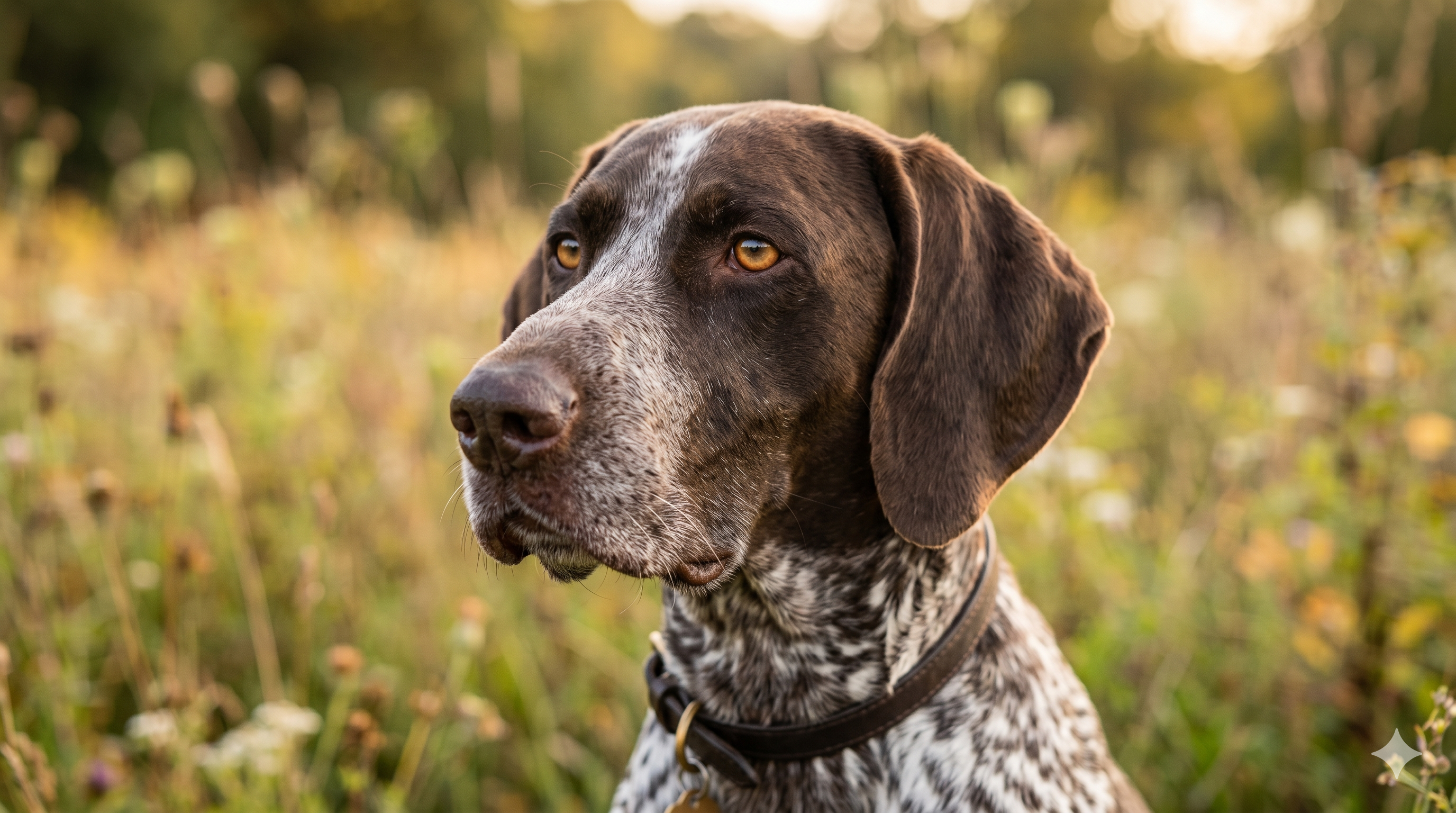
Overview
The German Shorthaired Pointer (GSP) is the prototype of the modern versatile hunting dog - point, retrieve, track, swim, work in field, forest, and water. Athletic, intelligent, and tireless, the GSP is one of the world's premier sporting breeds. It is also, increasingly, a popular family pet - though families who underestimate its drive and stamina are often quickly overwhelmed. A GSP without enough work becomes one of the most destructive dogs imaginable.
History & Origins
Developed in Germany in the second half of the 19th century. German hunters wanted a single all-purpose gundog rather than the specialist English breeds: a dog that could point and retrieve game both on land and in water, track wounded animals, and hold its own against predators. Breeders blended the older German Bird Dog (a slower scent hound) with English Pointer for style and speed, plus probably some Bloodhound for tracking and assorted German hunting types.
By 1872 the breed was registered in Germany; the AKC recognised it in 1930. The GSP rapidly became one of the most respected versatile hunting breeds worldwide. It remains highly popular for hunting, dog sport, search-and-rescue, and detection work, with a parallel pet population growing year by year.
Appearance
A medium-large, athletic, square-built dog. Males stand 58-64 cm (23-25 in) and weigh 25-32 kg (55-70 lb); females are slightly smaller. The build is lean, deep-chested, all working muscle.
Key features:
- Coat: short, dense, slightly harsh, water-resistant.
- Colour: liver, liver-and-white (ticked, patched, or roan), occasionally black-and-white in some standards. Solid white is a fault.
- Head: clean, slightly arched skull, brown nose, almond-shaped amber eyes.
- Ears: medium length, set high, lying close.
- Tail: historically docked to 40% in working homes; increasingly natural in pet and show contexts.
Temperament & Character
Energetic, affectionate, and highly people-oriented. GSPs bond intensely with family, follow their humans from room to room ("Velcro dog"), and dislike being left alone. They are friendly with strangers, usually fine with other dogs, and may be too predatory for cats or small pets.
The defining trait is drive. The breed has been selected for stamina, focus, and willingness to work all day in tough conditions. Translate this to family life: a GSP who is not running for an hour or more daily becomes anxious, destructive, and vocal. With enough work, the same dog is calm, biddable, and devoted.
Care
Coat & Grooming
The short coat is easy: weekly brushing with a rubber curry plus baths every 6-8 weeks. Sheds steadily year-round - fine hairs that stick to fabric.
Clean ears weekly, especially after swimming. Trim nails every 2-3 weeks. Brush teeth several times weekly. Check the dog after fieldwork for ticks, burrs, and small wounds.
Exercise & Activity Needs
Among the highest-energy popular breeds. Adults need a minimum of 90-120 minutes of vigorous exercise daily, ideally including off-leash running, retrieving, swimming, or fieldwork. A leashed walk is preparation, not exercise, for a GSP.
The breed excels at every dog sport: agility, dock diving, flyball, obedience, tracking, scent work, NAVHDA (North American Versatile Hunting Dog) trials, IGP, and competitive obedience. Mental stimulation is non-negotiable - bored GSPs chew furniture, dig craters, and scale fences.
Health & Lifespan
Average lifespan is 12-14 years - long for a sporting dog of this size.
Common concerns:
- Hip dysplasia - moderate; check parents.
- Bloat (GDV) - deep-chested build raises risk. Feed multiple small meals, avoid vigorous exercise around meals.
- Aortic stenosis and other heart issues.
- Lymphedema - relatively common in this breed.
- Hypothyroidism.
- Eye conditions - entropion, cone degeneration, PRA.
- Cancer in older dogs (haemangiosarcoma, mast cell tumours).
Feeding & Nutrition
Adults typically eat 2½-3½ cups of high-quality food per day in two or three meals. Working dogs need substantially more.
Bloat risk dictates that the GSP not exercise vigorously within an hour of meals. Slow-feeder bowls help inhalers. Performance dogs often benefit from a higher-fat sporting formula in working seasons.
GSPs maintain lean condition easily when exercised properly. Sedentary GSPs gain weight, lose muscle, and develop behaviour problems quickly.
Pros & Cons
Pros
- Athletic, versatile, capable of any working role.
- Affectionate and family-oriented.
- Highly trainable.
- Easy short coat.
- Long-lived for a working breed.
Cons
- Enormous exercise needs - no half-measures.
- Sheds steadily.
- Cannot be left alone for long periods.
- Strong prey drive; cats and small pets at risk.
- Destructive when under-exercised.
Best Suited For
- Hunters and field-sport enthusiasts.
- Runners, cyclists, hikers, dock-diving enthusiasts.
- Active families willing to commit hours per day.
- Sport homes (agility, obedience, scent work, hunt tests).
- Households with secure fencing - GSPs can clear ordinary fences easily.
Not suited for sedentary owners, apartment dwellers without long daily off-leash time, full-time-office homes, or first-time owners who underestimate drive.
German Shorthaired Pointer puppy growth chart
A typical growth curve for a large breed like the German Shorthaired Pointer, estimated from its adult weight of 25-32 kg. Puppies vary with sex, genetics and diet, so treat this as a guide - for your own puppy, use the puppy weight predictor.
| Age | Typical weight | % of adult |
|---|---|---|
| 2 mo | 5.5-7 kg | 22% |
| 3 mo | 8.3-10.6 kg | 33% |
| 4 mo | 10.8-13.8 kg | 43% |
| 6 mo | 15-19.2 kg | 60% |
| 9 mo | 20-25.6 kg | 80% |
| 12 mo | 23-29.4 kg | 92% |
| Adult | 25-32 kg | 100% |
German Shorthaired Pointer - frequently asked questions
How much exercise does a GSP really need?
At least 90-120 minutes of vigorous activity daily - running, retrieving, swimming. Walking alone, even for hours, doesn't satisfy them.
Are GSPs good family dogs?
Yes, with active families. Many adore children. They are large, fast, and clumsy as puppies - supervise around toddlers.
Can a GSP live in an apartment?
Possible only with substantial outdoor time daily - typically 2+ hours of vigorous activity. Most apartment GSPs end up rehomed.
Are GSPs good with other dogs?
Generally yes, especially when socialised young. Prey drive toward small pets (cats, rabbits) is often high.
Are they hypoallergenic?
No - they shed steadily and produce dander. The short hairs are particularly persistent in carpets and upholstery.
🧠 Test yourself: guess the dog
Three clues from our quiz bank, each about another of our dogs. Can you name them?
Clue 1.Once a much larger sled-type dog, this breed was miniaturized into a toy after Queen Victoria fell for a small one.
It's the Pomeranian - read the full profile →
Clue 2.One of the oldest Arctic sled dogs, this powerful freighting breed was developed by an Inuit people to haul heavy loads over long distances, not to race for speed.
It's the Alaskan Malamute - read the full profile →
Clue 3.Widely considered the most intelligent dog breed, this herder controls livestock with an intense, crouching stare known as the eye.
It's the Border Collie - read the full profile →
💛 Adoptable German Shorthaired Pointers near you
Real dogs of this breed (and close mixes) waiting in shelters and rescues right now, live from Petfinder. We have no affiliation and earn nothing - if someone catches your eye, the link goes straight to their shelter. New to adopting? Start with our adoption guide.
Widget not loading (some ad-blockers hide it)? Search directly on petfinder.com.