Italian Greyhound
The Italian Greyhound - universally called the "Iggy" - is the miniature sighthound of the dog world.
🗓️ Last reviewed: June 2026
Overview
The Italian Greyhound - universally called the "Iggy" - is the miniature sighthound of the dog world. A true scaled-down Greyhound, the breed weighs just 3-6 kg but retains the speed, elegance, and gentle nature of its larger cousin. The breed has been a noble lap dog for at least two thousand years, appearing in Roman art, Renaissance court paintings, and the lap of nearly every European royal household at one point or another. Modern Iggies remain affectionate, sensitive, and adaptable companions with one quirk: they are surprisingly fragile.
History & Origins
Miniature greyhound-type dogs have existed in the Mediterranean since at least 2000 BC; artefacts from Egypt, Greece, and Rome show small sighthound companions. The breed was particularly popular in Italian Renaissance courts, hence the modern name.
European royalty across centuries kept Italian Greyhounds - Catherine the Great of Russia, Frederick the Great of Prussia, Mary Queen of Scots, Queen Victoria. The breed nearly disappeared in the World Wars and was rebuilt from a small number of survivors.
The AKC recognised the breed in 1886. Modern Iggies are uncommon but consistent in personality and structure.
Appearance
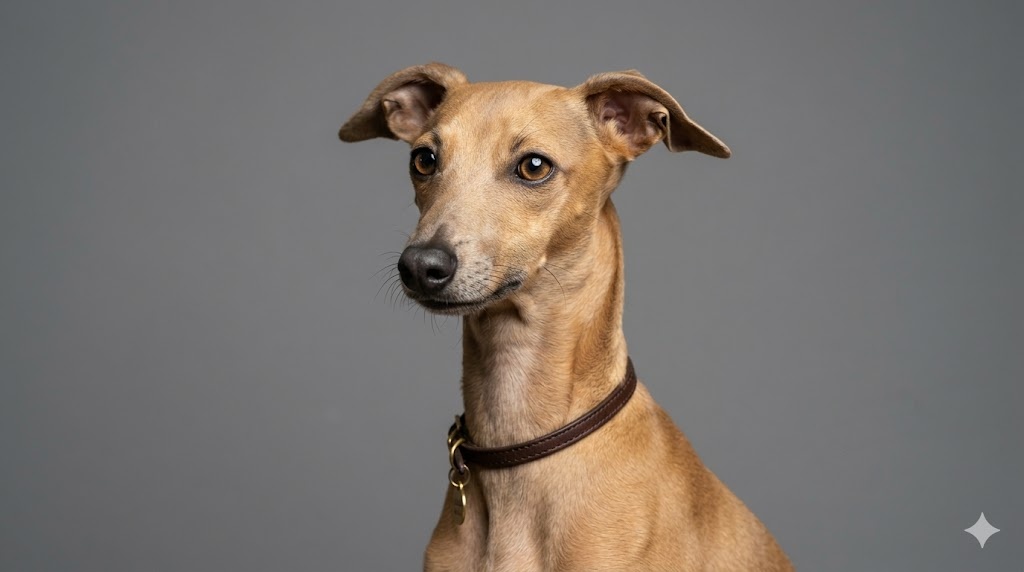
Tiny, elegant, with the unmistakable sighthound silhouette. Adults stand 33-38 cm (13-15 in) and weigh 3-5 kg (7-11 lb).
Key features:
- Coat: very short, fine, glossy, close to the body.
- Colour: any colour except brindle in some standards. Common colours: fawn, blue, black, cream, red, with or without white markings.
- Head: long, lean, narrow.
- Eyes: dark, large, expressive.
- Ears: small, fine, folded back when relaxed; semi-erect when alert.
- Tail: long, slender, tapering, carried low.
- Build: delicate, fine-boned, with the characteristic deep chest and tucked waist of a sighthound.
Temperament & Character
Gentle, affectionate, and sensitive. Italian Greyhounds bond intensely with family - typically with one primary person - and dislike being alone. The breed is friendly with familiar people, reserved with strangers, and generally sociable with other dogs (especially other sighthounds).
At home Iggies are affectionate cuddlers. They burrow under blankets, sit on laps, and follow their humans from room to room. Outside, the same dog can sprint at over 40 km/h after anything that moves.
The breed is sensitive - harsh handling, chaotic households, or rough children produce shutdown or fear-snapping. Quiet, gentle households suit best.
Care
Coat & Grooming
The very short single coat is the lowest-maintenance of almost any breed: weekly rub-down with a soft cloth, baths every 6-8 weeks. Sheds minimally.
The lack of insulation means coats and sweaters in cold weather are non-negotiable. Provide soft beds - there is almost no body padding for hard surfaces.
Clean ears weekly. Trim nails every 3 weeks (delicate nails). Brush teeth daily - dental disease is the breed's most common health issue and is particularly severe in Iggies.
Exercise & Activity Needs
Modest but real. Adults need 30-45 minutes of daily exercise - walks, indoor zoomies, training games. The breed needs at least one daily opportunity for short bursts of running in a safe enclosed space.
Use a harness, not a collar - the trachea is fragile. Avoid jumping from heights; the delicate bone structure makes fractures common (broken legs from jumping off sofas are a defining breed injury).
Health & Lifespan
Average lifespan is 14-15 years.
Common concerns:
- Dental disease - among the most severe in any breed. Daily brushing is essential.
- Leg fractures - the delicate radius and ulna fracture easily from jumps. Many Iggies break a leg in their first year.
- Patellar luxation.
- Hypothyroidism.
- Epilepsy.
- Progressive retinal atrophy and cataracts.
- Autoimmune diseases.
- Cold sensitivity - not a disease, but a serious quality-of-life issue.
- Anaesthetic sensitivities - sighthounds metabolise anaesthetics differently; inform the vet.
Feeding & Nutrition
Adults typically eat 1/2 to 3/4 cup of high-quality small-breed food per day in two meals. The breed maintains lean condition naturally; Iggies should look slightly bony.
Picky eating is common. Establish a calm feeding routine and resist hand-feeding.
Pros & Cons
Pros
- Affectionate, gentle, family companion.
- Very low grooming.
- Adaptable to apartments.
- Quiet - barks rarely.
- Long-lived.
Cons
- Fragile body; high fracture risk.
- Cold-intolerant; needs sweaters and warm beds.
- Severe dental disease without daily care.
- Slow to house-train.
- Sensitive - not for chaotic homes.
- Strong prey drive; unreliable recall.
Best Suited For
- Singles, couples, retirees in quiet households.
- Apartment dwellers in mild climates.
- Owners willing to provide soft beds and warm clothing.
- Households without rough-playing large dogs.
- Adults-only or older-child homes.
Not suited for households with toddlers or rough-playing children, cold-climate outdoor lifestyles, or owners unable to commit to daily dental care.
Italian Greyhound puppy growth chart
A typical growth curve for a toy breed like the Italian Greyhound, estimated from its adult weight of 3-6 kg. Puppies vary with sex, genetics and diet, so treat this as a guide - for your own puppy, use the puppy weight predictor.
| Age | Typical weight | % of adult |
|---|---|---|
| 2 mo | 1-2 kg | 33% |
| 3 mo | 1.4-2.7 kg | 45% |
| 4 mo | 1.7-3.3 kg | 55% |
| 6 mo | 2.3-4.5 kg | 75% |
| 9 mo | 2.8-5.7 kg | 95% |
| 12 mo | 3-6 kg | 100% |
| Adult | 3-6 kg | 100% |
Italian Greyhound - frequently asked questions
Are Italian Greyhounds fragile?
Yes. The delicate bone structure fractures easily - particularly the radius and ulna in young dogs. Manage jumping carefully, provide ramps, and supervise around children and large dogs.
Do they need clothing?
Yes. The very thin coat and lack of body fat make Iggies genuinely cold in temperatures most dogs find comfortable. Sweaters for indoor cool weather, coats for outdoor cold, are standard equipment.
Are they good with kids?
With respectful older children, yes. Toddlers handle Iggies too roughly; the breed's fragility and sensitivity make small-child households a poor fit.
Why is house training so slow?
The breed has a strong dislike of cold, wet, or unpleasant outdoor conditions. Many Iggies refuse to eliminate outside in bad weather and revert to indoor accidents. Indoor pad or litter training is often necessary.
How long do they live?
14-15 years on average. Lean weight, good dental care, and avoiding injury push the upper end into 16+.
🧠 Test yourself: guess the dog
Three clues from our quiz bank, each about another of our dogs. Can you name them?
Clue 1.This gentle giant is sweet and patient with families despite its enormous frame, but sadly has a short lifespan.
It's the Great Dane - read the full profile →
Clue 2.Once called the 'bobtail,' this drovers' dog has a loud, distinctive 'pot-casse' or cracked-bell bark.
It's the Old English Sheepdog - read the full profile →
Clue 3.Brought from China to Europe by Dutch traders, this flat-faced toy became the mascot of the House of Orange.
It's the Pug - read the full profile →
💛 Adoptable Italian Greyhounds near you
Real dogs of this breed (and close mixes) waiting in shelters and rescues right now, live from Petfinder. We have no affiliation and earn nothing - if someone catches your eye, the link goes straight to their shelter. New to adopting? Start with our adoption guide.
Widget not loading (some ad-blockers hide it)? Search directly on petfinder.com.