Maltese
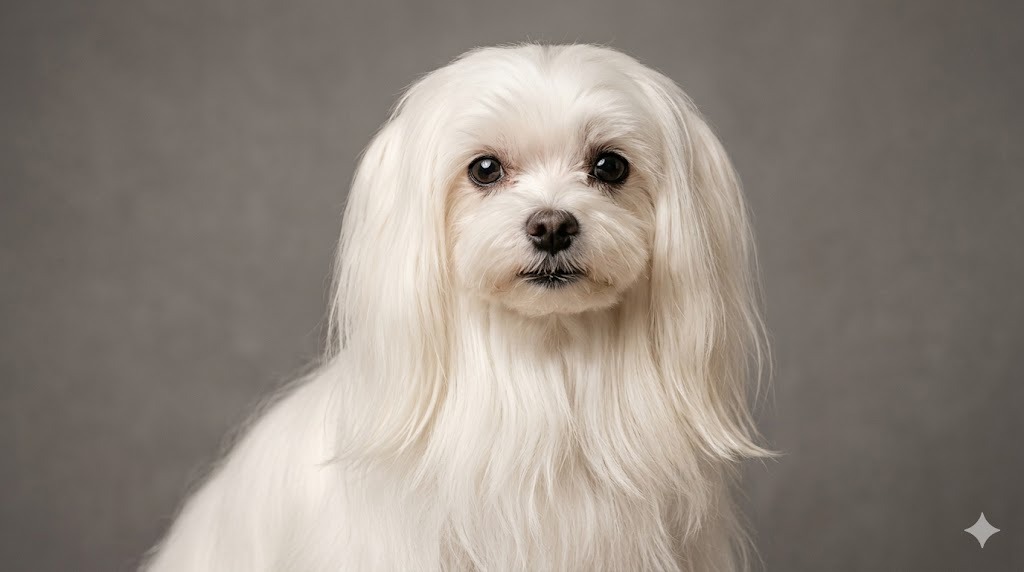
The Maltese is one of the oldest toy breeds in the world - a tiny, pure-white, silken-coated companion dog cherished since antiquity.
🗓️ Last reviewed: June 2026
Overview
The Maltese is one of the oldest toy breeds in the world - a tiny, pure-white, silken-coated companion dog cherished since antiquity. Greek and Roman writers praised the breed for its beauty and devotion; aristocratic ladies have kept Maltese on their laps for at least two thousand years. The modern Maltese remains a pure companion dog: tiny, affectionate, eternally puppy-faced, with a personality far larger than the four-kilogram body.
History & Origins
The breed's history stretches into deep antiquity. Phoenician traders are believed to have brought small white companion dogs to the island of Malta in the centuries before Christ; from there the breed spread across the Mediterranean world. Aristotle described "very small dogs called Melitaie" around 350 BC. Roman noblewomen kept Maltese as lap dogs; the breed appears on Greek pottery and Egyptian art.
The breed survived the fall of Rome and the Middle Ages largely in monasteries and aristocratic households. Maltese reached England in the 1500s and became favourites of Queen Elizabeth I and Mary Queen of Scots. The AKC recognised the breed in 1888.
The modern Maltese is essentially unchanged from depictions in Renaissance art - a remarkable continuity for any breed.
Appearance
Tiny, with a flowing pure-white coat. Adults stand 20-25 cm (8-10 in) and weigh 2-4 kg (4-8 lb).
Key features:
- Coat: long, straight, silky, single-coated (no undercoat). Floor-length in show condition.
- Colour: pure white. Slight ivory or lemon tinting on the ears is acceptable but undesirable.
- Head: slightly rounded with a moderate stop, dark round eyes, and long drop ears covered in long silky hair.
- Tail: plumed, carried over the back.
Temperament & Character
Bold, lively, and affectionate. Maltese are not the fragile flowers their appearance suggests - they are confident, sometimes feisty, and famously fearless toward dogs many times their size. They form intense bonds with family, often particularly with one person.
The breed is friendly with strangers when introduced calmly, sociable with other dogs and cats when socialised young. Maltese bark readily - alarm barking is breed-typical.
Despite the lap-dog reputation Maltese enjoy walking, sniffing, and playing. Many do well in agility and obedience scaled to their size.
Care
Coat & Grooming
The long single coat is the highest-maintenance feature.
Long show coat: daily brushing with a pin brush and metal comb, hair "wrapped" between brushings to prevent breakage, weekly baths, topknot tied to keep hair out of eyes. Hours per week.
Pet "puppy clip": professional grooming every 4-6 weeks (clip body short, scissor face, sanitary trim). Most pet owners choose this. Brushing 2-3 times weekly between groomings.
Tear staining on the white face is a constant battle. Wipe around eyes daily with a damp cloth; some use specialised stain removers. Trim the hair between eyes or tie it back. Brush teeth daily - dental disease is universal in toy breeds. Trim nails every 3 weeks. Clean ears weekly; pluck ear-canal hair as needed.
The coat is single-layered and sheds minimally. Many allergy sufferers tolerate the Maltese well.
Exercise & Activity Needs
Modest. Adults need 20-30 minutes of daily exercise - walks, indoor play, training games. Maltese fit easily into small homes and apartments.
Use a harness, not a collar - the trachea is fragile. Carry up and down stairs and off furniture; small joints and the long back are vulnerable. Avoid hot pavement (small dogs heat quickly).
Health & Lifespan
Average lifespan is 12-15 years.
Common concerns:
- Dental disease - universal without daily brushing.
- Tracheal collapse - chronic cough; use harnesses.
- Patellar luxation.
- Liver shunt (portosystemic shunt) - relatively common in toy breeds.
- Hypoglycaemia - small puppies and very small adults crash without regular meals.
- White Shaker Syndrome - sudden tremors of unknown cause.
- Heart disease - patent ductus arteriosus, mitral valve disease in older dogs.
- Eye conditions - cataracts, PRA, retinal dysplasia.
- Reverse sneezing - startling but harmless episodes.
Feeding & Nutrition
Adults typically eat 1/4 to 1/2 cup of high-quality small-breed food per day in two or three meals. Puppies need 3-4 small meals daily to prevent hypoglycaemia.
Picky eating is common. Establish a calm routine and resist hand-feeding. Treats should be tiny.
Liver shunt-affected dogs need specialised low-protein diets prescribed by a vet.
Pros & Cons
Pros
- Tiny - fits any home.
- Long-lived.
- Affectionate and entertaining.
- Low shedding; often suitable for allergy sufferers.
- Adaptable to apartment life.
Cons
- High coat maintenance.
- Slow to house-train.
- Vocal - barks readily.
- Fragile body; not for households with toddlers.
- Persistent tear staining on the white face.
Best Suited For
- Singles, couples, retirees wanting a constant companion.
- Apartment dwellers.
- Allergy-sensitive households (with caution).
- Families with older, gentle children.
- Owners willing to budget for grooming and dental care.
Not suited for households with toddlers or rough-playing large dogs, owners wanting a low-maintenance coat, or anyone unable to commit to daily face cleaning.
Maltese puppy growth chart
A typical growth curve for a toy breed like the Maltese, estimated from its adult weight of 2-4 kg. Puppies vary with sex, genetics and diet, so treat this as a guide - for your own puppy, use the puppy weight predictor.
| Age | Typical weight | % of adult |
|---|---|---|
| 2 mo | 0.7-1.3 kg | 33% |
| 3 mo | 0.9-1.8 kg | 45% |
| 4 mo | 1.1-2.2 kg | 55% |
| 6 mo | 1.5-3 kg | 75% |
| 9 mo | 1.9-3.8 kg | 95% |
| 12 mo | 2-4 kg | 100% |
| Adult | 2-4 kg | 100% |
Maltese - frequently asked questions
Are Maltese hypoallergenic?
No dog is fully hypoallergenic, but Maltese shed minimally and produce low dander. Many allergy sufferers tolerate them.
Why do they get tear stains?
The white face shows pigment from natural eye drainage. Causes include genetics, blocked tear ducts, food allergies, mineral content of water, and yeast on the face. Daily wiping, filtered water, and elimination diets help variably.
Are Maltese good with kids?
Better with older, gentle children. Maltese are easily injured by toddlers and may snap defensively.
Do they bark a lot?
Yes - alarm barking is breed-typical. Training reduces but rarely eliminates it.
Maltese vs Bichon Frise vs Havanese - what's the difference?
Maltese: smallest, pure white, silky straight coat, single-coated. Bichon: white, curly, slightly larger. Havanese: any colour, soft flowing coat, generally most family-tolerant of the three.
🧠 Test yourself: guess the dog
Three clues from our quiz bank, each about another of our dogs. Can you name them?
Clue 1.Bred at a hospice on a treacherous Alpine pass, this massive rescue dog could sense impending avalanches.
It's the Saint Bernard - read the full profile →
Clue 2.This northern breed can have heterochromia and is built to run efficiently on minimal food, an adaptation to scarce Arctic resources.
It's the Siberian Husky - read the full profile →
Clue 3.Bred to herd, guard, and hunt vermin on Irish farms, this breed greets people with an enthusiastic jump nicknamed its trademark 'leap'.
It's the Soft Coated Wheaten Terrier - read the full profile →
💛 Adoptable Malteses near you
Real dogs of this breed (and close mixes) waiting in shelters and rescues right now, live from Petfinder. We have no affiliation and earn nothing - if someone catches your eye, the link goes straight to their shelter. New to adopting? Start with our adoption guide.
Widget not loading (some ad-blockers hide it)? Search directly on petfinder.com.