Miniature Schnauzer
The Miniature Schnauzer is a small, sturdy, bearded terrier developed in late-19th-century Germany as a farm ratter.
🗓️ Last reviewed: June 2026
Overview
The Miniature Schnauzer is a small, sturdy, bearded terrier developed in late-19th-century Germany as a farm ratter. Smart, lively, and full of personality, the breed is famous for its luxuriant whiskers, alert squared-off build, and very low-shedding wiry coat. Schnauzers come in three sizes - Giant, Standard, and Miniature - all sharing the same essential character. The Miniature is the most popular variant worldwide and one of the few small breeds suitable for both apartment and active country life.
History & Origins
The Standard Schnauzer is the original breed, dating back to the Middle Ages as a German guard and ratting dog. In the 1880s German breeders began crossing Standards with Affenpinschers and possibly Poodles or Miniature Pinschers to produce a smaller version for ratting in farms and stables. The first Miniature Schnauzer was registered in 1888. The AKC recognised the breed in 1926.
In the US the Miniature is classified as a terrier; in Europe it remains in the Pinscher and Schnauzer group. The functional difference is small, but Miniature Schnauzers generally have a calmer, less scrappy temperament than typical British terriers.
Appearance
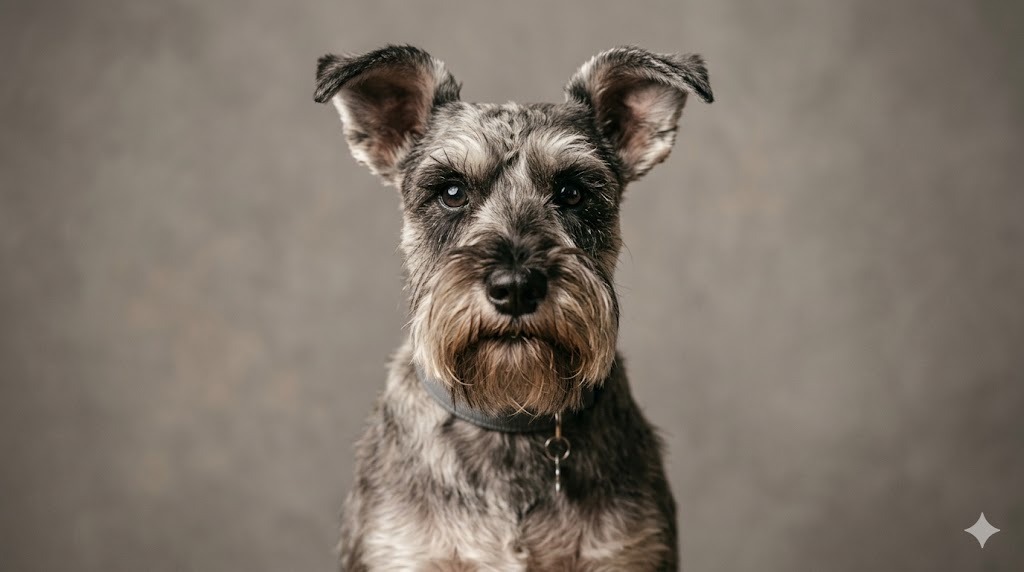
Small, square, sturdy with a distinctive whiskered face. Adults stand 30-36 cm (12-14 in) and weigh 5.5-9 kg (12-20 lb).
Key features:
- Coat: double coat with a wiry, hard outer coat and soft undercoat. Heavy beard, eyebrows, and leg furnishings.
- Colour: salt-and-pepper (most common), black, black-and-silver, white (allowed in FCI standards, not AKC).
- Head: rectangular with a strong muzzle, bushy eyebrows, and a full beard.
- Ears: historically cropped to a point in the US; natural V-shaped drop ears standard elsewhere.
- Tail: historically docked; natural tails increasingly common.
Temperament & Character
Confident, alert, lively, and friendly with family. The breed is famously vocal - Schnauzers bark at strangers, sounds, and small injustices. They make excellent alarm dogs. Reserved with new people initially, they warm up quickly once their family signals approval.
Miniature Schnauzers are intelligent and trainable but stubborn. They have terrier-style independence - they think before they obey. Most are good with children and other dogs but may chase cats and small pets due to ratting heritage.
Care
Coat & Grooming
The wiry coat requires routine work. Two grooming options:
Hand-stripped (show standard): the coat is plucked out a few hairs at a time every 6-8 weeks. This preserves the harsh, dark coat texture but requires a skilled groomer.
Clipped (most pets): every 6-8 weeks, the body is clipped short and the beard and furnishings trimmed. Easier and cheaper but softens the coat and lightens the colour.
Beard maintenance is daily: rinse after meals to prevent staining and odour, wipe dry. Leg furnishings tangle easily and need a comb-through 2-3 times weekly. Clean ears weekly. Pluck or trim ear-canal hair. Trim nails every 3-4 weeks. Brush teeth daily.
The breed sheds very little. Many allergy sufferers tolerate Schnauzers well.
Exercise & Activity Needs
Adults need 45-60 minutes of daily exercise. Walks, off-leash play in safe areas, and training sessions are ideal. The breed enjoys agility, scent work, barn hunt, and earthdog trials.
Mental work is essential - a bored Schnauzer barks, digs, and chews. Daily training, puzzle toys, and varied walks keep the dog satisfied.
Health & Lifespan
Average lifespan is 12-15 years.
Common concerns:
- Pancreatitis - a defining breed risk; Miniature Schnauzers are prone to chronic and acute pancreatitis, often triggered by fatty foods or hyperlipidemia.
- Hyperlipidemia - elevated blood fats; can run in families and predispose to pancreatitis. Many vets recommend annual lipid panels.
- Urinary stones (calcium oxalate and struvite).
- Diabetes mellitus - relatively common in middle-aged females.
- Progressive retinal atrophy and cataracts.
- Mycobacterium avium - a rare but serious infection in this breed.
- Comedone syndrome ("Schnauzer bumps") - small blackheads along the back, usually cosmetic.
Feeding & Nutrition
Adults typically eat 1/2 to 1 cup of quality small-breed food per day, split into two meals. The breed gains weight easily - extra weight worsens pancreatitis and diabetes risk.
Critically: keep the diet low in fat (under 12% as fed for at-risk dogs), avoid table scraps and fatty treats absolutely. One fatty meal can trigger acute pancreatitis. Many vets recommend lifelong low-fat feeding. Discuss diet with a vet who knows the breed's lipid issues.
Pros & Cons
Pros
- Very low shedding; often suitable for allergy sufferers.
- Lively, intelligent, entertaining personality.
- Adaptable to apartments and active homes alike.
- Long-lived.
- Sturdy for a small dog.
Cons
- Vocal - barks readily.
- High grooming requirements (clipping or stripping every 6-8 weeks).
- Prone to pancreatitis; strict low-fat diet often needed.
- Strong prey drive - cats and small pets at risk.
- Can be stubborn and reactive without training.
Best Suited For
- Apartment dwellers and homeowners alike.
- Allergy-sensitive households.
- Active families with children.
- Owners who enjoy training and dog sports.
- People willing to budget for regular professional grooming.
Not suited for noise-sensitive neighbours, owners unable to maintain a low-fat diet, or households with small pet rodents.
Miniature Schnauzer puppy growth chart
A typical growth curve for a toy breed like the Miniature Schnauzer, estimated from its adult weight of 5-9 kg. Puppies vary with sex, genetics and diet, so treat this as a guide - for your own puppy, use the puppy weight predictor.
| Age | Typical weight | % of adult |
|---|---|---|
| 2 mo | 1.7-3 kg | 33% |
| 3 mo | 2.3-4.1 kg | 45% |
| 4 mo | 2.8-5 kg | 55% |
| 6 mo | 3.8-6.8 kg | 75% |
| 9 mo | 4.8-8.5 kg | 95% |
| 12 mo | 5-9 kg | 100% |
| Adult | 5-9 kg | 100% |
Miniature Schnauzer - frequently asked questions
Are Schnauzers hypoallergenic?
No dog is fully hypoallergenic, but Miniature Schnauzers shed very little and produce less dander than most breeds. Many allergy sufferers tolerate them.
Why do they need a low-fat diet?
The breed is genetically predisposed to elevated blood fats and pancreatitis. One fatty meal - bacon, sausage, table scraps - can trigger life-threatening acute pancreatitis. Lifelong low-fat feeding is standard practice for many Schnauzer households.
Do Schnauzers bark a lot?
Yes. They are vocal alarm dogs. Training reduces unwanted barking but rarely eliminates it.
Are they good with kids?
Generally yes with respectful children. Some can be impatient with very young toddlers.
Miniature, Standard, or Giant - which is best?
Miniature: apartment-friendly, lively, easier exercise. Standard: medium-sized, balanced, versatile. Giant: large protection-capable dog with serious exercise needs. Same essential personality across all three.
🧠 Test yourself: guess the dog
Three clues from our quiz bank, each about another of our dogs. Can you name them?
Clue 1.A high-drive, short-haired working dog often mistaken for a German shepherd, it needs a serious job and tons of exercise to stay balanced.
It's the Belgian Malinois - read the full profile →
Clue 2.Bred for a flat chest to fit down burrows, this tenacious dog comes in smooth, broken, and rough coats.
It's the Jack Russell Terrier - read the full profile →
Clue 3.Despite weighing only a few pounds, this apple-headed breed has a famously bold, sassy temperament and shivers easily.
It's the Chihuahua - read the full profile →
💛 Adoptable Miniature Schnauzers near you
Real dogs of this breed (and close mixes) waiting in shelters and rescues right now, live from Petfinder. We have no affiliation and earn nothing - if someone catches your eye, the link goes straight to their shelter. New to adopting? Start with our adoption guide.
Widget not loading (some ad-blockers hide it)? Search directly on petfinder.com.