Newfoundland
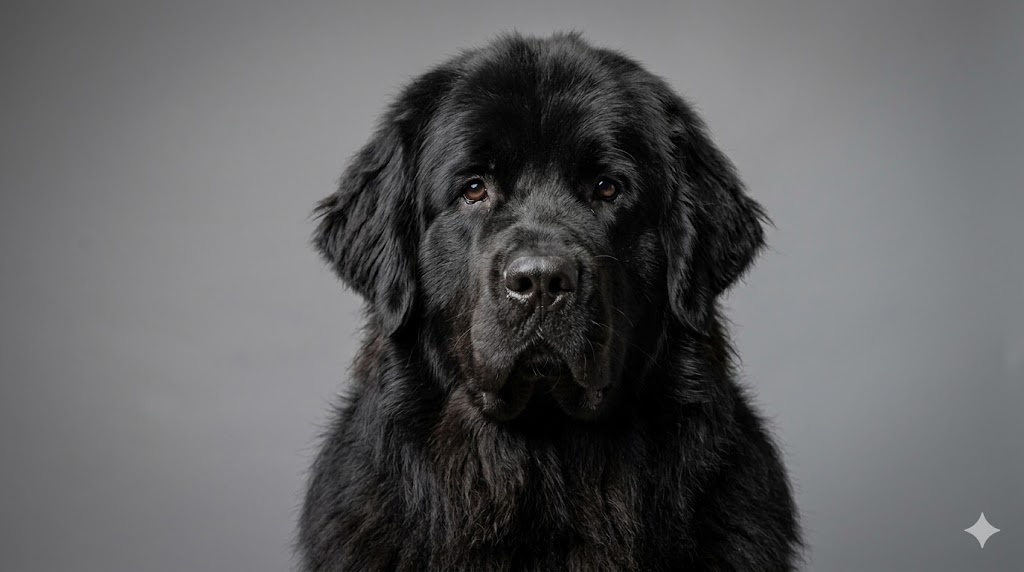
The Newfoundland is a massive, sweet-natured Canadian water dog famous for its gentleness with children, swimming ability, and history of saving human lives.
🗓️ Last reviewed: June 2026
Overview
The Newfoundland is a massive, sweet-natured Canadian water dog famous for its gentleness with children, swimming ability, and history of saving human lives. The breed has spent centuries hauling nets, rescuing drowning sailors, and serving as the steady, patient working partner of Atlantic fishermen. The modern "Newfie" remains one of the gentlest giant breeds - calm, affectionate, and so reliably good with children that Victorians called the breed "the nanny dog." All of this comes at the cost of a short lifespan, significant drool, and a coat that produces astonishing quantities of fur and water.
History & Origins
The breed developed on the island of Newfoundland (now part of Canada) during the 1700s. Origins are debated but likely include large Mastiff-type dogs left behind by Viking explorers around AD 1000, crossed with regional Native American dogs, and later with European mastiffs and water dogs brought by fishing fleets.
Newfoundlands were used for hauling fishing nets, retrieving lost equipment from the water, pulling carts of fish, and most famously rescuing people who had fallen overboard. The breed's webbed feet, water-resistant double coat, powerful swimming style, and natural inclination to grab and bring back drowning swimmers were all selected deliberately.
Lord Byron famously kept a Newfoundland named Boatswain and wrote one of the most celebrated dog tributes in literature when Boatswain died in 1808. The AKC recognised the breed in 1879.
Appearance
Enormous, heavily built, balanced. Males stand 70-75 cm (28-30 in) and weigh 60-70 kg (130-150 lb); females are smaller but still massive.
Key features:
- Coat: thick, dense, water-resistant double coat. Outer coat coarse and flat or slightly wavy; undercoat soft, oily, and dense.
- Colour: four recognised - solid black, brown, grey, and Landseer (black-and-white, named after Sir Edwin Landseer who painted them). Solid colours may have white markings.
- Head: massive, broad, with a slightly arched skull, square muzzle, and gentle expression.
- Eyes: small, dark, soft.
- Ears: small, drop, set at eye level.
- Tail: long, broad, carried low.
- Feet: notably large and webbed for swimming.
Temperament & Character
Sweet, gentle, devoted. The Newfoundland is famous as a children's dog - patient, tolerant, and protective. The breed bonds intensely with family and is friendly with strangers, other dogs, and cats.
Newfoundlands are calm and dignified at home. Adults sleep 14-16 hours a day. They are not natural alarm dogs and rarely bark; their size deters intruders without aggression.
The breed has an inherited drive to rescue swimmers. Many Newfoundlands will attempt to "save" any swimmer they see - towing children out of pools, retrieving floating debris, herding adults toward shore. This is endearing but can be alarming for strong swimmers who didn't ask for assistance.
Care
Coat & Grooming
The double coat is enormous and high-maintenance. Brush 2-3 times weekly with a slicker and undercoat rake. Daily during the twice-yearly heavy shed.
Bathe every 6-8 weeks. Trim hair between paw pads and around the rear. Never shave the double coat - the oily undercoat is part of the breed's water-resistance.
Drooling is heavy, especially after eating or drinking. Keep towels in every room.
Clean ears weekly. Trim nails every 3 weeks. Brush teeth several times weekly. The breed sheds water onto floors after swimming - a permanent reality for owners.
Exercise & Activity Needs
Moderate. Adults need 45-60 minutes of daily exercise - walks, swimming, gentle play. Swimming is excellent and natural; many Newfoundlands swim daily by preference.
Puppies require strictly controlled exercise - no forced running, no jumping, no stairs until at least 18 months. Giant size and fast growth make joint disease easy to trigger.
Heat tolerance is very limited. The breed evolved for cold Atlantic waters. Provide air conditioning, avoid midday summer activity, watch for overheating.
Health & Lifespan
Average lifespan is 8-10 years - typical for a giant breed.
Common concerns:
- Subaortic stenosis (SAS) - a heart condition; demand cardiac-cleared parents.
- Dilated cardiomyopathy (DCM).
- Hip and elbow dysplasia - common.
- Cystinuria - a hereditary kidney/bladder condition; DNA test available.
- Bloat (GDV).
- Osteosarcoma (bone cancer) and other cancers in older dogs.
- Heat intolerance - not a disease, but a real risk.
- Eyelid problems (entropion, ectropion).
- Hypothyroidism.
Feeding & Nutrition
Adults typically eat 4-6 cups of quality large-breed food per day in two or three meals. Puppies must be on a large-breed puppy formula to control growth rate.
Bloat prevention: multiple smaller meals, no vigorous exercise within an hour of meals, slow-feeder bowls if needed. Prophylactic gastropexy at spay/neuter is discussed in this breed though not as routinely as in Great Danes.
Keep the dog lean. Despite the dense coat, you should be able to feel ribs easily.
Pros & Cons
Pros
- Calm, gentle, family-devoted companion.
- Excellent with children - the "nanny dog" reputation is earned.
- Naturally watchful without aggression.
- Outstanding swimmer.
- Drafts, carts, and rescues with enthusiasm.
Cons
- Short lifespan.
- Heavy shedding; enormous coat.
- Heavy drooling.
- Heat intolerance.
- Expensive - food, vet, beds, transport all scale.
- Cannot tolerate small homes well.
Best Suited For
- Families with children of any age.
- Cold or mild climates.
- Households near water for swimming.
- Owners emotionally and financially prepared for short, expensive ownership.
- Drafting, carting, and water-rescue enthusiasts.
Not suited for apartment dwellers, hot climates, owners on tight budgets, or anyone allergic to drool and hair on every surface.
Newfoundland puppy growth chart
A typical growth curve for a giant breed like the Newfoundland, estimated from its adult weight of 60-70 kg. Puppies vary with sex, genetics and diet, so treat this as a guide - for your own puppy, use the puppy weight predictor.
| Age | Typical weight | % of adult |
|---|---|---|
| 2 mo | 10.8-12.6 kg | 18% |
| 3 mo | 16.8-19.6 kg | 28% |
| 4 mo | 22.2-25.9 kg | 37% |
| 6 mo | 31.2-36.4 kg | 52% |
| 9 mo | 42-49 kg | 70% |
| 12 mo | 49.8-58.1 kg | 83% |
| Adult | 60-70 kg | 100% |
Newfoundland - frequently asked questions
Are Newfoundlands good with children?
Outstanding. The "nanny dog" reputation is earned. Patient, gentle, protective, tolerant of all childhood handling within reason.
Do they really save people from drowning?
Yes. The breed has been used for water rescue for centuries and many do attempt to save anyone they perceive as struggling in water. Several documented cases exist of family Newfoundlands rescuing children from pools and ponds.
Do they drool a lot?
Heavily - particularly after eating, drinking, or in heat. Keep towels in every room.
How long do Newfoundlands live?
8-10 years on average. Lean weight, cardiac screening, and gastropexy push the upper end.
Do they need a pool?
Not strictly, but the breed loves to swim and is happiest with regular water access. Without water, daily walks and play suffice.
🧠 Test yourself: guess the dog
Three clues from our quiz bank, each about another of our dogs. Can you name them?
Clue 1.This gentle giant is sweet and patient with families despite its enormous frame, but sadly has a short lifespan.
It's the Great Dane - read the full profile →
Clue 2.This small wrinkly-faced dog with a tightly curled tail and big round eyes was bred as a companion for Chinese emperors.
It's the Pug - read the full profile →
Clue 3.A favorite of Greek and Roman nobles, this tiny companion has dark eyes, a black nose, and barely sheds.
It's the Maltese - read the full profile →
💛 Adoptable Newfoundlands near you
Real dogs of this breed (and close mixes) waiting in shelters and rescues right now, live from Petfinder. We have no affiliation and earn nothing - if someone catches your eye, the link goes straight to their shelter. New to adopting? Start with our adoption guide.
Widget not loading (some ad-blockers hide it)? Search directly on petfinder.com.