Old English Sheepdog
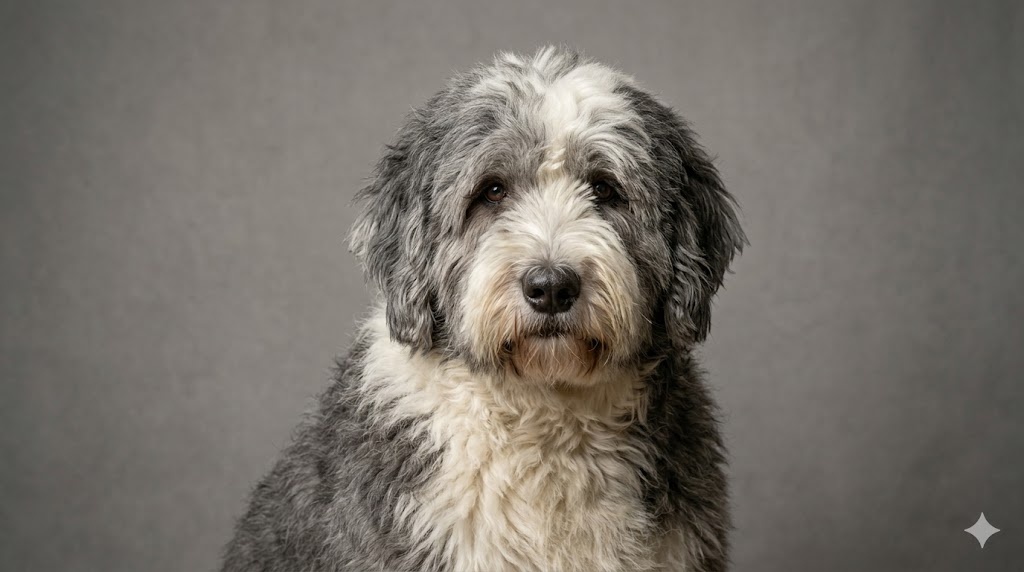
The Old English Sheepdog - affectionately called the "Bobtail" or simply OES - is a large, shaggy, blue-and-white English herding dog famous for its enormous double coat, ambling gait, and gentle, clownish personality.
🗓️ Last reviewed: June 2026
Overview
The Old English Sheepdog - affectionately called the "Bobtail" or simply OES - is a large, shaggy, blue-and-white English herding dog famous for its enormous double coat, ambling gait, and gentle, clownish personality. The breed served as a drover dog, moving cattle and sheep to market in southwestern England, and was popular enough as a working dog that owners docked the tail short to claim tax exemption on working dogs - hence "Bobtail." The breed reached the height of mass-culture fame in the 1960s as the Dulux paint mascot in the UK and as the canine star of a dozen Disney films.
History & Origins
The breed developed in the early 19th century in the West Country of England (Devon and Cornwall), where farmers needed a sturdy, weather-resistant dog to drive sheep and cattle to market. The OES's ancestry probably includes the Bearded Collie, Russian Owtchar, and various European herding dogs.
The Bobtail tax law (1796-1796) exempted working dogs with docked tails from a dog tax; herders accordingly docked their dogs to short tails to qualify for the exemption. The trait was bred in, and some modern Old English Sheepdogs are born naturally tailless.
The Kennel Club (UK) recognised the breed in 1873; the AKC in 1888. Through the 20th century the OES shifted from working dog to companion and show dog. Numbers have declined recently due to the breed's enormous grooming demands.
Appearance
Large, shaggy, square-built. Adults stand at least 53 cm (21 in) and typically 56-66 cm; weight 27-45 kg (60-100 lb). Males are larger.
Key features:
- Coat: profuse double coat - shaggy harsh outer coat with a soft thick undercoat, falling over the eyes.
- Colour: blue, blue merle, blue with white markings, or grey with white. Puppies are born black-and-white and lighten to blue or grey by adulthood.
- Head: broad, square, with the famous hair-over-the-eyes look. Eyes brown, blue, or one of each.
- Tail: naturally bobbed or docked (historically); natural long tails now common in non-docking countries.
Temperament & Character
Friendly, affectionate, and clownish. Old English Sheepdogs are typically excellent with children - patient, gentle, and protective. They are sociable with other dogs and tolerant in multi-pet homes.
The breed bonds strongly with family and is uncomfortable being left alone for long. Most are friendly with strangers when introduced calmly.
At home the OES is calm and dignified, often slow-moving. The ambling gait - a peculiar pace where both legs on one side move together - is breed-typical.
The breed retains some herding drive - gentle nudging or shouldering of family members and pets is common.
Care
Coat & Grooming
The most demanding part of ownership. The double coat mats catastrophically without diligent care; neglected coats become felted pelts requiring complete shaving.
Brushing 3-4 times weekly minimum with a slicker, undercoat rake, and metal comb. Daily during shedding seasons. A full grooming session can take 1-2 hours.
Many pet owners maintain the breed in a "puppy clip" or "kennel clip" - clipped to 5-8 cm all over every 6-8 weeks. This dramatically reduces brushing demands while preserving the breed's shaggy look.
Bathe every 4-6 weeks. The coat over the eyes can be tied up or trimmed for visibility. Hair around the rear should be trimmed for hygiene. Clean ears weekly. Pluck ear-canal hair. Trim nails every 3 weeks. Brush teeth several times weekly.
Exercise & Activity Needs
Moderate. Adults need 45-60 minutes of daily exercise - walks, off-leash play in safe areas, gentle herding work. The breed is not built for marathon running but enjoys activity.
Heat tolerance is limited due to the dense coat. Avoid midday summer activity.
Health & Lifespan
Average lifespan is 10-12 years.
Common concerns:
- Hip dysplasia - moderate.
- Cerebellar ataxia - DNA test available.
- Progressive retinal atrophy and hereditary cataracts.
- MDR1 mutation - some lines carry this; DNA test.
- Autoimmune haemolytic anaemia.
- Hypothyroidism.
- Deafness - congenital deafness occurs.
- Bloat (GDV) - moderate risk.
- Cancer in older dogs.
Feeding & Nutrition
Adults typically eat 2½-3½ cups of quality food per day in two meals. The dense coat hides body condition; feel ribs regularly.
Bloat prevention: multiple smaller meals, no vigorous exercise around meals.
Pros & Cons
Pros
- Gentle, family-devoted companion.
- Excellent with children.
- Sociable with other dogs.
- Sturdy, generally healthy.
- Iconic, recognisable appearance.
Cons
- Enormous grooming demands.
- Heavy shedding under all that coat.
- Heat-intolerant.
- Cannot tolerate long alone-time.
- Powerful, can be hard to handle without leash training.
Best Suited For
- Families with children of any age.
- Owners willing to commit to daily grooming or budget for professional clipping.
- Cool to mild climates.
- Multi-pet households.
- Suburban and rural homes.
Not suited for owners unable to maintain coat, hot-climate outdoor lifestyles, apartment dwellers with no time for grooming, or full-time-office homes.
Old English Sheepdog puppy growth chart
A typical growth curve for a large breed like the Old English Sheepdog, estimated from its adult weight of 27-45 kg. Puppies vary with sex, genetics and diet, so treat this as a guide - for your own puppy, use the puppy weight predictor.
| Age | Typical weight | % of adult |
|---|---|---|
| 2 mo | 5.9-9.9 kg | 22% |
| 3 mo | 8.9-14.9 kg | 33% |
| 4 mo | 11.6-19.4 kg | 43% |
| 6 mo | 16.2-27 kg | 60% |
| 9 mo | 21.6-36 kg | 80% |
| 12 mo | 24.8-41.4 kg | 92% |
| Adult | 27-45 kg | 100% |
Old English Sheepdog - frequently asked questions
How much grooming does an Old English Sheepdog need?
Either daily home brushing (45+ minutes) or a short clip every 6-8 weeks plus weekly brushing. There is no low-maintenance option.
Are they good with kids?
Outstanding - gentle, patient, protective. Among the best large breeds for families.
Can they see through all that hair?
Yes - the coat over the eyes doesn't usually block vision. Many owners tie up or trim the "forelock" for cleaner sight lines.
Do they really walk that way?
The "amble" - both legs on one side moving together at a slow pace - is breed-typical. At faster speeds they trot normally.
Are they hypoallergenic?
No - they shed heavily under the dense coat. The volume of loose hair is substantial.
🧠 Test yourself: guess the dog
Three clues from our quiz bank, each about another of our dogs. Can you name them?
Clue 1.A lean, short-coated pointing breed from Hungary prized for both pointing and retrieving game, with a self-colored nose blending into its coat.
It's the Vizsla - read the full profile →
Clue 2.A robust water dog from a seafaring nation, this breed was nearly extinct before a 20th-century revival saved it.
It's the Portuguese Water Dog - read the full profile →
Clue 3.This tough, compact herder was bred to drive cattle across vast outback distances by nipping at their heels, earning it a heeler nickname.
It's the Australian Cattle Dog - read the full profile →
💛 Adoptable Old English Sheepdogs near you
Real dogs of this breed (and close mixes) waiting in shelters and rescues right now, live from Petfinder. We have no affiliation and earn nothing - if someone catches your eye, the link goes straight to their shelter. New to adopting? Start with our adoption guide.
Widget not loading (some ad-blockers hide it)? Search directly on petfinder.com.