Papillon
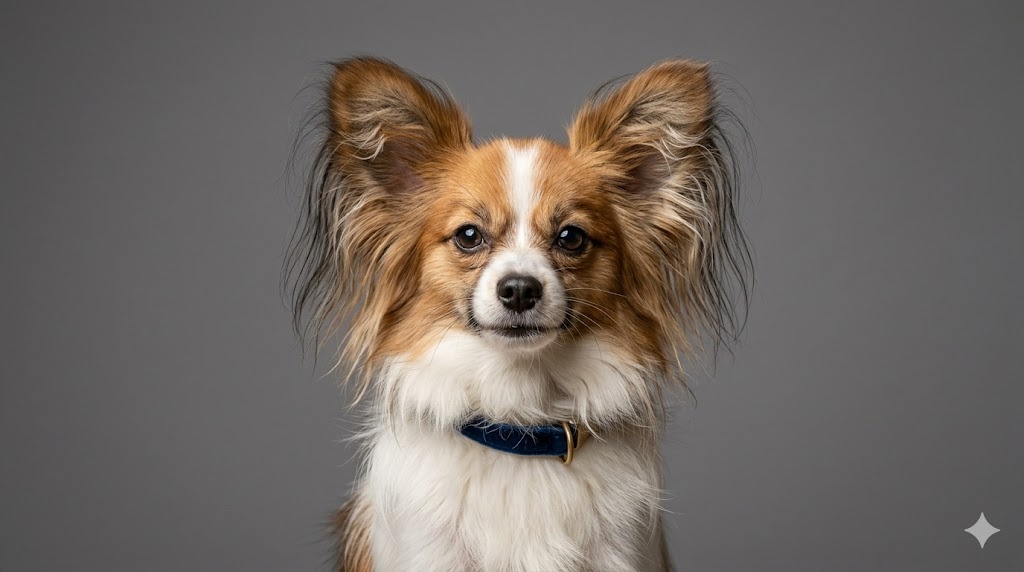
The Papillon - French for "butterfly," named for its enormous fringed ears - is a small, elegant, deceptively athletic toy breed with one of the oldest documented histories of any modern dog.
🗓️ Last reviewed: June 2026
Overview
The Papillon - French for "butterfly," named for its enormous fringed ears - is a small, elegant, deceptively athletic toy breed with one of the oldest documented histories of any modern dog. Featured in court paintings across Europe for over 500 years, the Papillon is also one of the most intelligent toy breeds and a frequent winner in competitive agility despite its tiny size. Behind the dainty appearance is a bold, lively, intelligent dog that owners describe as a "big dog in a small package."
History & Origins
Small spaniel-type dogs appear in European court paintings from the 13th century onward, particularly in Spain, France, and Italy. The breed's modern form solidified in 16th-century France and Belgium, where it became the favourite companion of French queens and aristocrats. Marie Antoinette reportedly took a Papillon to the guillotine.
The breed has two ear varieties - the erect-eared Papillon (the more common, butterfly type) and the drop-eared Phalène (French for "moth"). Both are the same breed; ear type can vary within a litter.
The AKC recognised the Papillon in 1915. The breed has been a consistent winner in conformation and agility competitions, including a Best in Show at Westminster in 1999.
Appearance
Small, dainty, with disproportionately large ears. Adults stand 20-28 cm (8-11 in) and weigh 3-5 kg (5-10 lb).
Key features:
- Coat: long, fine, silky, single-coated (no undercoat), with abundant feathering on ears, chest, legs, and tail.
- Colour: white with patches of any colour except liver. The face typically has a clear white blaze.
- Head: small, slightly rounded, with a defined stop and small dark round eyes.
- Ears: the iconic feature - large, set toward the back of the head, heavily fringed. The Papillon variety has erect ears resembling spread butterfly wings; the Phalène has drop ears.
- Tail: long, set high, plumed, carried over the back.
Temperament & Character
Bold, alert, intelligent, and affectionate. Papillons are friendly with family and typically friendly with strangers and other dogs when socialised. The breed is not a typical "purse dog" - Papillons want to participate in activities, learn tricks, and explore.
They are vocal - alarm barking is breed-typical. They are bold around larger dogs (sometimes foolishly so) and need protection from rough play.
Care
Coat & Grooming
The single coat is surprisingly low-maintenance for the length. The lack of undercoat means no matting against the skin; the feathering on ears and rear can tangle if neglected.
Brush 2-3 times weekly with a pin brush and metal comb. Bathe every 4-6 weeks. Trim hair between paw pads. Many owners trim sanitary areas; the body coat itself is rarely clipped.
Clean ears weekly. Brush teeth daily - dental disease is universal in toy breeds. Trim nails every 3 weeks.
The breed sheds minimally compared to most. Many allergy sufferers tolerate the Papillon.
Exercise & Activity Needs
Moderate for the size. Adults need 30-45 minutes of daily exercise - walks, training, indoor play, agility, scent work. Papillons are athletic and enjoy genuine activity, not just toy-tossing.
Use a harness, not a collar. Avoid jumping from heights. Carry up and down high stairs.
Health & Lifespan
Average lifespan is 14-17 years - among the longest of any breed.
Common concerns:
- Patellar luxation.
- Progressive retinal atrophy.
- Open fontanelle - incomplete skull closure.
- Dental disease.
- Hypoglycaemia in small puppies and very small adults.
- Mitral valve disease in older dogs.
- Allergies.
- Neuroaxonal dystrophy - a rare neurological condition; DNA test available.
The breed is generally robust.
Feeding & Nutrition
Adults typically eat 1/4 to 1/2 cup of high-quality small-breed food per day in two or three meals. Puppies need 3-4 small meals daily.
The breed maintains lean weight easily. Treats counted into daily calories.
Pros & Cons
Pros
- Highly intelligent and trainable.
- Long-lived (often 15+ years).
- Low-shedding; often tolerated by allergy sufferers.
- Adaptable to apartments.
- Striking appearance.
Cons
- Vocal - alarm barker.
- Fragile body; not for households with toddlers.
- Persistent dental disease without daily care.
- Sometimes bold around large dogs to its own danger.
- Some lines have hereditary issues - choose a tested breeder.
Best Suited For
- Singles, couples, retirees wanting an active companion.
- Apartment dwellers tolerant of barking.
- Allergy-sensitive households.
- Agility, obedience, and trick training enthusiasts.
- Owners willing to commit to daily dental care.
Not suited for households with toddlers, owners wanting a quiet dog, or families with large rough-playing pets.
Papillon puppy growth chart
A typical growth curve for a toy breed like the Papillon, estimated from its adult weight of 3-5 kg. Puppies vary with sex, genetics and diet, so treat this as a guide - for your own puppy, use the puppy weight predictor.
| Age | Typical weight | % of adult |
|---|---|---|
| 2 mo | 1-1.7 kg | 33% |
| 3 mo | 1.4-2.3 kg | 45% |
| 4 mo | 1.7-2.8 kg | 55% |
| 6 mo | 2.3-3.8 kg | 75% |
| 9 mo | 2.8-4.8 kg | 95% |
| 12 mo | 3-5 kg | 100% |
| Adult | 3-5 kg | 100% |
Papillon - frequently asked questions
Are Papillons good with kids?
With respectful older children, yes. Small Papillons are easily injured by toddlers and may snap defensively. Many do best in adult households.
Do they bark a lot?
Yes - alarm barking is breed-typical. Training and socialisation help but rarely eliminate it.
Papillon vs Phalène - what's the difference?
Same breed, different ear position. Papillon (butterfly) has erect ears; Phalène (moth) has drop ears. Both can appear in the same litter.
Are they hypoallergenic?
No dog is fully hypoallergenic, but Papillons shed minimally and produce low dander. Many allergy sufferers tolerate them.
How long do they live?
14-17 years typically. Some reach 18-19 with lean weight and excellent dental care.
🧠 Test yourself: guess the dog
Three clues from our quiz bank, each about another of our dogs. Can you name them?
Clue 1.This large, gentle Swiss farm dog has a striking tricolor coat of black, white, and rust, and was bred to pull carts and drive cattle in the Alps.
It's the Bernese Mountain Dog - read the full profile →
Clue 2.This northern breed can have heterochromia and is built to run efficiently on minimal food, an adaptation to scarce Arctic resources.
It's the Siberian Husky - read the full profile →
Clue 3.Bred to herd, guard, and hunt vermin on Irish farms, this breed greets people with an enthusiastic jump nicknamed its trademark 'leap'.
It's the Soft Coated Wheaten Terrier - read the full profile →
💛 Adoptable Papillons near you
Real dogs of this breed (and close mixes) waiting in shelters and rescues right now, live from Petfinder. We have no affiliation and earn nothing - if someone catches your eye, the link goes straight to their shelter. New to adopting? Start with our adoption guide.
Widget not loading (some ad-blockers hide it)? Search directly on petfinder.com.