Poodle (Standard, Miniature, Toy)
The Poodle is one of the most misunderstood breeds.
🗓️ Last reviewed: August 2026
Full Guide
Deep dive · 25-35 min · everything you need
Overview
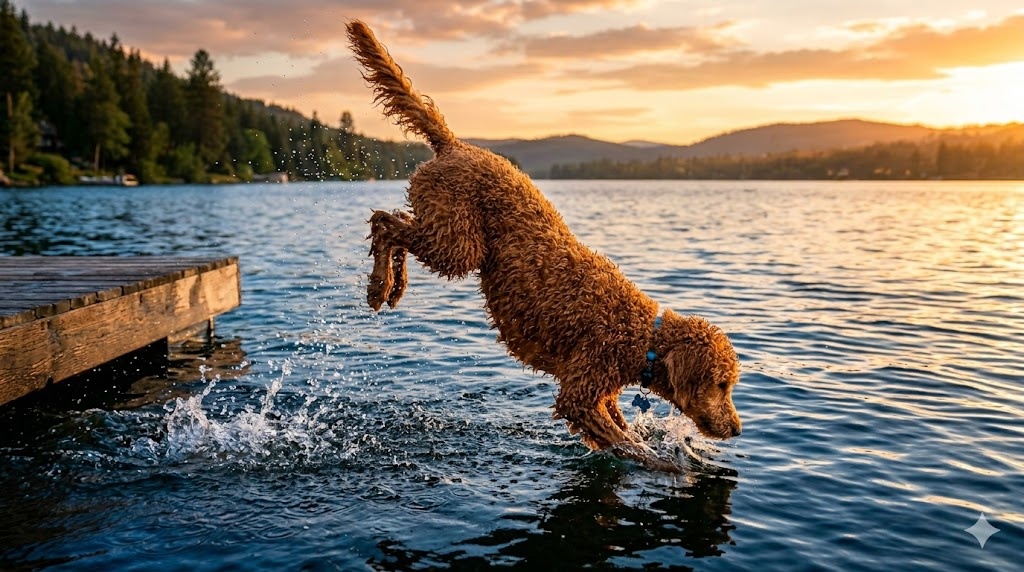
The Poodle is one of the most misunderstood breeds. Behind the show-ring topiary coat and historic association with pampered lifestyles is a serious working water retriever - agile, sharp, athletic, and arguably the most intelligent breed in the world after the Border Collie. Poodles come in three FCI-recognised sizes (Toy, Miniature, Standard) and a fourth Medium size in some standards, all sharing the same essential character. Their low-shedding coat, high trainability, and devoted personality have also made them the foundation of nearly every "doodle" mix on the market.
History & Origins
The Poodle's name comes from the German "pudeln" - to splash in water. Despite being France's national dog today, the breed originated in Germany as a duck retriever, working alongside hunters in marshes and reedy lakes. The classic show clip, with shaven hindquarters and pom-poms at the joints, is a working-style - bare hindquarters reduced drag in water; pom-poms kept joints warm.
The breed split into sizes early. The original Standard was the largest, used for hunting. Miniatures were popular truffle hunters in France and Spain. The Toy was bred down further for circus, court, and companion work in the 1700s onward. The Poodle has been a star performer in circuses for nearly three centuries - the breed's intelligence and quick-trick capacity made it a natural.
The AKC recognised the breed in 1887. The Standard Poodle remains the original working form; the Miniature and Toy are pure-companion dogs that retain remarkable working intelligence.
Appearance
A square, elegant, athletic dog regardless of size. Three sizes commonly cited:
- Standard: over 38 cm (15 in) at the shoulder, typically 50-60 cm, 20-32 kg.
- Miniature: 28-38 cm (11-15 in), 5-9 kg.
- Toy: under 28 cm (10-11 in), 2-4 kg.
Key features:
- Coat: dense, curly, single-coated, low-shedding. Continues growing like human hair - needs regular cutting.
- Colour: any solid colour - black, white, apricot, cream, silver, blue, brown, red, café au lait. Parti-colours and phantoms exist but are not allowed in some show standards.
- Head: long, refined, with a chiselled muzzle and long pendant ears.
- Eyes: dark, oval, intelligent expression.
Temperament & Character
The Poodle is alert, intelligent, playful, and sensitive. Most are deeply attached to family, polite with strangers, and excellent with other animals when raised together. Toys and Miniatures can be more reactive and vocal; Standards are typically calmer and more dignified.
Across all sizes the breed is highly trainable and emotionally tuned-in. Poodles read body language and household mood quickly, which makes them excellent service and therapy dogs. The flip side is that harsh handling or chaotic environments stress them rapidly.
Standard Poodles in particular have a playful, slightly goofy sense of humour. They are reputed to enact small jokes - hiding objects, feigning naps, sneaking onto sofas.
Care
Coat & Grooming
The Poodle coat is the most labour-intensive part of ownership. It does not shed onto floors but does shed into itself, creating mats that progress rapidly to felted pelts if neglected.
Brushing minimum 3-4 times per week; daily during long-coat phases. A slicker plus a metal comb are mandatory tools. Professional grooming every 4-6 weeks: bathe, blow-dry, clip, scissor, sanitary trim, ear care, nails.
Common clip choices: continental, English saddle, modern, lamb, puppy, kennel/sport (short all over - most practical for pet life). Many owners keep pets in a short, easy "puppy clip" year-round.
Ears must be checked weekly. Hair grows inside the ear canal; some groomers pluck it. Either way, keep ears dry and clean to prevent infections.
Exercise & Activity Needs
A widely under-estimated need. Standards require 60-90 minutes of vigorous daily exercise; Miniatures 45-60; Toys 30-45 with significant indoor play. All three sizes excel at agility, obedience, dock diving (Standards), trick training, and scent work.
Mental stimulation is non-negotiable. A bored Poodle becomes a destructive, vocal, anxious Poodle. Daily training, puzzle toys, and varied environments keep the breed balanced.
Health & Lifespan
Lifespans differ by size:
- Toy: 14-18 years
- Miniature: 13-16 years
- Standard: 11-13 years
Common health concerns by size:
- Standards: bloat (GDV - high risk), Addison's disease, sebaceous adenitis, hip dysplasia, epilepsy, cancer.
- Miniatures and Toys: patellar luxation, Legg-Calvé-Perthes, progressive retinal atrophy, epilepsy, dental disease.
All sizes can carry the von Willebrand's disease gene (a clotting disorder) - DNA tests are available.
Feeding & Nutrition
Portions vary enormously by size: Toys 1/4-1/2 cup per day, Miniatures 1/2-1 cup, Standards 2-3 cups. Split into two meals (three for puppies under 4 months). Standards in particular should not exercise hard immediately before or after meals due to bloat risk.
Poodles are usually less food-driven than retrievers but still gain weight easily, particularly as Toys and Miniatures. Measure portions; treats kept under 10% of calories.
Pros & Cons
Pros
- Low-shedding, often suitable for many allergy sufferers.
- Among the most trainable breeds in existence.
- Three sizes - fits almost any household.
- Long-lived, especially Toys and Minis.
- Versatile athletes - agility, dock diving, hunting.
Cons
- High-maintenance coat - professional grooming is non-optional.
- Toys and Minis prone to anxiety, reactivity, and dental disease if mishandled.
- Standards have a real bloat risk and shorter lifespans.
- Sensitive - not a breed for chaotic, stressful households.
- Reputation drives high puppy prices and many poor breeders.
Best Suited For
- Allergy-sensitive households.
- Active owners who enjoy training and sport.
- Service- and therapy-dog work.
- Families wanting a long-lived, intelligent companion.
- People willing to budget for professional grooming.
Not suited for owners who want a low-maintenance dog, those who underestimate Standards' exercise needs, or anyone who finds the coat upkeep tedious.
Poodle (Standard, Miniature, Toy) puppy growth chart
A typical growth curve for a large breed like the Poodle (Standard, Miniature, Toy), estimated from its adult weight of 20-32 kg. Puppies vary with sex, genetics and diet, so treat this as a guide - for your own puppy, use the puppy weight predictor.
| Age | Typical weight | % of adult |
|---|---|---|
| 2 mo | 4.4-7 kg | 22% |
| 3 mo | 6.6-10.6 kg | 33% |
| 4 mo | 8.6-13.8 kg | 43% |
| 6 mo | 12-19.2 kg | 60% |
| 9 mo | 16-25.6 kg | 80% |
| 12 mo | 18.4-29.4 kg | 92% |
| Adult | 20-32 kg | 100% |
Poodle (Standard, Miniature, Toy) - frequently asked questions
Are Poodles hypoallergenic?
No dog is fully hypoallergenic, but Poodles produce far less loose hair and dander than most breeds. Many allergy sufferers tolerate them well; spend time with an adult Poodle before committing.
Standard, Miniature, or Toy - which is best?
Standard for active families and sport. Miniature for an athletic small dog with similar character. Toy for a true lap-dog companion in a small home. All three are exceptionally intelligent.
Are Poodles smart?
Famously yes - typically ranked second only to the Border Collie. This is a blessing and a problem; Poodles need work or they invent it.
Do Poodles bark a lot?
Toys and Miniatures can be vocal alarms; Standards are usually quiet. Training and proper socialisation control unwanted barking in all sizes.
Why the funny haircut?
The traditional show clip is a stylised version of the original working clip: shaved hindquarters and chest for swimming efficiency, pom-poms over joints for warmth.
🧠 Test yourself: guess the dog
Three clues from our quiz bank, each about another of our dogs. Can you name them?
Clue 1.Large, athletic, and protective, this molosser sports a broad blocky head and comes in black, fawn, gray, and brindle.
It's the Cane Corso - read the full profile →
Clue 2.This medium sled dog was developed by the Chukchi people and famously helped relay diphtheria medicine to Nome, Alaska, in 1925.
It's the Siberian Husky - read the full profile →
Clue 3.A popular sturdy lapdog, this whiskered breed comes in salt-and-pepper, black, and black-and-silver.
It's the Miniature Schnauzer - read the full profile →
💛 Adoptable Poodle (Standard, Miniature, Toy)s near you
Real dogs of this breed (and close mixes) waiting in shelters and rescues right now, live from Petfinder. We have no affiliation and earn nothing - if someone catches your eye, the link goes straight to their shelter. New to adopting? Start with our adoption guide.
Widget not loading (some ad-blockers hide it)? Search directly on petfinder.com.