Rhodesian Ridgeback
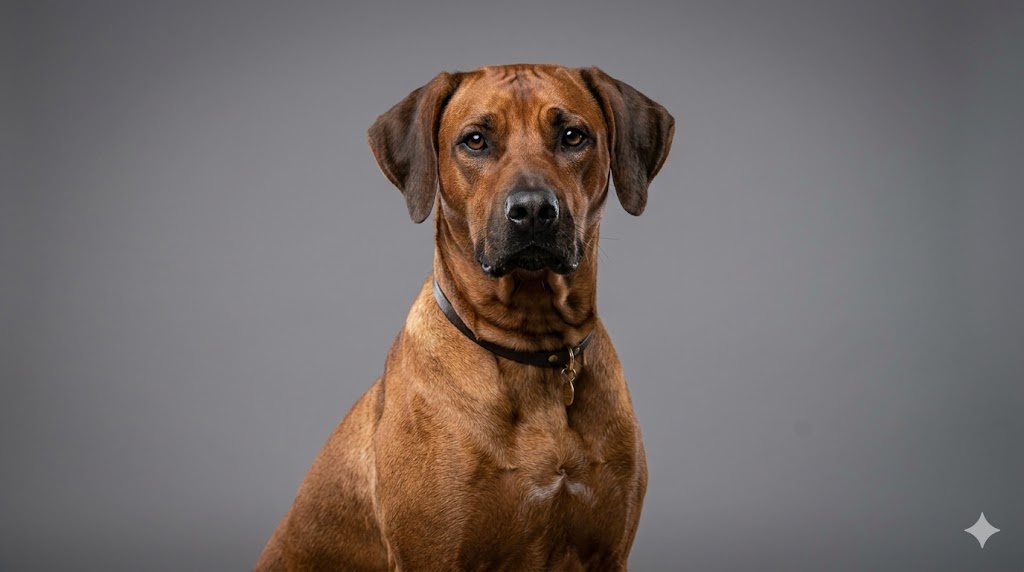
The Rhodesian Ridgeback is a powerful African sighthound-mastiff cross famous for the distinctive ridge of backward-growing hair along its spine.
🗓️ Last reviewed: June 2026
Overview
The Rhodesian Ridgeback is a powerful African sighthound-mastiff cross famous for the distinctive ridge of backward-growing hair along its spine. Developed in southern Africa to hunt lions on horseback, the breed combines hound speed, mastiff size, and remarkable courage in a sleek, athletic, deeply loyal companion. Modern Ridgebacks no longer hunt lions but retain the working dog's intensity, intelligence, and reserved demeanour - making them stunning companions in capable households and serious challenges in unprepared ones.
History & Origins
The breed descends from native African dogs - particularly the ridged dogs of the Khoikhoi people - crossed with European dogs brought by Boer settlers in the 17th and 18th centuries. The European contributors included Mastiffs, Bloodhounds, Greyhounds, and Great Danes.
In the 1870s the missionary Charles Helm took two ridged dogs to what is now Zimbabwe (then Rhodesia). The big-game hunter Cornelis van Rooyen used Helm's dogs to develop a pack capable of hunting lions - not killing them, but holding them at bay until the hunter arrived. The dogs' courage, athletic ability, and characteristic ridge were locked in.
A breed standard was drawn up in 1922. The AKC recognised the Rhodesian Ridgeback in 1955. The breed today is popular worldwide for its striking appearance and athletic capability.
Appearance
Large, athletic, balanced. Males stand 63-69 cm (25-27 in) and weigh 36-41 kg (80-90 lb); females are smaller.
Key features:
- Coat: short, dense, sleek.
- Colour: wheaten - anything from light to deep red. Small amounts of white on chest and toes acceptable; black mask permitted.
- Ridge: the breed's defining feature - a strip of hair along the spine that grows in the opposite direction to the rest of the coat. The ridge starts behind the shoulders, narrows toward the hips, and contains two symmetrical "crowns" (whorls). A correctly formed ridge is required by the standard; ridgeless puppies cannot be shown but make excellent pets.
- Head: broad between the ears, with a moderate stop and a long powerful muzzle.
- Tail: long, tapering, carried in a slight curve.
Temperament & Character
Confident, dignified, and intensely loyal. Ridgebacks are deeply bonded to family and naturally reserved with strangers - not fearful, just selectively friendly. The breed is observant and decisive; they assess situations before acting.
Around family, Ridgebacks are affectionate, sometimes goofy, and famously couch-loving. They are typically gentle with children of their own household. With strangers they are polite but not effusive. The breed makes a serious deterrent simply by presence.
Prey drive is high. Ridgebacks were bred to chase and grip large game. Cats, rabbits, and small pets often trigger pursuit. Cohabitation with cats requires careful introduction and supervision.
Care
Coat & Grooming
The short coat is very low-maintenance: weekly rub-down with a rubber curry, baths every 6-8 weeks. Sheds steadily; the dense red hair is persistent in fabrics.
Limited insulation means cold-weather coats and summer shade. Clean ears weekly, trim nails every 3 weeks, brush teeth several times weekly.
Exercise & Activity Needs
High. Adults need 60-90 minutes of vigorous daily exercise - running, hiking, swimming, lure coursing, or other sport. The breed is built for endurance and bursts of speed; walking alone is insufficient.
The breed excels at lure coursing, agility, obedience, dock diving, and tracking. Mental stimulation matters; daily training keeps the dog balanced.
Puppies require controlled exercise. Avoid forced running and jumping until joints close (around 18 months).
Health & Lifespan
Average lifespan is 10-12 years.
Common concerns:
- Dermoid sinus - a developmental defect where a tube of skin extends from the spine. Detected in puppies; affected dogs require surgical correction.
- Hip and elbow dysplasia.
- Hypothyroidism.
- Eye conditions - cataracts, progressive retinal atrophy.
- Bloat (GDV) - deep chest, moderate risk.
- Cancer - mast cell tumours, haemangiosarcoma, osteosarcoma.
- Degenerative myelopathy - DNA test available.
- Drug sensitivities - some Ridgebacks react poorly to acepromazine and certain anaesthetics.
Feeding & Nutrition
Adults typically eat 3-4 cups of quality large-breed food per day in two or three meals. Working dogs need more.
Bloat prevention: multiple smaller meals, no vigorous exercise within an hour of meals. The breed maintains lean condition naturally when exercised.
Pros & Cons
Pros
- Athletic, capable, dignified.
- Devoted family companion.
- Naturally watchful without aggression training.
- Striking appearance with the famous ridge.
- Short coat is easy to maintain.
Cons
- High exercise needs.
- Strong prey drive - small pets at risk.
- Reserved with strangers; requires careful socialisation.
- Powerful, large, demanding strong handling.
- Significant inherited health issues; choose tested breeder.
- Sheds steadily.
Best Suited For
- Active, experienced owners (runners, hikers, lure coursing).
- Active families with older children.
- Sport homes.
- Households with secure high fencing.
- Mild to warm climates.
Not suited for sedentary owners, apartment dwellers without serious daily exercise, full-time-office homes, families with cats, or first-time owners.
Rhodesian Ridgeback puppy growth chart
A typical growth curve for a large breed like the Rhodesian Ridgeback, estimated from its adult weight of 36-41 kg. Puppies vary with sex, genetics and diet, so treat this as a guide - for your own puppy, use the puppy weight predictor.
| Age | Typical weight | % of adult |
|---|---|---|
| 2 mo | 7.9-9 kg | 22% |
| 3 mo | 11.9-13.5 kg | 33% |
| 4 mo | 15.5-17.6 kg | 43% |
| 6 mo | 21.6-24.6 kg | 60% |
| 9 mo | 28.8-32.8 kg | 80% |
| 12 mo | 33.1-37.7 kg | 92% |
| Adult | 36-41 kg | 100% |
Rhodesian Ridgeback - frequently asked questions
Did Rhodesian Ridgebacks really hunt lions?
Yes - they were used in packs to hold lions at bay until a hunter could shoot them. The dogs' courage, agility, and toughness were essential. The breed does not hunt lions today and is not "born to fight lions" in any practical sense.
What is the ridge?
A strip of hair along the spine growing in the opposite direction to the rest of the coat. It is an inherited feature shared with a few other ridged breeds. Correct ridges have two symmetrical whorls.
Are they good with kids?
Generally yes with their own family. Their size, strength, and reserved disposition require supervision around toddlers and unfamiliar children.
Can they live with cats?
Sometimes, with careful introduction from puppyhood. The breed's prey drive is high; even cohabitating cats may not be safe outdoors, and visiting cats may trigger pursuit.
Are they hypoallergenic?
No - they shed steadily and produce dander.
🧠 Test yourself: guess the dog
Three clues from our quiz bank, each about another of our dogs. Can you name them?
Clue 1.This rugged, non-shedding working dog has webbed feet and was once a fisherman's helper, even carrying messages between boats.
It's the Portuguese Water Dog - read the full profile →
Clue 2.A tireless, people-loving bird dog, this spaniel is often used to sniff out drugs and explosives.
It's the English Springer Spaniel - read the full profile →
Clue 3.Built for explosive acceleration, this thin-coated hound has very little body fat and gets cold easily, often wearing coats in winter.
It's the Whippet - read the full profile →
💛 Adoptable Rhodesian Ridgebacks near you
Real dogs of this breed (and close mixes) waiting in shelters and rescues right now, live from Petfinder. We have no affiliation and earn nothing - if someone catches your eye, the link goes straight to their shelter. New to adopting? Start with our adoption guide.
Widget not loading (some ad-blockers hide it)? Search directly on petfinder.com.