Saint Bernard
The Saint Bernard is a massive, gentle, snow-coloured giant developed in the Swiss Alps as a working rescue and draft dog by Augustinian monks of the Great Saint Bernard Hospice.
🗓️ Last reviewed: June 2026
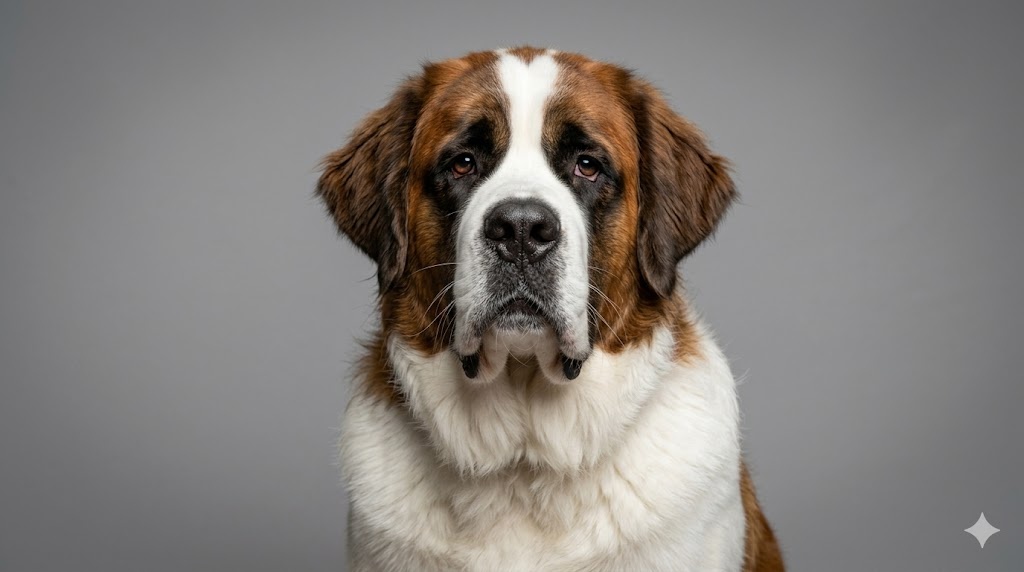
Overview
The Saint Bernard is a massive, gentle, snow-coloured giant developed in the Swiss Alps as a working rescue and draft dog by Augustinian monks of the Great Saint Bernard Hospice. The breed is genuinely a "gentle giant" - affectionate, patient with children, and famous for its history of rescuing travellers stranded in Alpine snowdrifts. Modern Saint Bernards no longer perform rescue work but remain wonderful, slobbery, slow-moving family companions with predictably short lifespans.
History & Origins
The Augustinian monks at the Great Saint Bernard Hospice (a refuge in the high Alps along a key trade route through Switzerland) began keeping large dogs around 1660 as watchdogs and companions. By 1700 the dogs were assisting monks in finding and rescuing travellers caught in avalanches and snowstorms - a job they performed for nearly two centuries.
The most famous rescue dog was Barry, who served at the hospice from 1800 to 1812 and is credited with saving 40+ lives. His preserved body is displayed at the Natural History Museum in Bern.
A series of harsh winters in the 1810s killed many hospice dogs, and Saint Bernards were crossed with Newfoundlands to rebuild the breed. The longer-coated variety dates from this cross. The breed was officially named after the hospice in 1880. The AKC recognised the Saint Bernard in 1885.
The famous "barrel around the neck" with brandy for stranded travellers was a Victorian artistic invention - the monks never actually used such barrels. The image stuck regardless.
Appearance
Enormous, muscular, dignified. Males stand at least 70 cm (27½ in) and typically 75-90 cm; weight 65-90+ kg (140-200+ lb). Females are smaller but still massive.
Key features:
- Coat: two varieties - short (smooth) and long (rough). Both are double-coated.
- Colour: white with red, mahogany, or brindle markings. A dark facial mask is typical.
- Head: massive, broad, with a moderately short muzzle (not flat), pronounced stop, and gentle expression.
- Ears: medium-sized, set high, lying close.
- Eyes: medium, dark, with soft expression. Some dogs have visible "haw" (third eyelid).
- Tail: long, broad, carried low.
Temperament & Character
Calm, affectionate, and patient. Saint Bernards are among the most gentle giant breeds - typically wonderful with children, friendly with strangers, and tolerant of other animals. The breed is not a guardian by drive; size alone deters intruders.
Adult Saint Bernards sleep most of the day. They are playful in short bursts and dignified the rest of the time. The breed bonds intensely with family and dislikes being left alone.
Many Saint Bernards retain a working drive to "rescue" - they may pull children out of pools, herd family members toward home, and become anxious when family is separated.
Care
Coat & Grooming
Both coats are work. Brush 2-3 times weekly with a slicker and undercoat rake. Daily during the twice-yearly heavy shed. Long-coated Saint Bernards need extra attention to feathering.
Bathe every 6-8 weeks. Never shave the double coat. Wipe facial wrinkles and the heavy lower lips 2-3 times weekly.
Drooling is heavy - much heavier than most large breeds. Keep towels in every room. Strings of drool flying when the dog shakes its head are a fact of life.
Clean ears weekly. Trim nails every 3 weeks (heavy nails). Brush teeth several times weekly.
Exercise & Activity Needs
Modest. Adults need 30-45 minutes of daily exercise - calm walks, gentle play. The breed enjoys drafting, carting, and short hikes in cool weather.
Puppies require strictly controlled exercise. No forced running, no jumping, no stairs until 18 months. Joint disease is easy to trigger in fast-growing giant breeds.
Heat tolerance is very limited. Air conditioning is essential in warm climates. Never leave a Saint Bernard in a parked car.
Health & Lifespan
Average lifespan is 8-10 years.
Common concerns:
- Hip and elbow dysplasia - common.
- Bloat (GDV) - very high risk.
- Dilated cardiomyopathy.
- Osteosarcoma (bone cancer) - elevated rates.
- Eyelid problems (entropion, ectropion, cherry eye).
- Wobbler syndrome.
- Eosinophilic panosteitis - growing pains in puppies.
- Heat intolerance.
- Epilepsy.
Feeding & Nutrition
Adults typically eat 5-8 cups of quality large-breed food per day in two or three meals. Puppies must be on a large-breed puppy formula to control growth rate.
Bloat prevention: multiple smaller meals, no vigorous exercise within an hour of meals, slow-feeder bowls. Many owners pursue prophylactic gastropexy at spay/neuter.
Keep the dog lean. Visible waist and easily felt ribs. Overweight Saint Bernards develop joint disease early.
Pros & Cons
Pros
- Calm, gentle, family-devoted companion.
- Excellent with children.
- Naturally watchful without aggression.
- Striking, beloved appearance.
- Drafting and carting capable.
Cons
- Short lifespan.
- Heavy drooling.
- Heavy shedding.
- Significant inherited health issues.
- Heat-intolerant.
- Very expensive - food, vet, beds, transport all scale.
Best Suited For
- Families with children of any age.
- Cold or mild climates.
- Owners with secure outdoor space and tall doorways.
- Households emotionally and financially prepared for short, expensive ownership.
- Drafting and carting enthusiasts.
Not suited for hot climates, apartment dwellers, owners on tight budgets, or anyone with low tolerance for drool, hair, and slobber on walls.
Saint Bernard - frequently asked questions
Did Saint Bernards really wear barrels of brandy?
No - the brandy barrel image was a Victorian invention popularised by paintings. The monks did not use barrels. Actual rescue dogs found and warmed stranded travellers.
Are they good with kids?
Outstanding - patient, gentle, protective. Among the best giant breeds for families. Supervise around toddlers due to size.
Do they drool a lot?
Heavily. Strings of drool flying when they shake their heads are a daily reality. Keep towels everywhere.
How long do they live?
8-10 years on average. Some reach 11-12 with luck, lean weight, and cardiac care.
Saint Bernard vs Newfoundland - which is calmer?
Both are giant gentle family breeds. Saint Bernard is slightly larger and drools more. Newfoundland is more water-oriented and slightly more athletic. Both are excellent with children. Choice often comes down to climate preference (Saint loves cold) and water access (Newfoundland thrives near it).
🧠 Test yourself: guess the dog
Three clues from our quiz bank, each about another of our dogs. Can you name them?
Clue 1.With a luxuriant mane and a sharp, sensitive mind, this compact herder excels at obedience and agility trials.
It's the Shetland Sheepdog - read the full profile →
Clue 2.This rugged, non-shedding working dog has webbed feet and was once a fisherman's helper, even carrying messages between boats.
It's the Portuguese Water Dog - read the full profile →
Clue 3.Originally bred for a brutal blood sport involving tethered cattle, this loose-jowled dog now has a famously gentle, lazy temperament.
It's the Bulldog (English Bulldog) - read the full profile →
💛 Adoptable Saint Bernards near you
Real dogs of this breed (and close mixes) waiting in shelters and rescues right now, live from Petfinder. We have no affiliation and earn nothing - if someone catches your eye, the link goes straight to their shelter. New to adopting? Start with our adoption guide.
Widget not loading (some ad-blockers hide it)? Search directly on petfinder.com.