Samoyed
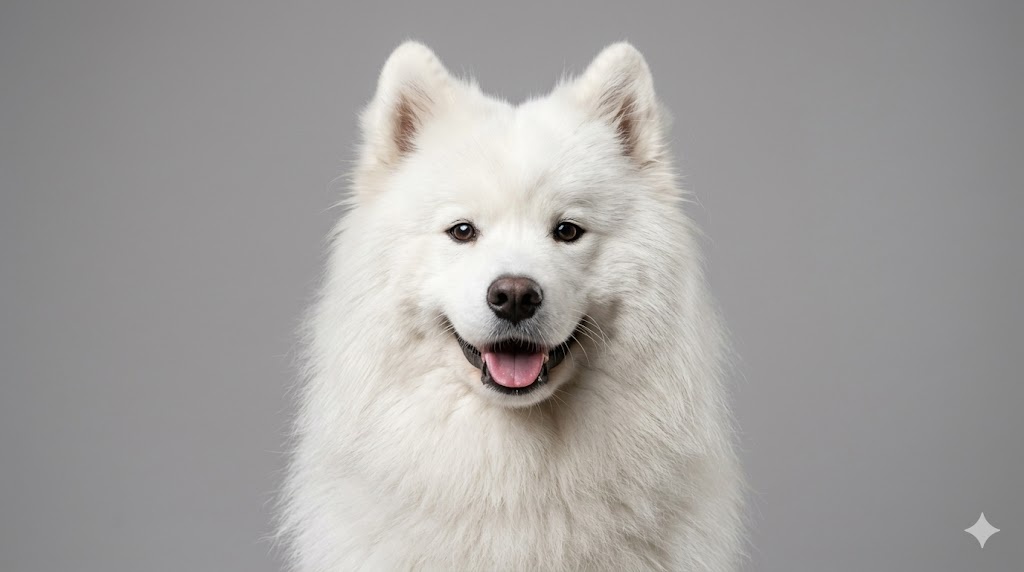
The Samoyed is a large, pure-white, double-coated Arctic working dog famous for its "Sammy smile" - the upturned corners of the mouth that make the breed look perpetually cheerful.
🗓️ Last reviewed: June 2026
Overview
The Samoyed is a large, pure-white, double-coated Arctic working dog famous for its "Sammy smile" - the upturned corners of the mouth that make the breed look perpetually cheerful. Bred by the Samoyedic peoples of Siberia for over three thousand years as a herding, sledding, and hunting partner, the Samoyed combines Spitz independence with an unusually friendly, family-oriented temperament that distinguishes it from most cold-weather working breeds.
History & Origins
The Samoyedic peoples of Siberia developed the breed in the Arctic regions of what is now Russia. The dogs lived in close proximity to humans - herding reindeer, pulling sleds, hunting bears and seals, and sleeping inside tents with families during sub-Arctic nights. Unlike most working dogs of similar regions, Samoyeds were valued partly for warmth and companionship.
European explorers brought Samoyeds south in the late 1800s, most famously when Norwegian explorer Fridtjof Nansen used them on Arctic expeditions. Roald Amundsen used Samoyeds as part of his successful South Pole expedition in 1911 (alongside Greenland huskies).
The breed was named for the Samoyedic peoples and standardised in Britain in the late 1800s. The AKC recognised the Samoyed in 1906.
Appearance
Large, square, beautiful. Males stand 53-60 cm (21-23½ in) and weigh 23-30 kg (50-65 lb); females are smaller.
Key features:
- Coat: dense double coat - soft thick undercoat with long harsh guard hairs that stand off the body. Built for extreme Arctic cold; remains glossy and largely self-cleaning.
- Colour: pure white, biscuit (cream), or white-and-biscuit. Other colours are not recognised.
- Head: wedge-shaped with a slightly arched skull, dark almond eyes, and small erect ears with rounded tips.
- Mouth: the famous "Sammy smile" - upturned corners that prevent drool from freezing in Arctic temperatures.
- Tail: thick, set high, plumed, carried over the back when alert.
Temperament & Character
Friendly, gentle, and sociable. Samoyeds are one of the most family-oriented working breeds - typically excellent with children, friendly with strangers, and tolerant of other dogs and pets. They are not guard dogs by drive; they make poor watchdogs because they are friendly with everyone.
The breed is intelligent and biddable for a Spitz but with the independence and stubbornness of the type. Samoyeds were bred to think and to work alongside humans rather than under direct command.
Vocalisation is significant. The breed "talks," howls, and barks readily. Apartment owners should expect complaints.
Care
Coat & Grooming
The double coat is enormous and demanding. Brush 2-3 times weekly with a slicker and undercoat rake; daily during the twice-yearly heavy "coat blow" when the undercoat falls out in clouds. The shed amounts of white fur over several weeks are extraordinary.
Bathe every 6-8 weeks. The coat is largely self-cleaning - Samoyed coat doesn't hold dirt well, and the dog rarely smells.
Never shave the double coat. Shaved Sammies often regrow patchy, frizzy coat that no longer provides proper insulation. Clean ears weekly. Trim nails every 3 weeks. Brush teeth several times weekly.
Exercise & Activity Needs
High. Adults need 60-90 minutes of vigorous daily exercise - walking, running, hiking, pulling, or sled work. The breed thrives at canicross, bikejoring, dog scootering, sledding, and weight pull.
Mental work is essential. A bored Samoyed digs craters in the yard, vocalises constantly, and develops separation issues. Daily training, varied environments, and structured engagement keep the breed balanced.
Heat tolerance is very limited. The breed evolved for Arctic cold and struggles in summer. Provide air conditioning, avoid midday summer activity, watch for overheating.
Health & Lifespan
Average lifespan is 12-14 years.
Common concerns:
- Hip dysplasia - moderate.
- Hereditary Samoyed glomerulopathy - a kidney condition specific to the breed; DNA test available.
- Diabetes mellitus - elevated rates.
- Progressive retinal atrophy.
- Hypothyroidism.
- Cataracts.
- Aortic stenosis and other heart issues.
- Subvalvular aortic stenosis in some lines.
The breed is generally robust given its working heritage.
Feeding & Nutrition
Adults typically eat 2-3 cups of quality food per day in two meals. Working dogs need more. The breed evolved on minimal food and burns calories efficiently - overfeeding is the most common feeding mistake.
Pros & Cons
Pros
- Friendly, family-oriented; rare among Arctic breeds.
- Beautiful, striking appearance.
- Excellent with children.
- Capable working dog in cold climates.
- Generally robust health.
Cons
- Enormous shedding; vast white-fur clouds.
- Vocal - barks, howls, "talks."
- Heat-intolerant.
- Independent - recall unreliable.
- High exercise needs.
- Bad guard dog (too friendly).
Best Suited For
- Active families in cold or mild climates.
- Sled and pulling sport homes.
- Outdoor-oriented owners (runners, hikers, cyclists).
- Households tolerant of vocalisation and shedding.
- Multi-pet homes.
Not suited for hot-climate outdoor lifestyles, sedentary owners, noise-sensitive neighbours, or anyone unable to manage the seasonal coat blow.
Samoyed puppy growth chart
A typical growth curve for a large breed like the Samoyed, estimated from its adult weight of 23-30 kg. Puppies vary with sex, genetics and diet, so treat this as a guide - for your own puppy, use the puppy weight predictor.
| Age | Typical weight | % of adult |
|---|---|---|
| 2 mo | 5.1-6.6 kg | 22% |
| 3 mo | 7.6-9.9 kg | 33% |
| 4 mo | 9.9-12.9 kg | 43% |
| 6 mo | 13.8-18 kg | 60% |
| 9 mo | 18.4-24 kg | 80% |
| 12 mo | 21.2-27.6 kg | 92% |
| Adult | 23-30 kg | 100% |
Samoyed - frequently asked questions
Why do Samoyeds always look happy?
The "Sammy smile" - upturned mouth corners - evolved practically: in Arctic temperatures, downturned mouths allow drool to drip and freeze, causing facial frostbite. The cheerful expression is a biological coincidence.
Do they shed a lot?
Spectacularly. The white double coat sheds steadily year-round and "blows" twice yearly in clouds. White Samoyed fur ends up on every surface, in every garment, embedded in every carpet.
Are they good with kids?
Outstanding - friendly, playful, gentle. Among the best Arctic breeds for families.
Can they live in hot climates?
Possible with strict precautions - air conditioning, summer activity only in cool hours, plenty of shade. It is not ideal.
Are Samoyeds hypoallergenic?
No - they shed heavily, despite occasional online claims to the contrary. The volume of loose fur is among the highest of any breed.
🧠 Test yourself: guess the dog
Three clues from our quiz bank, each about another of our dogs. Can you name them?
Clue 1.This ancient toy lapdog wears a long, flowing pure-white coat that hangs straight to the floor.
It's the Maltese - read the full profile →
Clue 2.A big, fluffy, double-coated dog from Japan, it has small triangular eyes, a broad head, and a plush tail that curls over its back.
It's the Akita - read the full profile →
Clue 3.This long-bodied, short-legged hound comes in smooth, wirehaired, and longhaired coats.
It's the Dachshund - read the full profile →
💛 Adoptable Samoyeds near you
Real dogs of this breed (and close mixes) waiting in shelters and rescues right now, live from Petfinder. We have no affiliation and earn nothing - if someone catches your eye, the link goes straight to their shelter. New to adopting? Start with our adoption guide.
Widget not loading (some ad-blockers hide it)? Search directly on petfinder.com.