Shih Tzu
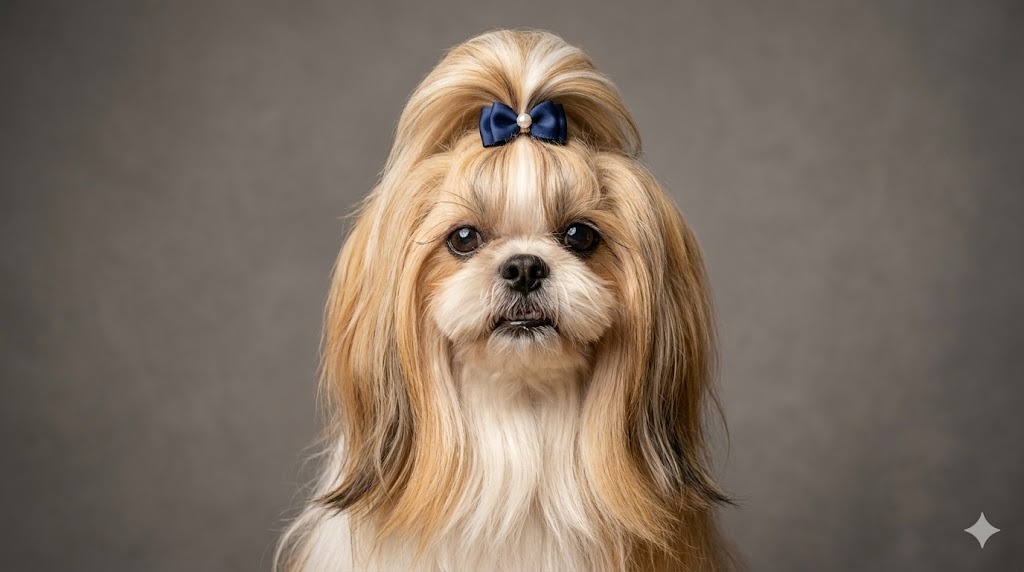
The Shih Tzu is a small, long-coated toy dog with imperial Chinese origins and a personality as elaborate as its show coat.
🗓️ Last reviewed: June 2026
Overview
The Shih Tzu is a small, long-coated toy dog with imperial Chinese origins and a personality as elaborate as its show coat. The name - pronounced "sheed-zoo" - translates roughly as "lion dog," reflecting the breed's centuries of association with Tibetan Buddhism and Chinese imperial courts. Affectionate, sociable, and refreshingly low-energy compared with most small breeds, the Shih Tzu is one of the world's most popular companion dogs.
History & Origins
The breed's history reaches back over a thousand years in Tibet, where small long-coated dogs were kept by Buddhist monasteries as gifts to Chinese emperors. In the Imperial Palace they were crossed with Pekingese and other court dogs to produce the distinctive short-faced, lion-maned Shih Tzu. The dogs were rarely allowed outside the palace walls; for centuries the breed was almost unknown in the West.
When the Empress Dowager Cixi died in 1908 her kennels broke up, and the breed nearly disappeared in the upheaval of the 1911 revolution and the Cultural Revolution decades later. Almost every modern Shih Tzu descends from 14 dogs (seven males and seven females, plus one Pekingese added in 1952) brought out of China in the 1930s. The Kennel Club (UK) recognised the breed in 1946; the AKC followed in 1969.
Appearance
Small, sturdy, with a flowing double coat and a distinctive proud carriage. Adults stand 20-28 cm (8-11 in) and weigh 4-7 kg (9-16 lb).
Key features:
- Coat: long, dense, double; flowing to the ground in show condition.
- Colour: any colour or combination. Most common are gold and white, black and white, brindle, and solid black or liver.
- Head: round, broad, with a flat short muzzle (brachycephalic, though less extreme than Pug or Bulldog), large round dark eyes, and long pendulous ears.
- Tail: carried over the back, heavily feathered.
- Topknot: the long head hair is traditionally tied into a topknot to keep it out of the eyes.
Temperament & Character
Friendly, sociable, and outgoing. The Shih Tzu was bred for one purpose - companionship - and the breed excels at it. Most are excellent with children, friendly with strangers, sociable with other dogs and cats. They are not natural alarm dogs and rarely guard or growl.
The breed is bright but selectively cooperative. Shih Tzus are happy to learn things they find interesting; they ignore commands they consider beneath them. Many are slow to house-train. Despite the lap-dog reputation, the breed enjoys short walks, sniffing, and gentle play.
Care
Coat & Grooming
The long double coat is the highest-maintenance feature. Two paths:
Long show coat: daily brushing, light spritz to prevent breakage, topknot maintained, weekly baths. Hours per week.
Pet "puppy clip": professional grooming every 4-6 weeks (clip body short, scissor face round, sanitary trim, ear clean, nails). Most pet owners choose this. Brushing 2-3 times weekly between groomings.
Whatever the length, the face requires daily attention. Eye discharge stains the white hair, and food crumbs catch in the long whiskers. Wipe the face daily with a warm damp cloth; trim hair between the eyes or tie it back. Brush teeth daily - dental disease is universal in this breed.
Exercise & Activity Needs
Modest. Adults need 20-40 minutes of daily exercise - short walks, indoor play. Shih Tzus do well in apartments and small homes.
Heat tolerance is limited due to the short muzzle and dense coat. Avoid midday summer walks; never leave one in a parked car. Most cannot swim safely.
Health & Lifespan
Average lifespan is 10-16 years - wide range, depending on breeder quality and weight management.
Common concerns:
- Brachycephalic Obstructive Airway Syndrome (BOAS) - variable in this breed; severity ranges from mild to moderate. Some need surgical correction.
- Heat intolerance.
- Eye conditions - dry eye, corneal ulcers (prominent eyes are vulnerable), progressive retinal atrophy.
- Dental disease - universal.
- Hip dysplasia and patellar luxation.
- Intervertebral disc disease in some lines.
- Renal dysplasia - a congenital kidney condition that can shorten life dramatically.
- Ear infections.
- Skin allergies.
Feeding & Nutrition
Adults typically eat 1/2 to 1 cup of quality small-breed food per day in two meals. The breed gains weight easily. Measure portions; limit treats.
Picky eating is common - many Shih Tzus refuse the same food day after day or develop strong preferences. Establish a calm, predictable feeding routine and resist hand-feeding. Skipping a meal is acceptable; a healthy adult Shih Tzu will eat when hungry.
Pros & Cons
Pros
- Friendly with everyone - kids, strangers, dogs.
- Apartment-friendly with modest exercise needs.
- Long-lived for a popular breed.
- Adaptable to many lifestyles.
- Beautiful, expressive appearance.
Cons
- High grooming requirements.
- Slow to house-train.
- Heat-intolerant.
- Dental and eye problems are near-universal.
- Brachycephalic breathing issues in some lines.
Best Suited For
- Retirees and singles wanting a constant companion.
- Apartment dwellers.
- Families with older children.
- Multi-pet homes.
- Owners willing to budget for regular professional grooming.
Not suited for active outdoor enthusiasts wanting a running partner, hot-climate outdoor lifestyles, or anyone who finds daily face care tedious.
Shih Tzu puppy growth chart
A typical growth curve for a toy breed like the Shih Tzu, estimated from its adult weight of 4-7 kg. Puppies vary with sex, genetics and diet, so treat this as a guide - for your own puppy, use the puppy weight predictor.
| Age | Typical weight | % of adult |
|---|---|---|
| 2 mo | 1.3-2.3 kg | 33% |
| 3 mo | 1.8-3.2 kg | 45% |
| 4 mo | 2.2-3.9 kg | 55% |
| 6 mo | 3-5.3 kg | 75% |
| 9 mo | 3.8-6.7 kg | 95% |
| 12 mo | 4-7 kg | 100% |
| Adult | 4-7 kg | 100% |
Shih Tzu - frequently asked questions
Are Shih Tzus hypoallergenic?
No, but they shed very little once mature, and many allergy sufferers tolerate them well. Spend time with an adult Shih Tzu before committing.
Are they good with kids?
Yes with respectful older children. Supervise toddlers - small Shih Tzus are easily injured and their prominent eyes are vulnerable.
Do they bark a lot?
Generally less than most small breeds. They alarm-bark but are not chronic barkers.
Why is house training so slow?
The breed is famously stubborn about elimination. Establish a calm crate routine, take the puppy out every 2-3 hours, reward outdoor success generously, and be patient through 8-12 months.
Can Shih Tzus swim?
Most cannot swim safely. The flat face and dense coat make swimming difficult. Use a life vest near water.
🧠 Test yourself: guess the dog
Three clues from our quiz bank, each about another of our dogs. Can you name them?
Clue 1.Despite weighing only a few pounds, this apple-headed breed has a famously bold, sassy temperament and shivers easily.
It's the Chihuahua - read the full profile →
Clue 2.Bred to haul ducks from icy American bay waters, this brown gun dog has an oily, wavy waterproof coat.
It's the Chesapeake Bay Retriever - read the full profile →
Clue 3.This small, silky-coated companion breed is the only dog native to Cuba and serves as its national dog.
It's the Havanese - read the full profile →
💛 Adoptable Shih Tzus near you
Real dogs of this breed (and close mixes) waiting in shelters and rescues right now, live from Petfinder. We have no affiliation and earn nothing - if someone catches your eye, the link goes straight to their shelter. New to adopting? Start with our adoption guide.
Widget not loading (some ad-blockers hide it)? Search directly on petfinder.com.