Vizsla
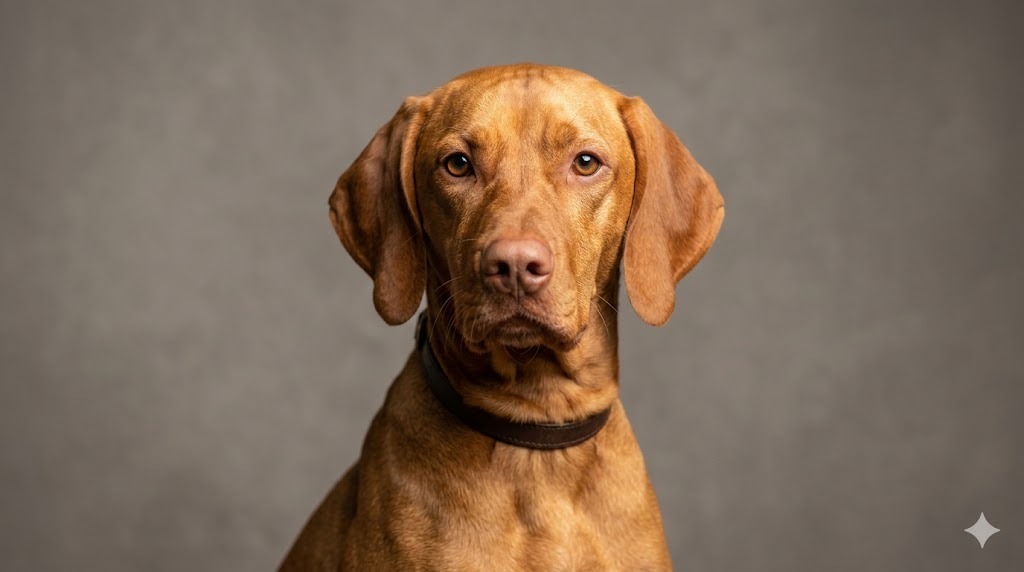
The Vizsla is a Hungarian sporting dog of striking elegance - a rust-coloured, lean, athletic pointer-retriever with a temperament far softer and more deeply bonded than most working breeds.
🗓️ Last reviewed: June 2026
Overview
The Vizsla is a Hungarian sporting dog of striking elegance - a rust-coloured, lean, athletic pointer-retriever with a temperament far softer and more deeply bonded than most working breeds. Known as the "Velcro Vizsla" for its near-pathological need to be touching its humans, the breed is one of the most affectionate sporting dogs in the world, but also one of the most demanding - both physically and emotionally.
History & Origins
Vizslas accompanied the Magyar tribes that settled the Carpathian Basin in the 9th century. Stone etchings from the period show clear pointer-type dogs hunting alongside Magyar warriors with falcons. Through the Middle Ages and Renaissance the breed remained the favoured hunting dog of Hungarian aristocracy.
By the late 1800s the original Hungarian pointer had nearly been replaced by imported German shorthairs and English pointers. Hungarian breeders rescued the breed in the early 20th century from a small number of remaining dogs. World War II and the subsequent Communist takeover nearly finished the Vizsla - many Hungarians smuggled dogs out of the country to preserve the breed.
The AKC recognised the Vizsla in 1960. Today the breed has rebounded strongly worldwide, popular for both field work and family life. A wirehaired variety (Wirehaired Vizsla) is a separate breed.
Appearance
Medium-sized, lean, elegant. Males stand 56-64 cm (22-25 in) and weigh 20-27 kg (45-60 lb); females are smaller. The build is balanced, athletic, never coarse.
Key features:
- Coat: short, smooth, dense, no undercoat.
- Colour: solid golden rust - anything from a light wheaten gold to deep mahogany rust. White on the chest and toes acceptable but small. The nose and eye rims are flesh-coloured (rust), matching the coat.
- Head: lean, refined wedge with a long muzzle.
- Eyes: medium, slightly almond, harmonising with the coat colour.
- Ears: thin, V-shaped, drop.
- Tail: traditionally docked to two-thirds; natural tails common in non-docking countries.
Temperament & Character
Affectionate, sensitive, and intensely bonded. The Vizsla forms profound attachments to family and does not tolerate being left alone for long. Separation anxiety is the breed's defining behavioural challenge. "Velcro Vizsla" is not a joke - most adults follow their primary person from room to room, lean against legs, and prefer to sleep in physical contact.
The breed is intelligent and biddable but sensitive. Harsh corrections produce shut-down, fear, and avoidance. Reward-based methods plus calm consistency produce extraordinary working partners.
With strangers, well-socialised Vizslas are polite without being effusive. With children they are typically gentle, though their high energy can overwhelm toddlers.
Care
Coat & Grooming
The short single coat is very low-maintenance: weekly rub-down with a rubber curry, baths every 6-8 weeks. Sheds steadily; fine rust-coloured hairs stick to fabrics.
The lack of undercoat means limited insulation. Vizslas need coats in cold weather and shade in summer. Clean ears weekly, trim nails every 3 weeks, brush teeth several times weekly.
Exercise & Activity Needs
Among the highest of any popular breed. Adults need a minimum of 90-120 minutes of vigorous daily exercise - running, retrieving, hiking, swimming, or field work. Walking alone is not enough.
The breed excels at field trials, agility, dock diving, scent work, obedience, and tracking. Many Vizslas are running partners for marathoners. Without enough exercise the breed becomes destructive and develops anxiety.
Mental work is equally critical. Daily training, varied environments, and structured engagement keep the dog balanced.
Health & Lifespan
Average lifespan is 12-14 years - long for a working sporting breed.
Common concerns:
- Hip dysplasia - moderate.
- Sebaceous adenitis - a hereditary skin condition.
- Hypothyroidism.
- Lymphoma and haemangiosarcoma in older dogs.
- Epilepsy.
- Progressive retinal atrophy.
- Vizsla inflammatory polymyopathy (VIP) - a rare inflammatory muscle disease specific to the breed.
- Bloat (GDV) - moderate risk.
The breed is generally healthy for a sporting dog.
Feeding & Nutrition
Adults typically eat 2½-3 cups of quality food per day in two meals. Working dogs need significantly more. The breed maintains lean condition naturally when exercised.
Avoid heavy exercise within an hour of meals (bloat risk). Slow-feeder bowls help. Performance dogs benefit from a higher-fat sporting formula in working seasons.
Pros & Cons
Pros
- Affectionate, deeply bonded family companion.
- Athletic, versatile, capable of any sporting role.
- Highly trainable.
- Short coat is easy to maintain.
- Long-lived for a working breed.
Cons
- Enormous exercise needs - no half-measures.
- Severe separation anxiety; cannot be left alone for long.
- Sensitive - not for harsh handlers or chaotic homes.
- Sheds steadily.
- Limited cold tolerance.
Best Suited For
- Active, outdoor-oriented owners (runners, hikers, hunters).
- Sport homes (field trials, agility, scent work).
- Households where someone is home most of the day.
- Active families with older children.
Not suited for sedentary owners, apartment dwellers without serious daily activity, full-time-office homes, or first-time owners who underestimate drive and attachment.
Vizsla puppy growth chart
A typical growth curve for a large breed like the Vizsla, estimated from its adult weight of 20-27 kg. Puppies vary with sex, genetics and diet, so treat this as a guide - for your own puppy, use the puppy weight predictor.
| Age | Typical weight | % of adult |
|---|---|---|
| 2 mo | 4.4-5.9 kg | 22% |
| 3 mo | 6.6-8.9 kg | 33% |
| 4 mo | 8.6-11.6 kg | 43% |
| 6 mo | 12-16.2 kg | 60% |
| 9 mo | 16-21.6 kg | 80% |
| 12 mo | 18.4-24.8 kg | 92% |
| Adult | 20-27 kg | 100% |
Vizsla - frequently asked questions
Are Vizslas good with kids?
Generally yes, especially older children who can handle the breed's energy. The breed's intensity can overwhelm toddlers.
Why are they called "Velcro Vizslas"?
The breed bonds more intensely than nearly any other working dog. Adults want to be in physical contact with their humans constantly - sitting on laps despite size, following from room to room, leaning, paw-touching.
Can a Vizsla be left alone for work?
Poorly. The breed is highly prone to separation anxiety. Owners who work full days need daycare, dog walkers, or another dog. Many Vizsla rescues come from underestimating this trait.
Vizsla vs Weimaraner - what's the difference?
Both are Central European pointer-retrievers. Vizsla is smaller (20-27 kg vs 30-40 kg), rust-coloured, more sensitive and "Velcro." Weimaraner is grey, larger, more independent and more challenging behaviourally.
Are Vizslas hypoallergenic?
No - they shed and produce dander.
🧠 Test yourself: guess the dog
Three clues from our quiz bank, each about another of our dogs. Can you name them?
Clue 1.A big, fluffy, double-coated dog from Japan, it has small triangular eyes, a broad head, and a plush tail that curls over its back.
It's the Akita - read the full profile →
Clue 2.A smart, eager-to-please herder with a fluffy medium coat, it craves a job and can develop bad habits if left bored.
It's the Australian Shepherd - read the full profile →
Clue 3.Named for its original job of flushing a long-billed game bird, this floppy-eared gun dog is the smallest of the flushing sporting breeds.
It's the Cocker Spaniel (American) - read the full profile →
💛 Adoptable Vizslas near you
Real dogs of this breed (and close mixes) waiting in shelters and rescues right now, live from Petfinder. We have no affiliation and earn nothing - if someone catches your eye, the link goes straight to their shelter. New to adopting? Start with our adoption guide.
Widget not loading (some ad-blockers hide it)? Search directly on petfinder.com.